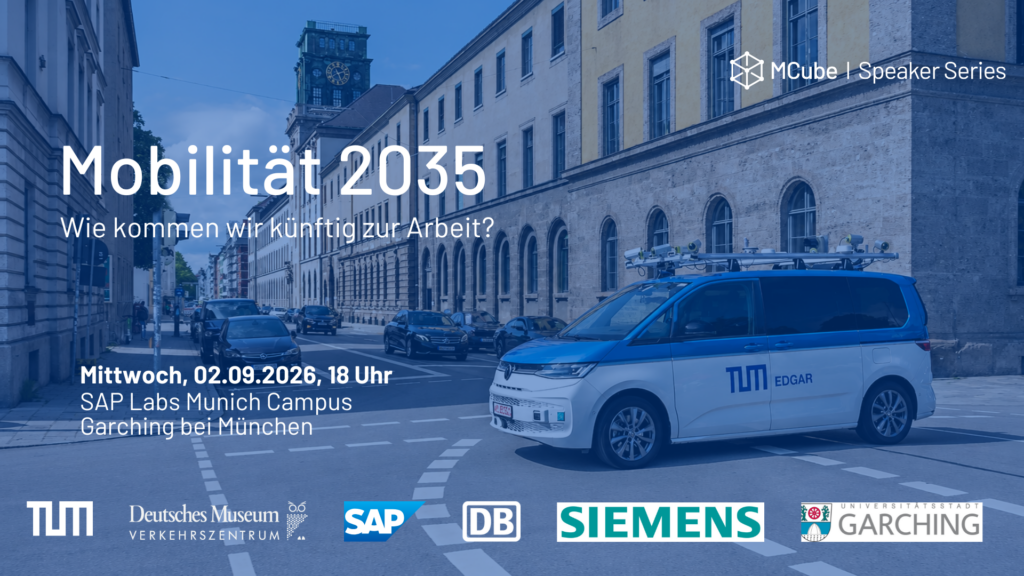
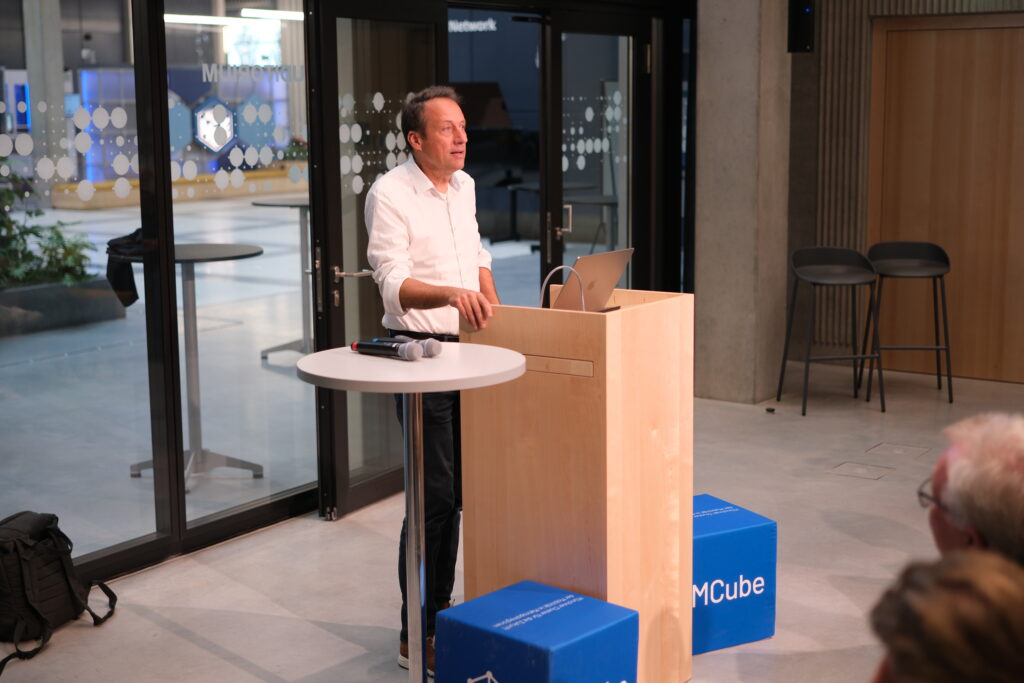
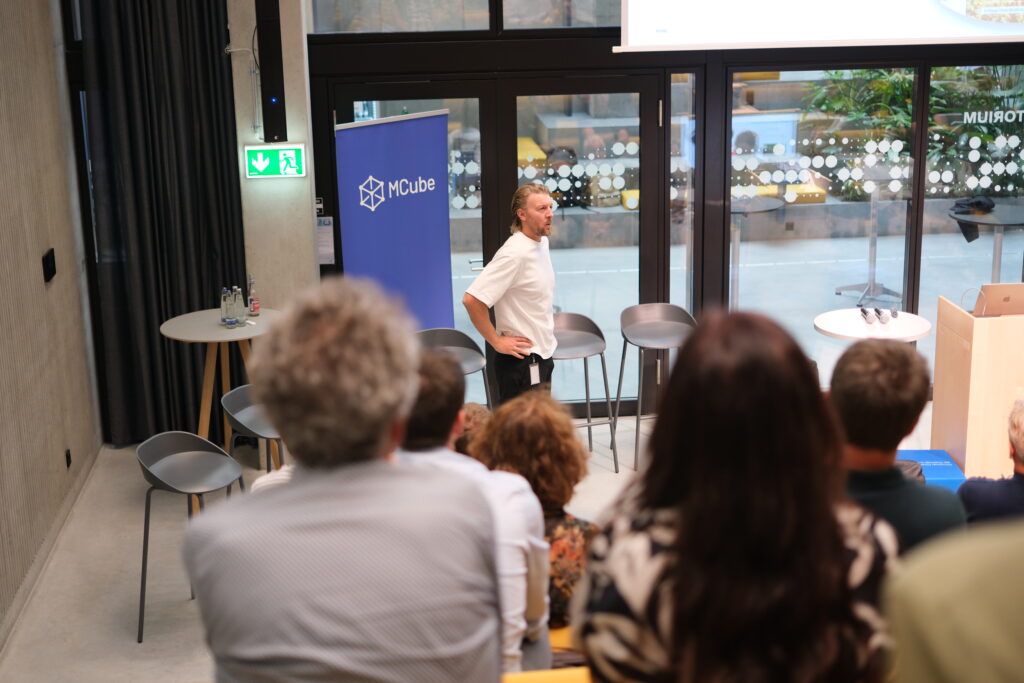
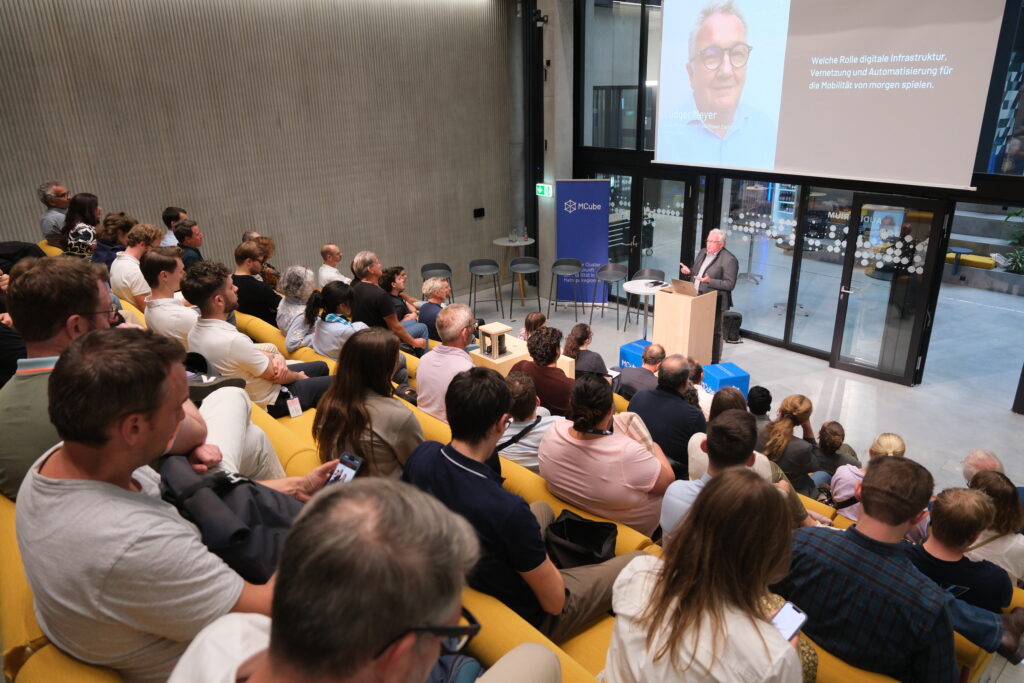
Getting to the MCube Speaker Series at the SAP Lab in Garching this time was the perfect starting point to talk about the mobility of the future. More than once from the audience, you could hear that the option of coming by private car was significantly faster and more comfortable than using public transportation and facing an 18-minute walk from the subway stop.
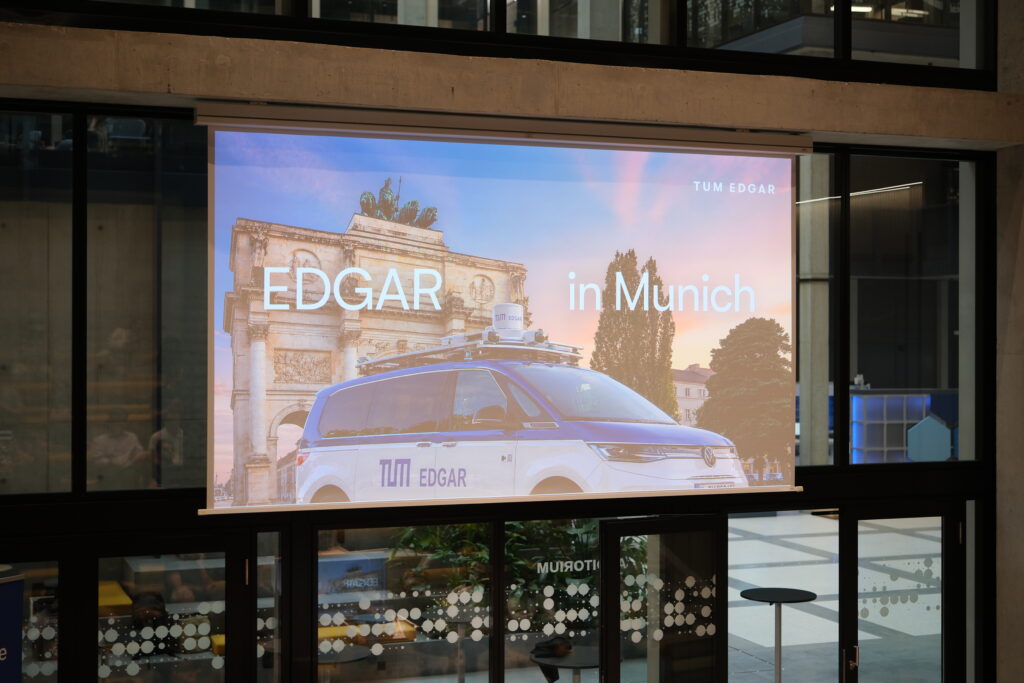
Precisely this challenge was already addressed during the day by the real-world laboratory of the MCube project ReFuMoLab. For two days, SAP and Siemens employees can try out test rides with TUM's autonomous shuttle EDGAR (Excellent Driving Garching) across the campus—the slots were quickly filled, and the question of when the autonomous shuttle will be deployed on a permanent basis came up often—an answer does not exist yet.
City councilors appeal – MCube responds
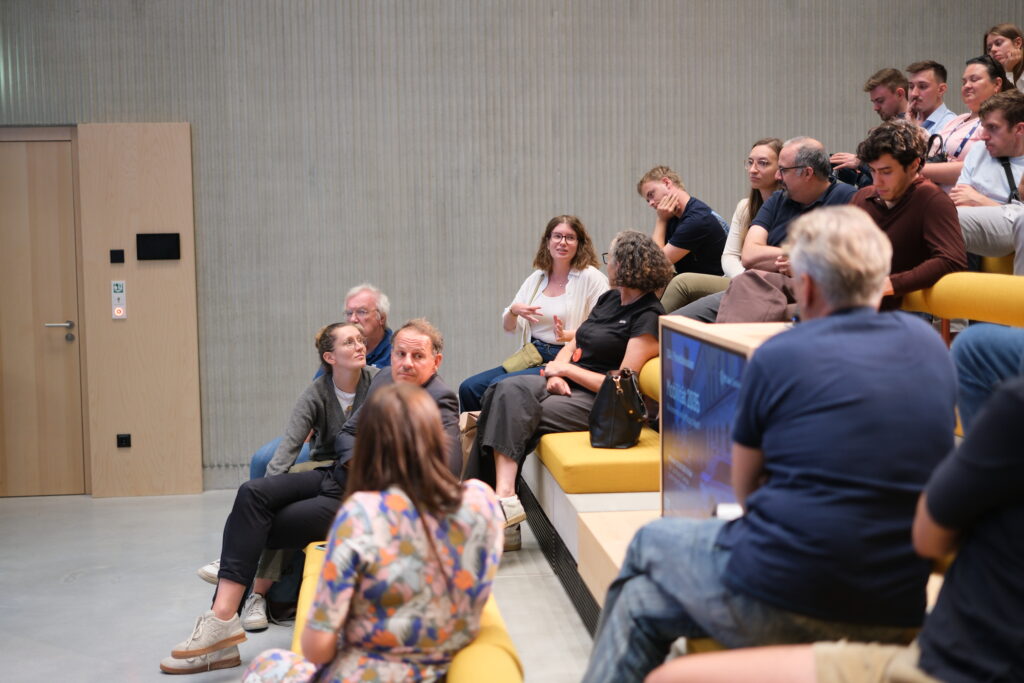
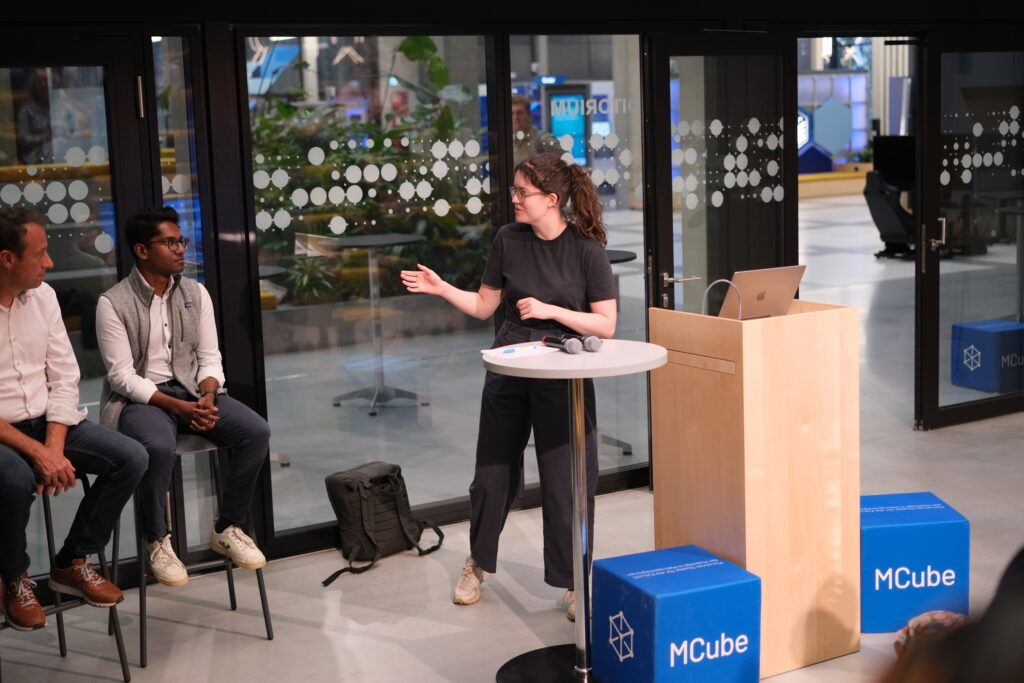
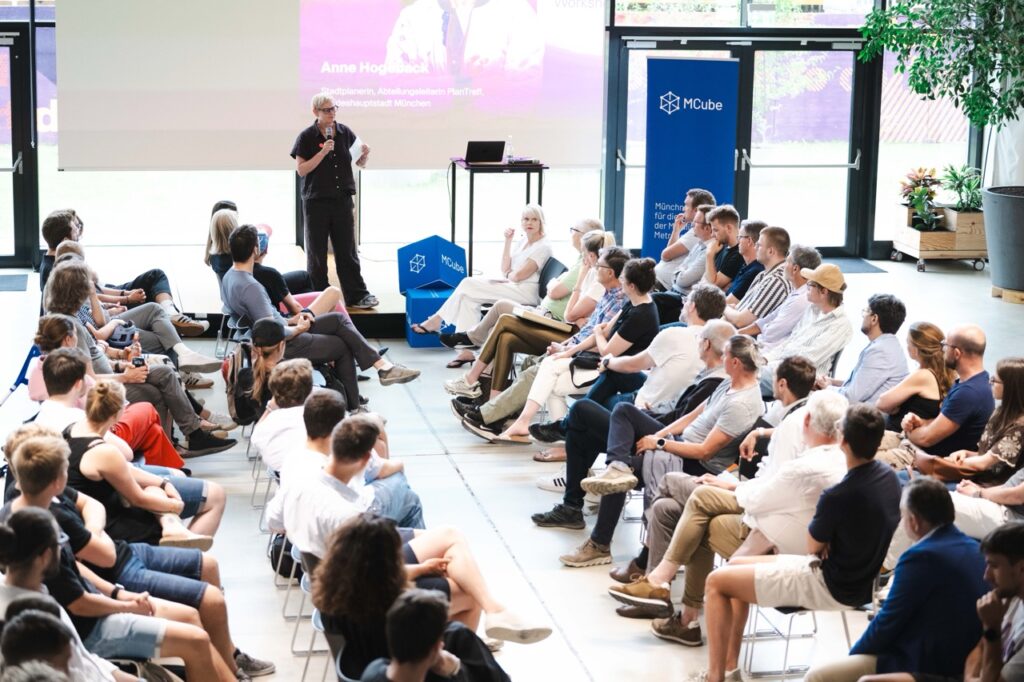
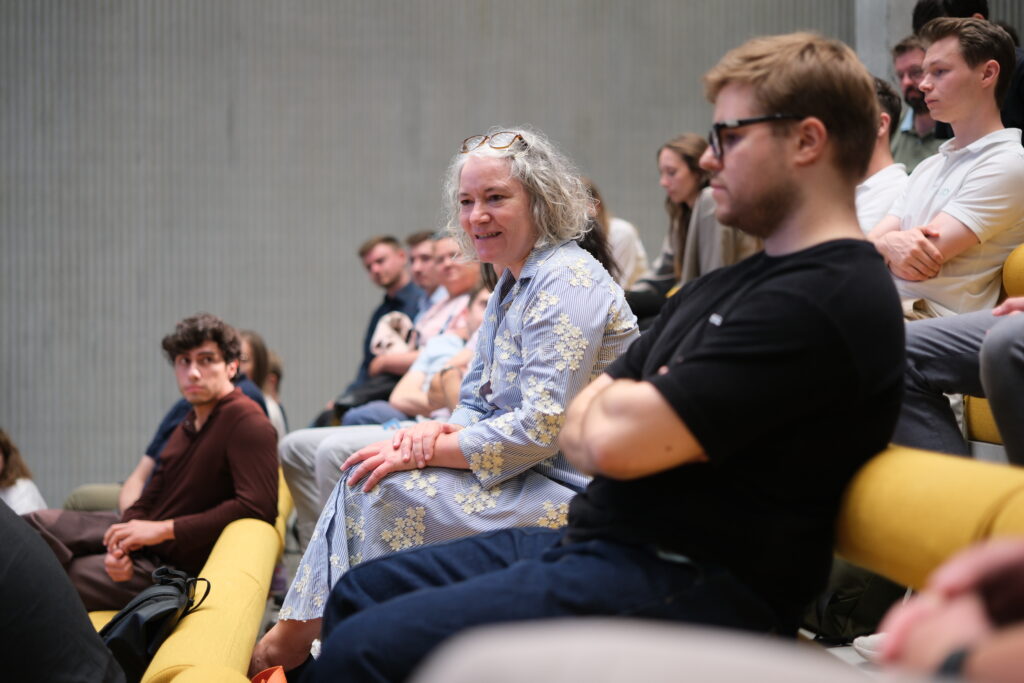
There were plenty of impulses for mobility in 2035 during the evening event led by Isabella Waldorf, project manager of ReFuMoLab Garching. One of the most striking statements came from the audience: dedicated Garching city councilwomen spoke up and made it clear that in their daily political work, they often lack expertise on mobility topics. Their appeal to the panel was as direct as it was charming: „Train us!“
Especially in Garching, where the development of a large new residential area is imminent and modern mobility concepts are needed, the need for knowledge transfer between research and municipal practice is great. Therefore, Oliver May-Beckmann, managing director of MCube, immediately signaled his readiness to start here and specifically train municipal decision-makers in mobility issues in the future.
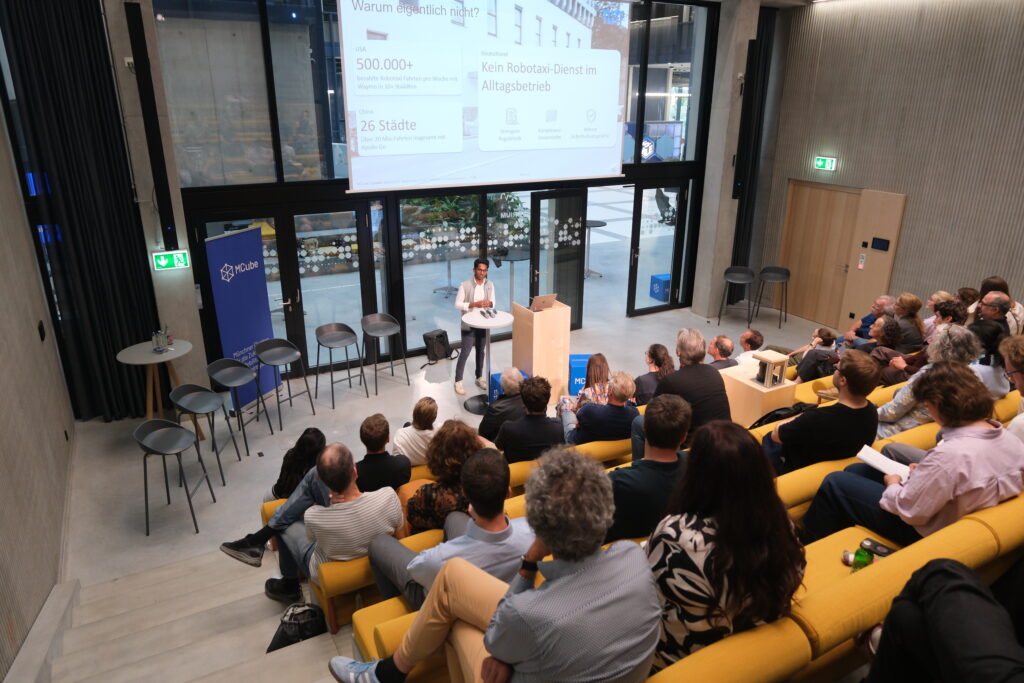
Before that, however, breaking news about Waymo's launch in Munich provided the opening for the keynote by Nijinshan Karunainayagam, research associate at the TUM Chair of Automotive Engineering, and Markus Lienkamp, professor at the same chair.
The keynote addressed the question of why autonomous driving is already a reality in the USA and China, while there is still no market-ready vehicle in the EU and Germany. This is where EDGAR comes in and tries to catch up with test drives in Munich, at the Oktoberfest, and even in Berlin.
Professor Lienkamp explained the technical approach behind EDGAR: instead of a million-dollar budget and a large fleet, the project relies on several combinable software stacks. He also pointed out the high safety requirements for autonomous vehicles: around 10⁹ driven kilometers without a fatality, compared to 100 million kilometers for human drivers, would be needed to achieve social acceptance for autonomous driving.
Further insights from brief impulses
In further brief presentations, Sebastian Wagner (SAP) explained how the global conversion of the company fleet to electric drive worked, as well as the difficulty of connecting the Garching location well – with the note that it is less about completely new infrastructure than about using existing infrastructure more intelligently.
Camila Barquero, mobility officer for the city of Garching, presented the municipal perspective on mobility in 2035. The focus was not on autonomous driving as a standalone solution, but rather on autonomous driving as a complement to socially equitable mobility concepts that are not only safe and reliable, but also sustainable and accessible for diverse needs.
Stefan Kretzschmar (DB Regio) spoke about the networking of various mobility apps and how isolated solutions in autonomous driving represent an obstacle rather than a sustainable alternative to motorized private transport. He said, „We need more than just autonomous vehicles. We must connect the technology behind them and create more opportunities for a networked travel chain.“
Ludger Meyer (Siemens AG) also did not see autonomous vehicles simply as a cure-all, but pointed to the infrastructure needed for modern mobility concepts, which does not always have to be newly created, but often just better utilized. He made it clear that autonomous vehicles with only one passenger would not solve the problem of traffic jams, for example: „Autonomous driving must not just be an addition to mobility; it must be a combination.“
Core message of the evening: No autonomous driving on one's own
A common theme ran through all the contributions: none of the panel guests saw autonomous driving as the sole solution for the mobility of the future. Instead, there was agreement that autonomous vehicles only make sense as a building block of an intermodal, multimodal mobility concept—as a complement to existing services, not as a replacement for them.
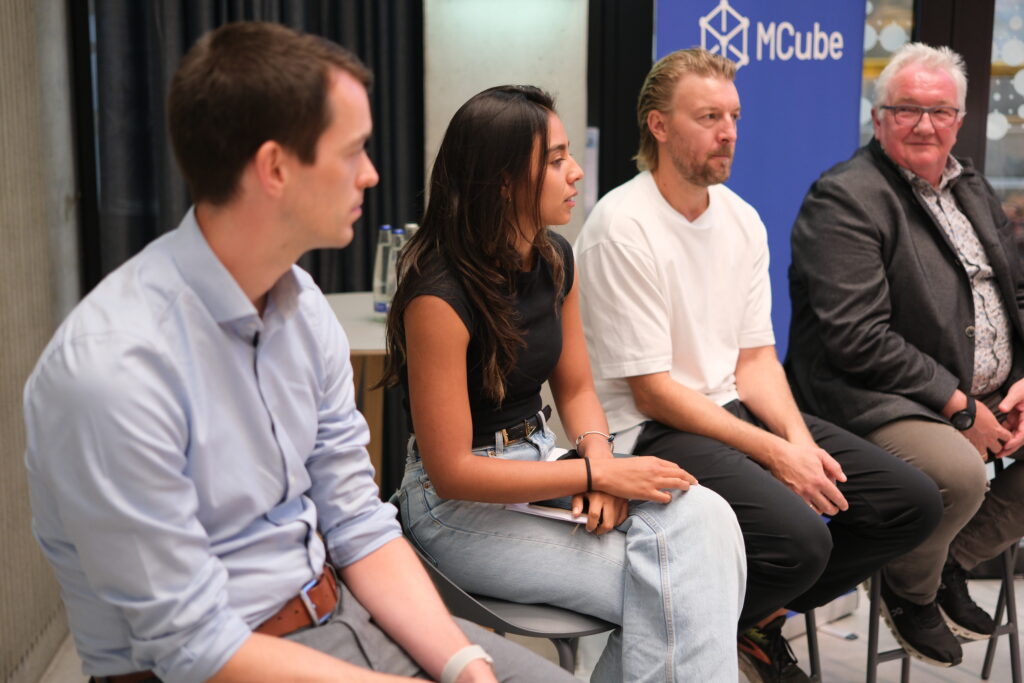
During the open panel discussion, this idea was picked up: with questions about carpooling and sharing services, the role of the bicycle in the year 2035, and the concern that the success of providers like Waymo might ultimately push mobility back toward a monomodal system instead of making it more multimodal.
Conclusion
The evening made clear that future mobility is not purely a technical question. It arises from the interplay of technology, infrastructure, operations, and—as the appeal by the Garching city councilors impressively demonstrated—above all, knowledge and exchange between research and municipal practice.