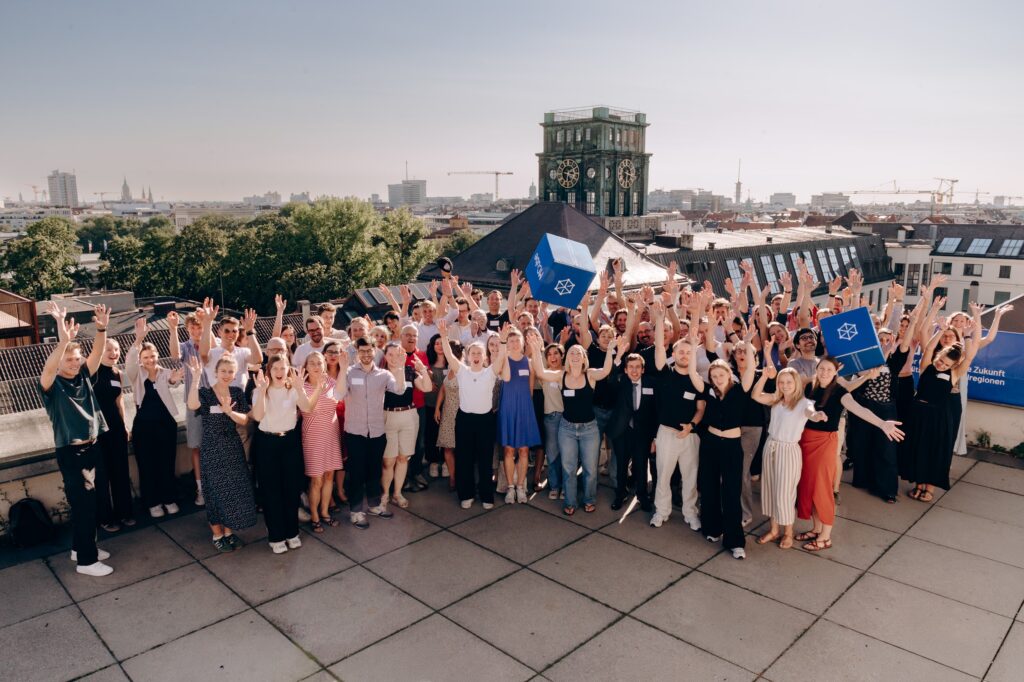
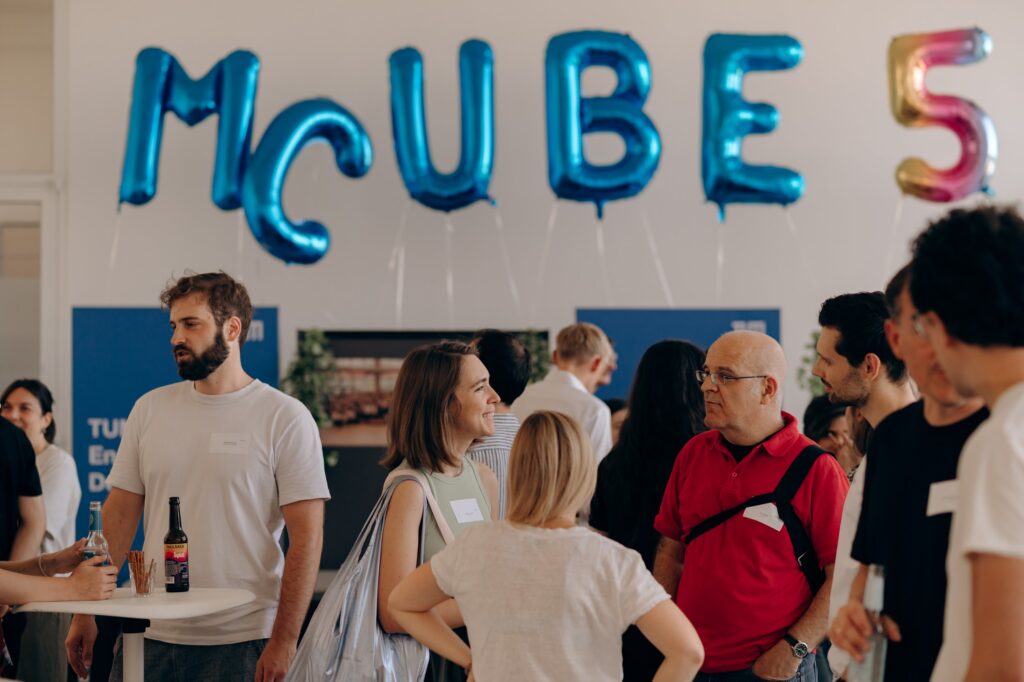
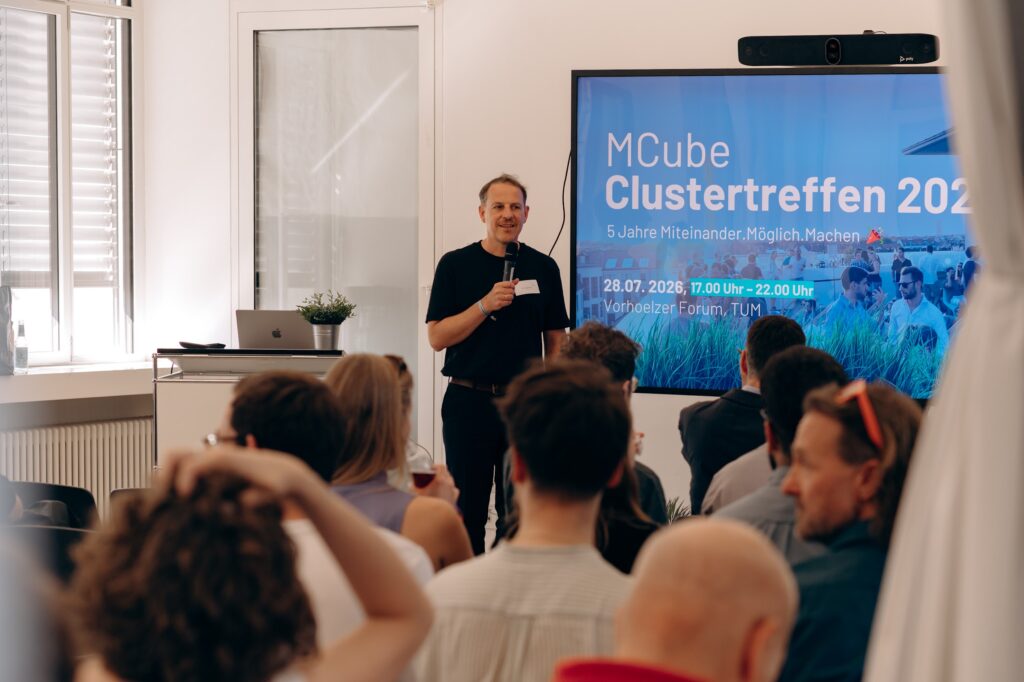
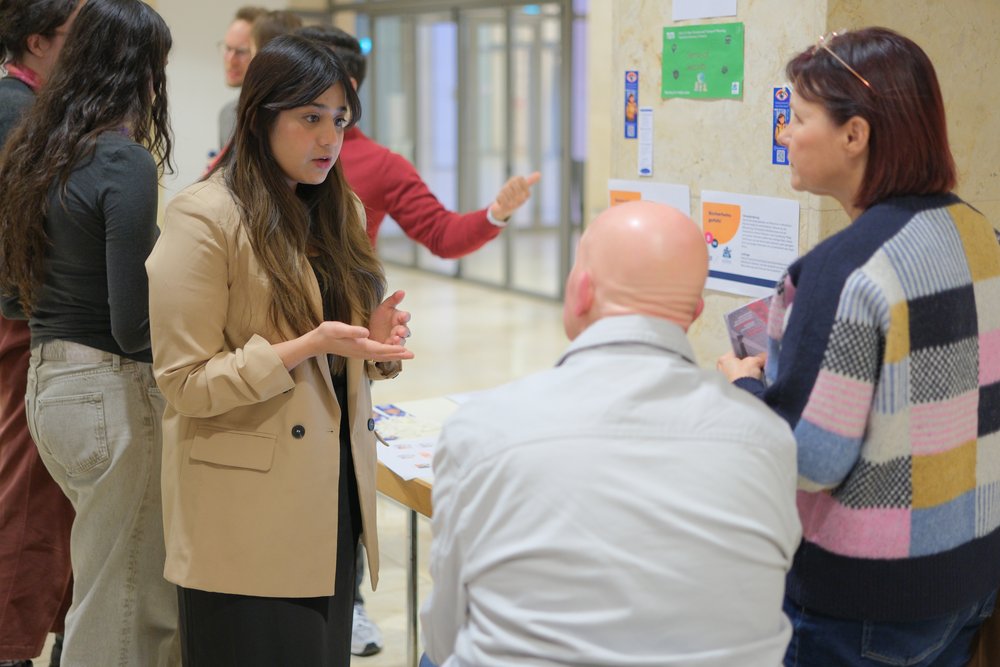
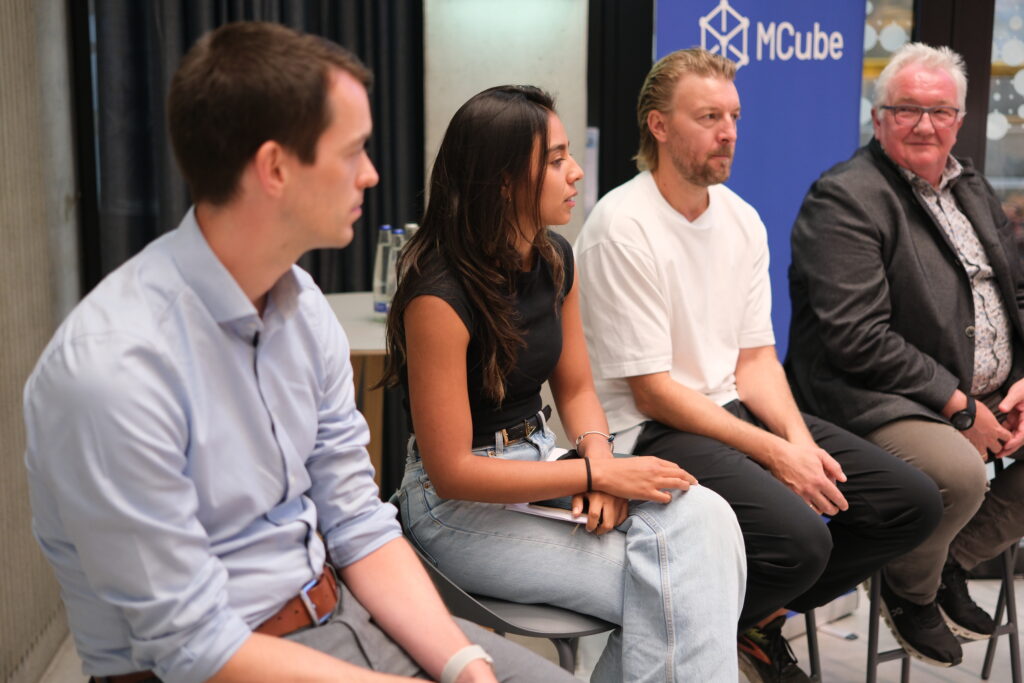
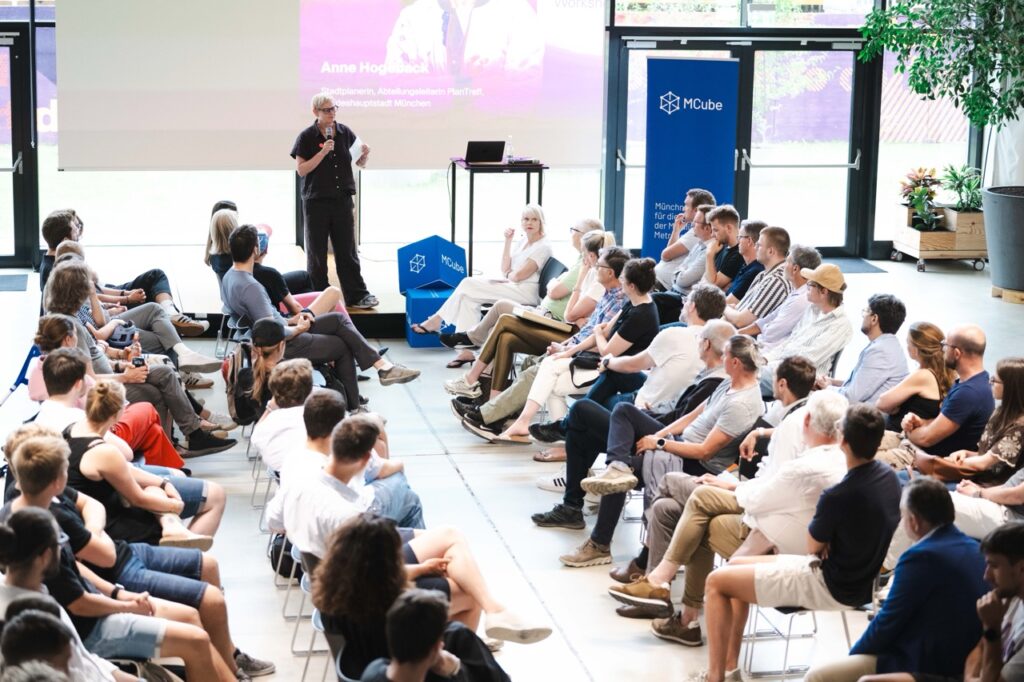
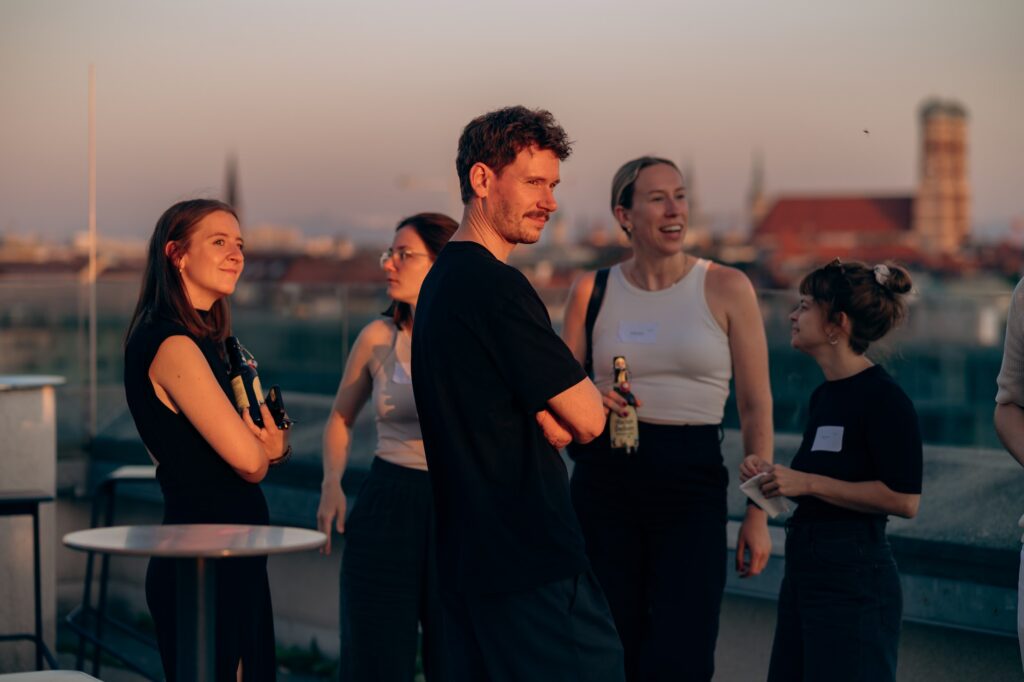
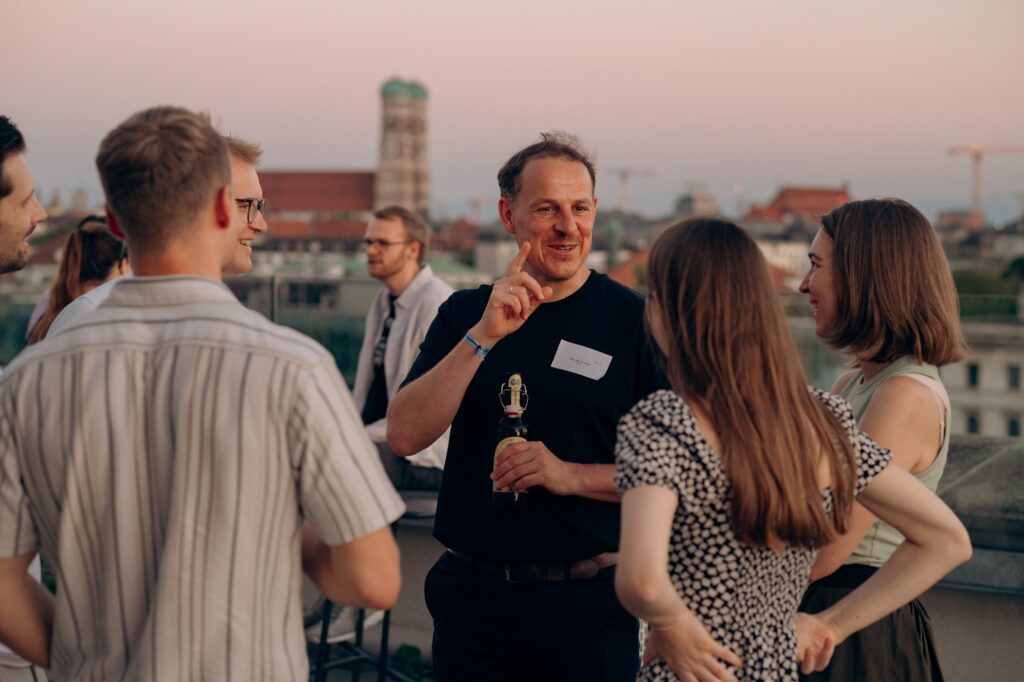
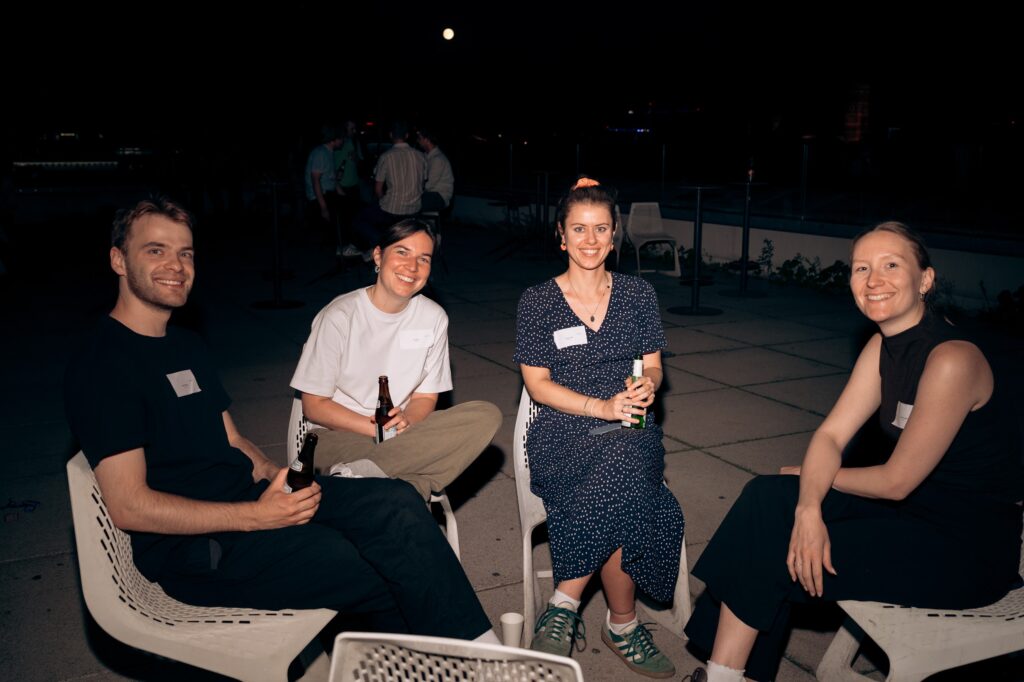
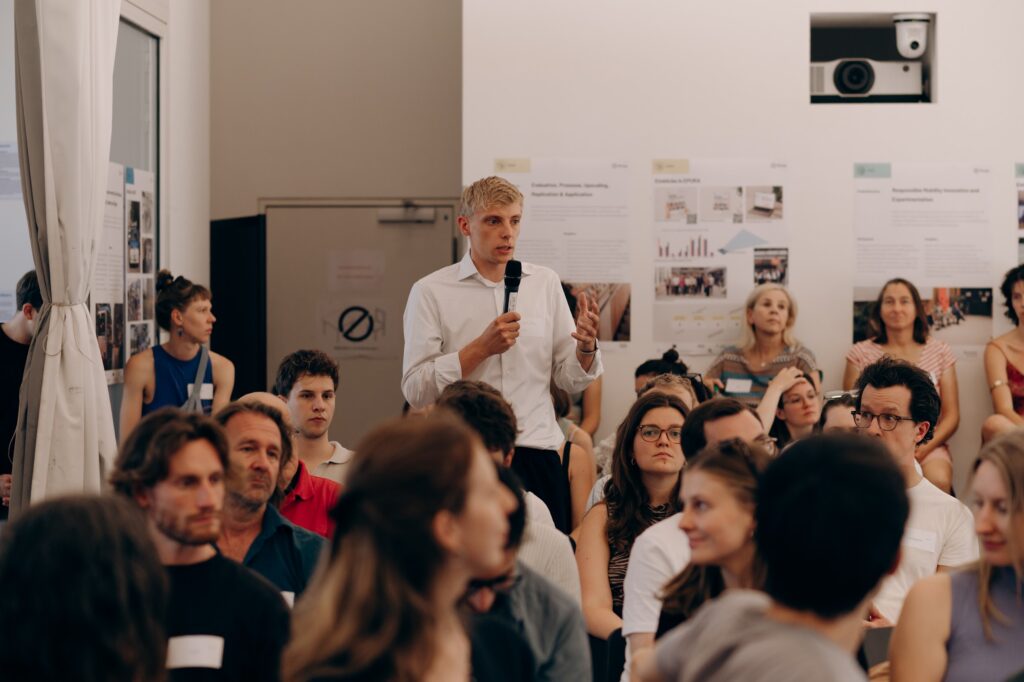
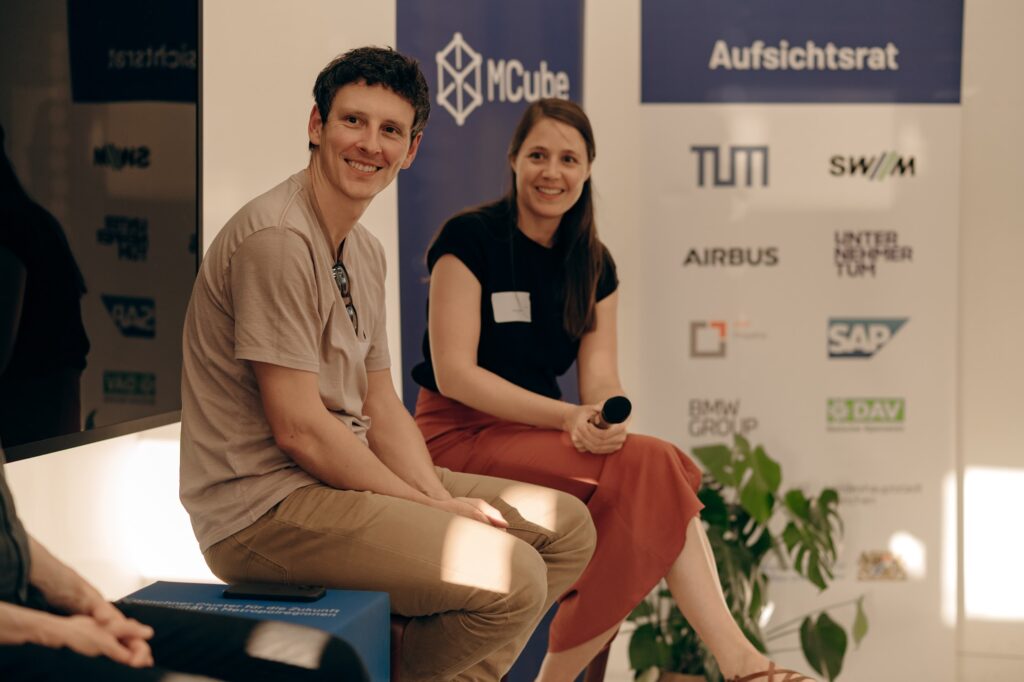
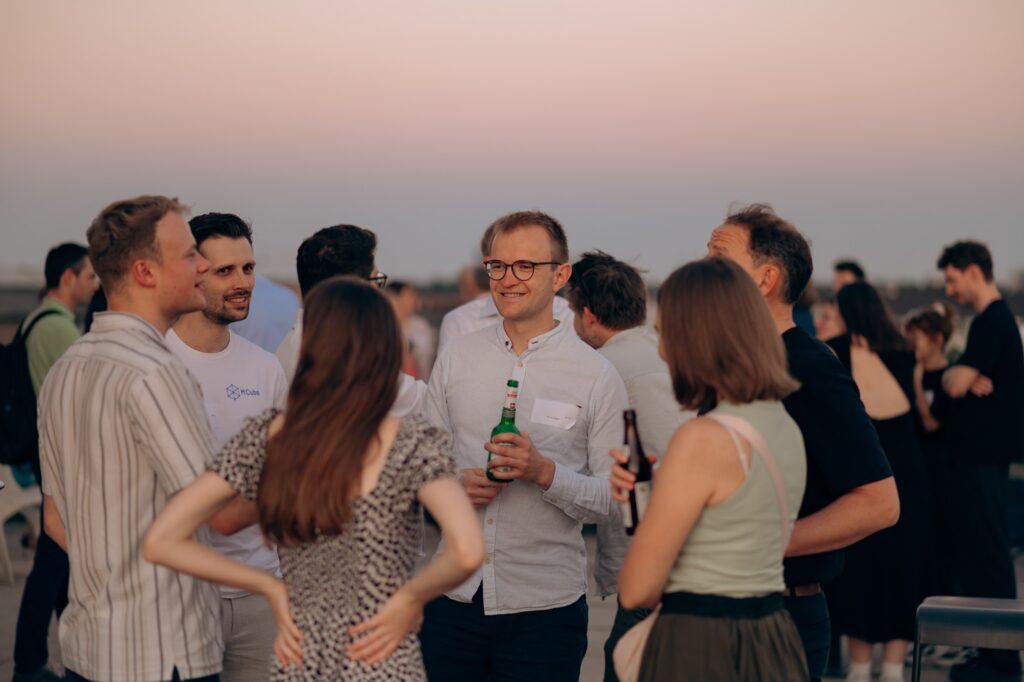
This year's MCube cluster meeting was truly special – and not just because all the cluster's members, partners, and companions gathered on the rooftop terrace of the Technical University of Munich to discuss the innovation projects together. Above all, it was because the cluster's fifth anniversary was also being celebrated: 5 years of MCube, 5 years of mobility innovations.
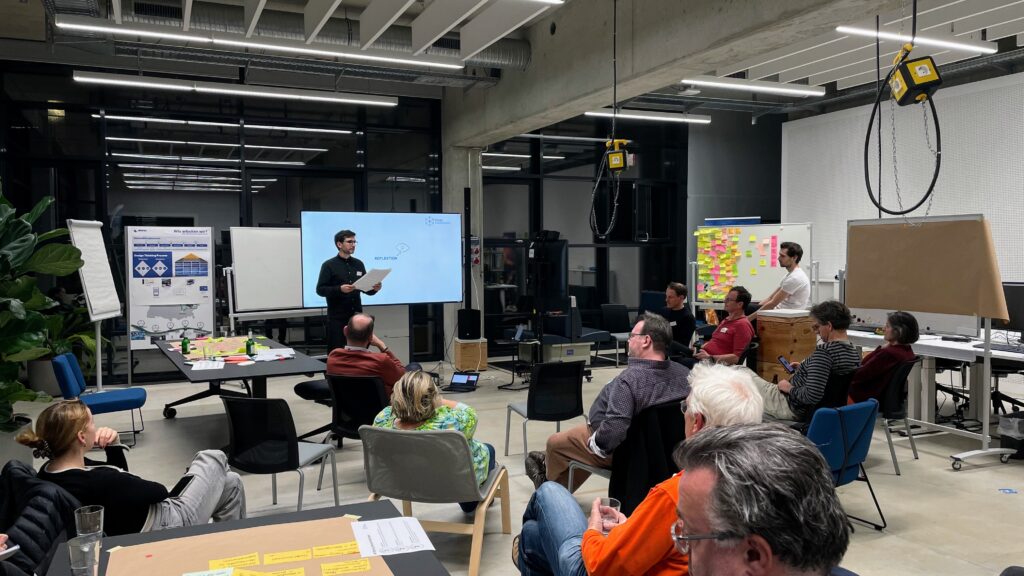
The first part of the program on July 28, 2026, focused primarily on a joint review of the innovation projects: Where does MCube stand this year, what synergies can be harnessed between the projects, and what challenges is the cluster facing?
A key result of the discussion: MCube is on the threshold of real-world laboratories. Several projects are moving from the conception to the implementation phase this year:
- MOSAIQ begins with the concrete neighborhood redesign in Moosach and Schwabing.
- MobiPioneer creates targeted incentives for hundreds of Munich residents to change their mobility behavior.
- ComfficientShare 2.0 launches the first peer-to-peer car sharing services in Munich.
These three projects exemplify the next level of cluster collaboration: from joint concept development to testing in real urban spaces.
In the evening, the focus shifted to the anniversary celebration – with an eye to the future. After all, MCube was founded over five years ago based on a clear premise: mobility cannot be meaningfully conceived along the lines of individual modes of transport, technologies, or disciplines, but must be understood as a shared societal task to be shaped collectively. From this starting idea, a network of now over 80 partner organizations from science, business, politics, administration, and civil society has grown.
The path there was not always linear. In recent years, approaches were tested, partly discarded again, and rethought. Real-world laboratories were set up, cross-disciplinary formats established, and knowledge exchanged between actors who usually do not come into contact with one another. The guiding principle „Miteinander. Möglich. Machen.“ (Together. Possible. Doing.) has thereby evolved from a programmatic motto into a lived way of working.
Future ideas under changed conditions
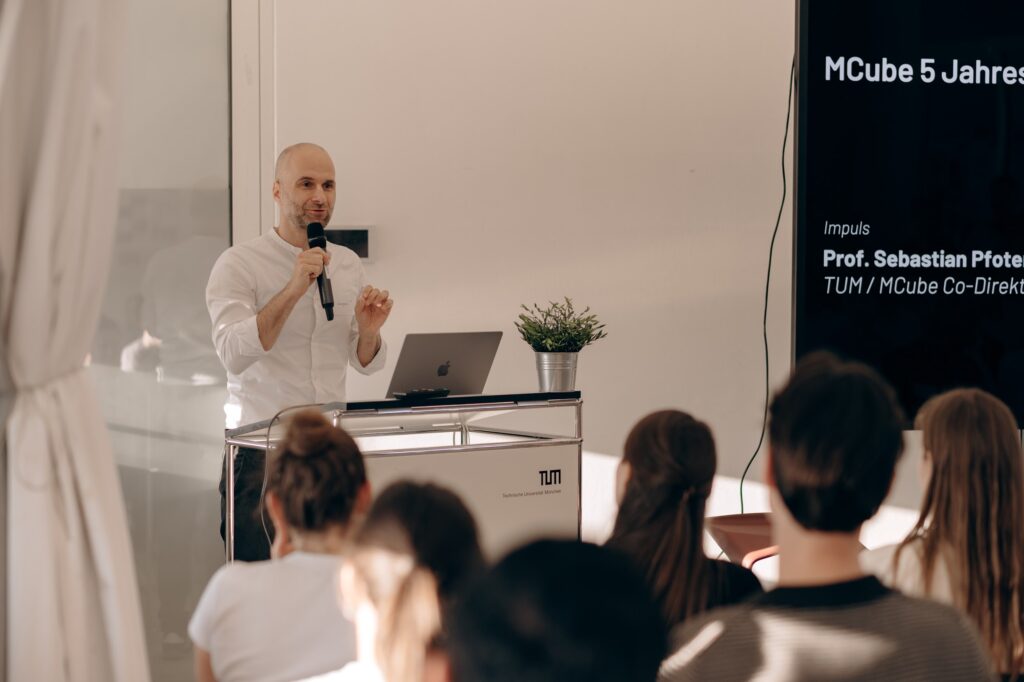
In his address, cluster spokesperson Prof. Sebastian Pfotenhauer described MCube's work using a metaphor from navigation technology: shaping the future of mobility does not follow a straight line from a starting point to a defined destination. What is crucial is not the exact target coordinate, but the ability to continuously „re-route“ – comparable to navigation software that constantly adapts to changing conditions.
This description matches the reality of the past five years: a pandemic, energy crisis, geopolitical upheavals, rapid progress in artificial intelligence, and political changes have repeatedly shifted the framework for mobility research. MCube's mandate is therefore less to formulate a fixed vision of the future than to create spaces in which diverse actors can jointly test, discuss, and shape that future.
Review of the partners
As part of the celebration, several long-standing partners classified the development of MCube and provided insights from their respective perspectives: Georg Dunkel (Head of the Mobility Department, City of Munich), Sebastian Pfotenhauer and Gebhard Wulfhorst (TUM / MCube Co-Directors), as well as Florian Welter from Project Management Jülich (PtJ). In addition, Carolin Zimmer, Julia Kinigadner, Michael Wittmann, Alexander Wentland, Oliver May-Beckmann, and Sophia Knopf as moderator provided a personal look back at the cluster's journey from 2018 to the present.
Five years of MCube stand for the establishment of a resilient network and a way of working that relies on cross-sector cooperation. At the same time, the cluster views the anniversary as a starting point for the coming years: The central question remains not where the journey leads, but how the path to get there is shaped together with the MCube community.
Photos: Viktoriya Zayika
About MCube
MCube – the „Munich Cluster for the Future of Mobility in Metropolitan Regions“ – is a future cluster funded by the Federal Ministry for Research, Technology and Space (BMFTR) and has been in its second funding phase since November 2024. Led by the Technical University of Munich and together with over 80 partners from science, industry, society, and administration, MCube is shaping the mobility of tomorrow – innovatively, sustainably, and transferably to other regions.