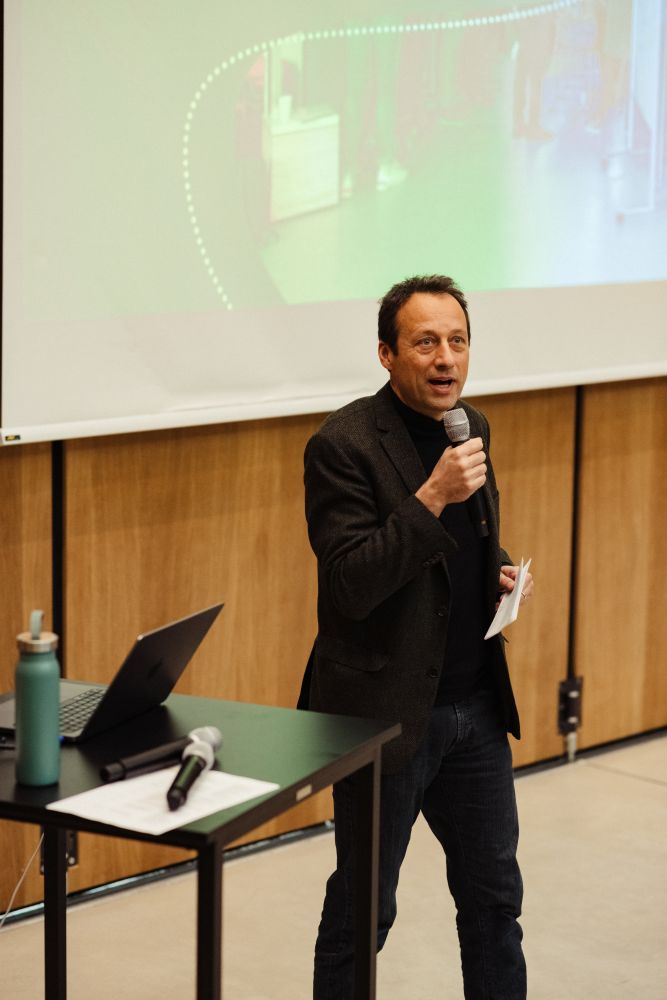
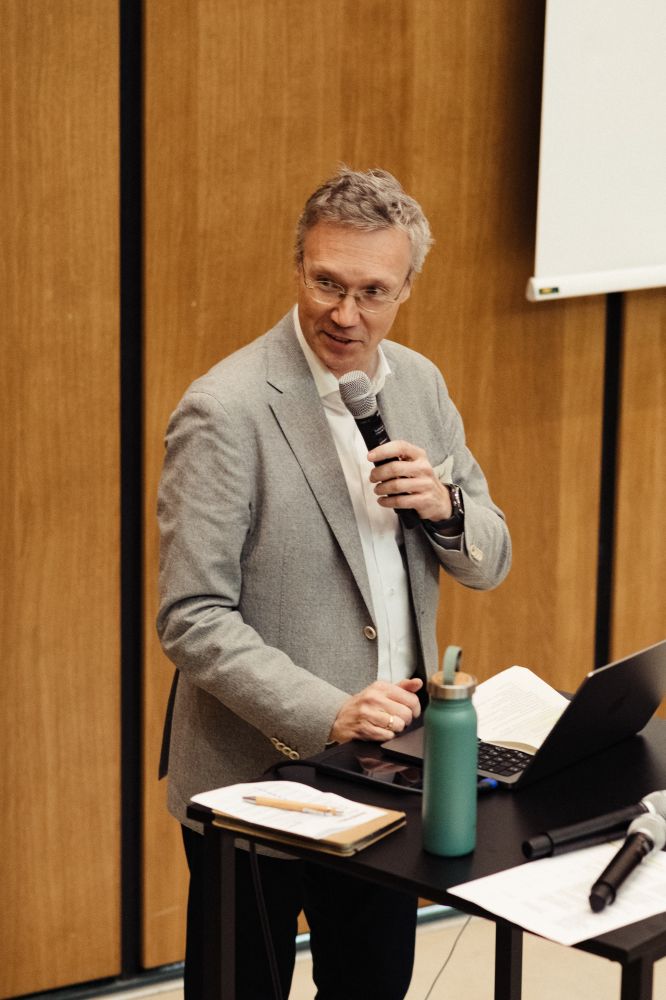
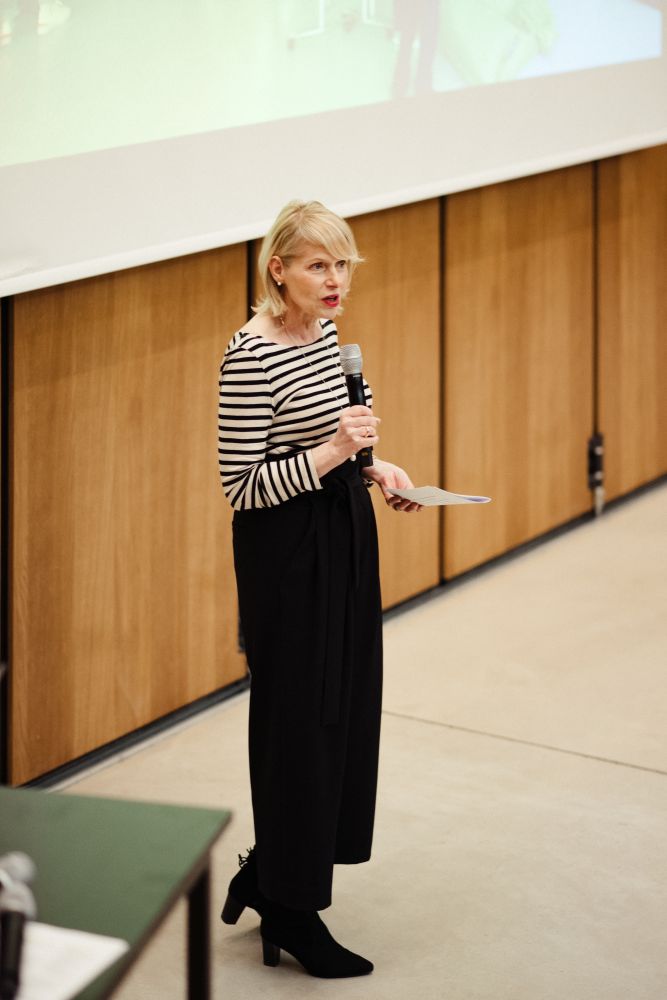
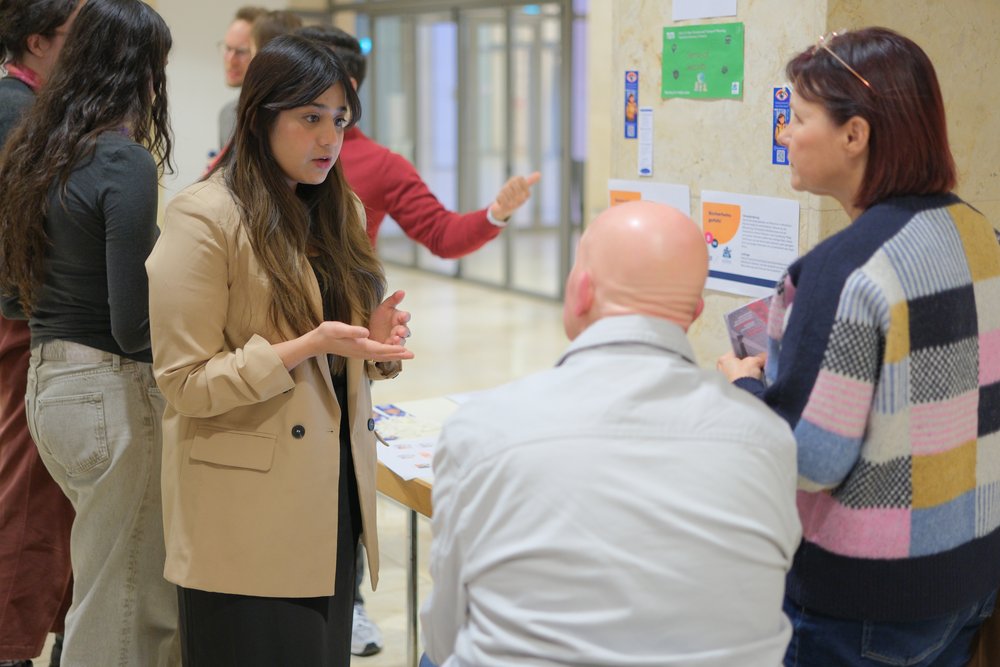
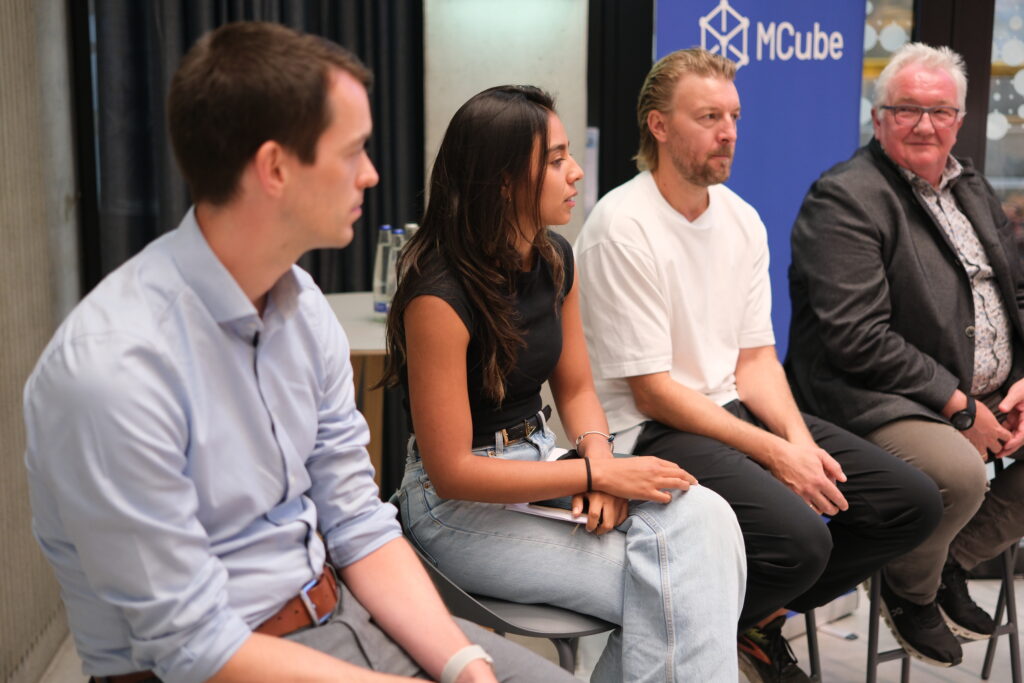
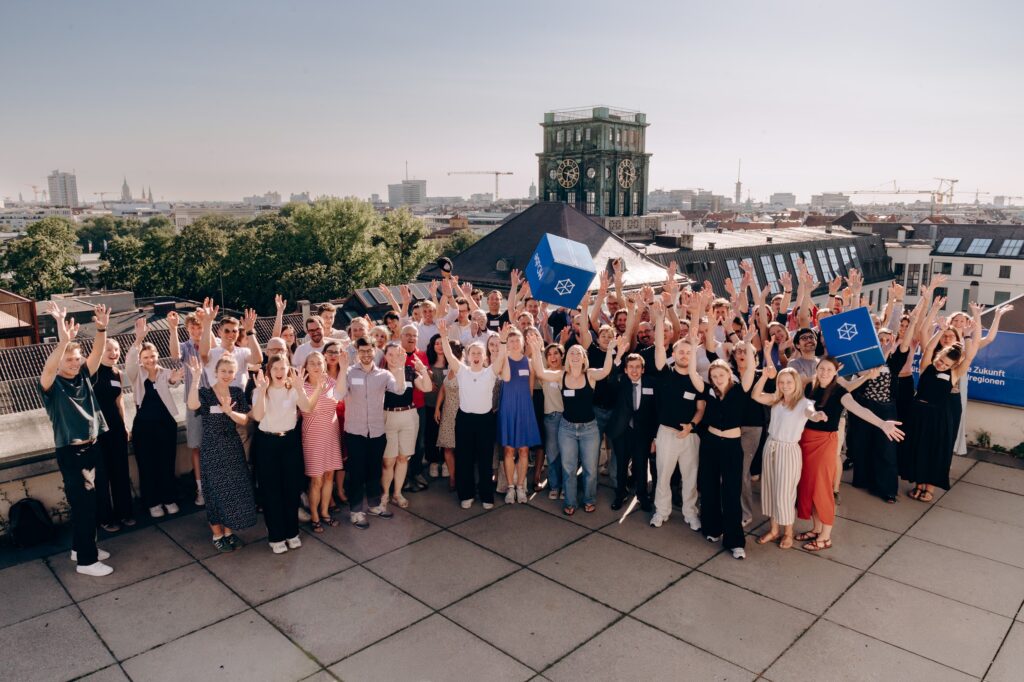
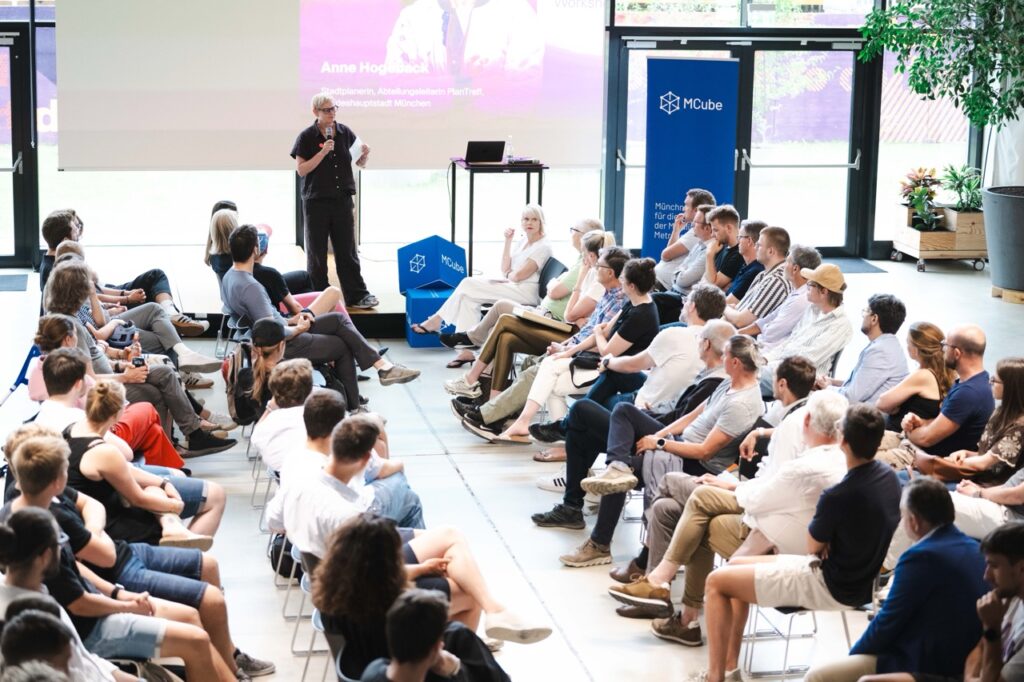
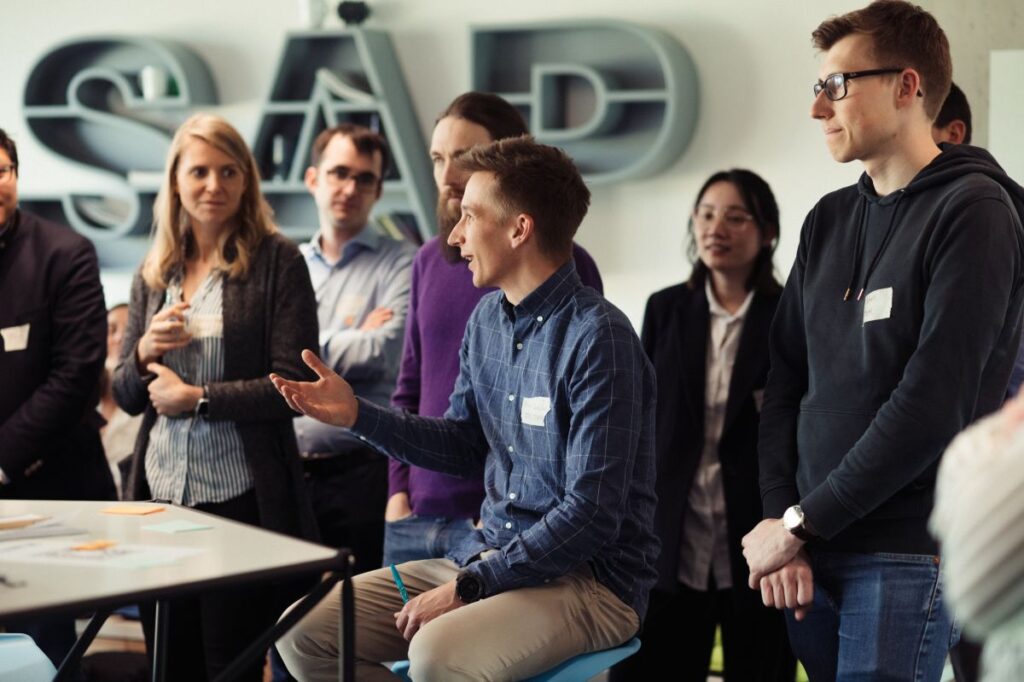
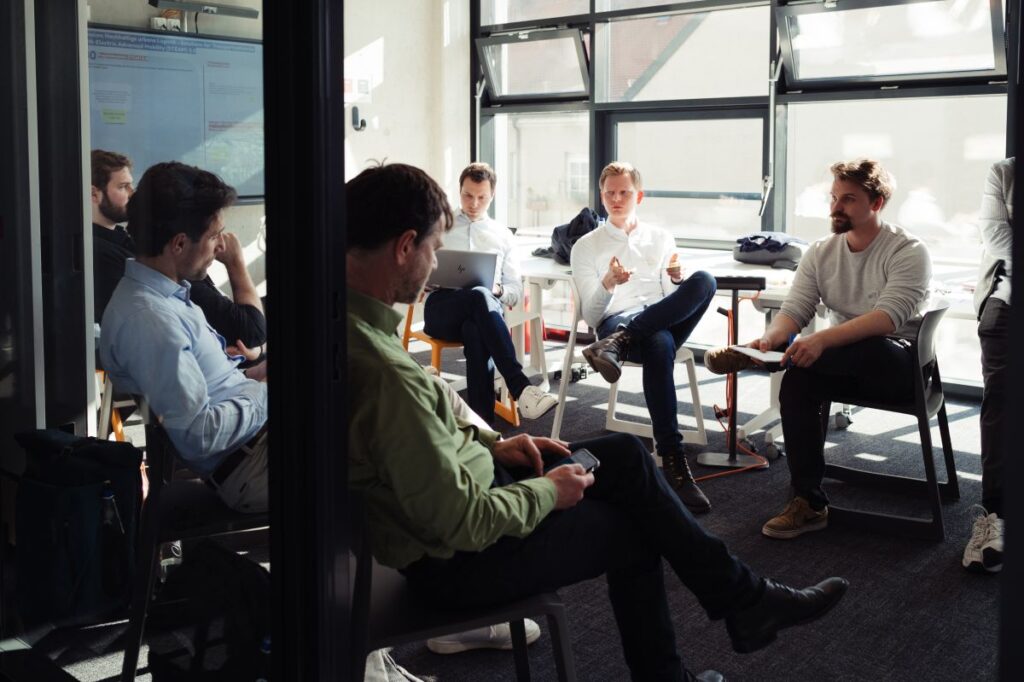
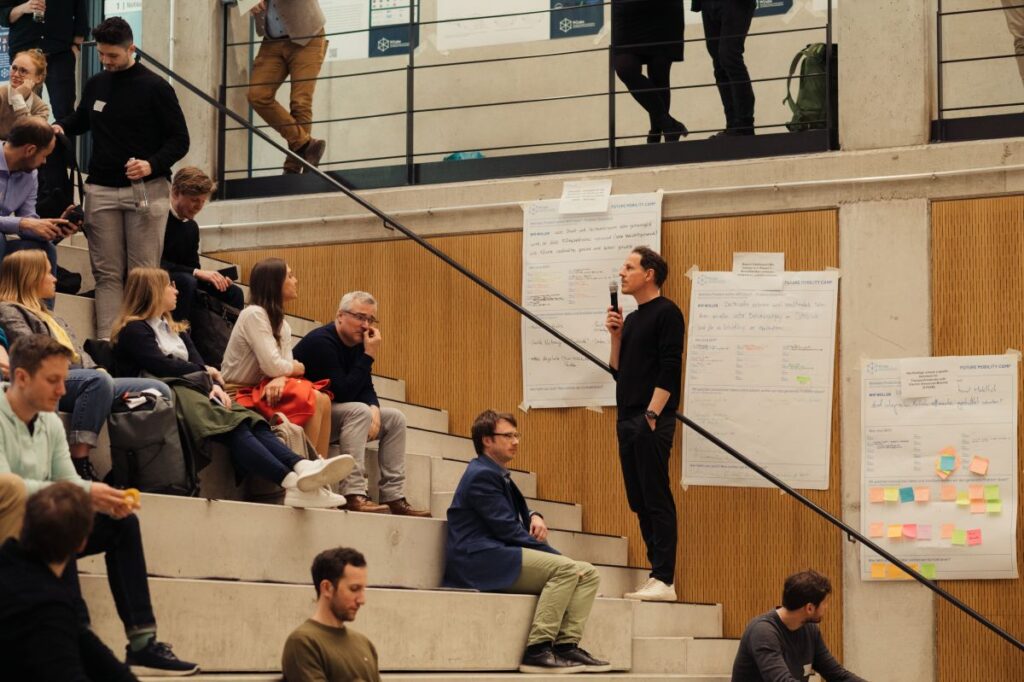
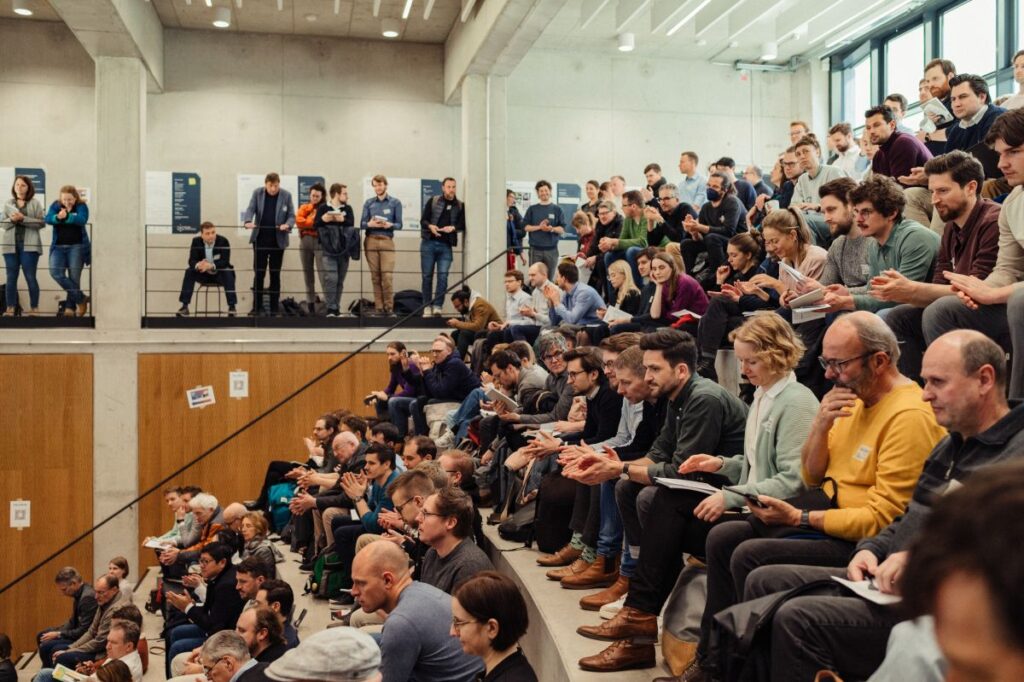
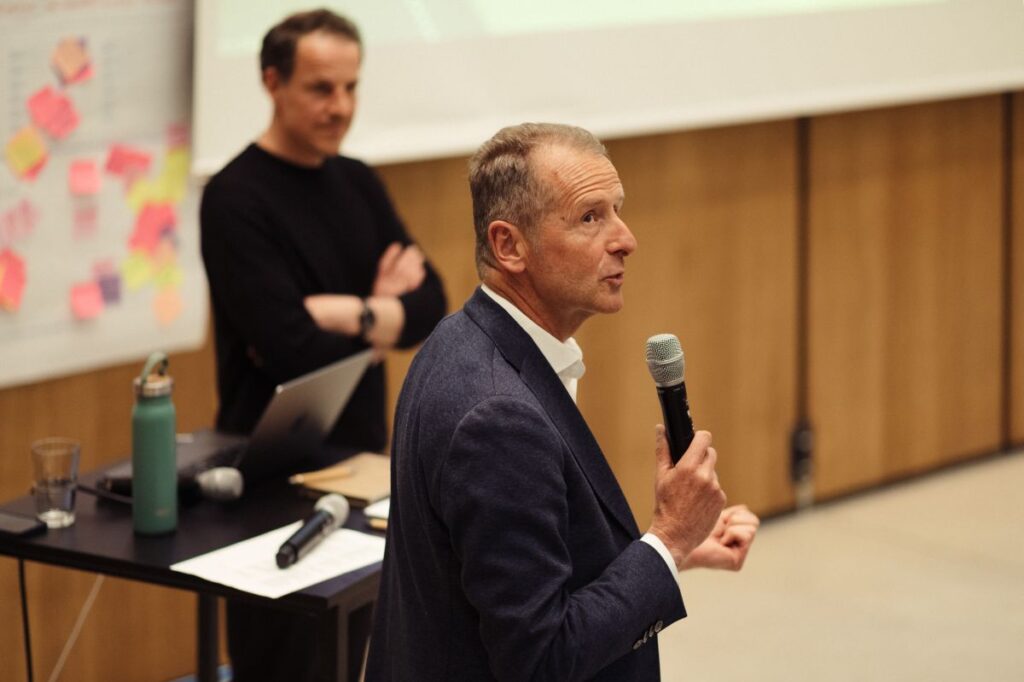
At the MCube Future Mobility Camp on April 4, 2023, over 200 existing and interested new Mcube cluster partners came together at the Munich Urban Colab - civil society, industry, science, start-ups and administration - to shape the next projects and consortia in a design sprint based on the ongoing innovation projects of the first BMBF funding phase on the future of mobility.
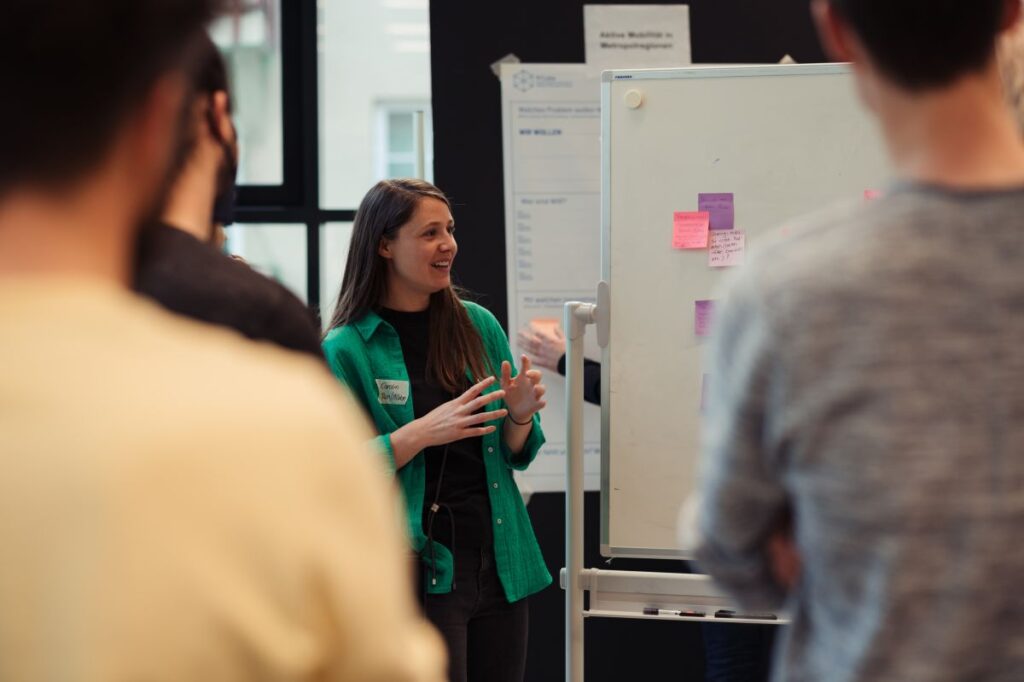
After the virtual kick-off of the camp by Minister Bettina Stark-Watzinger in the auditorium, the experts spread out into different rooms in the building and generated over 20 potential new project ideas in a design sprint.
With the given questions What problem do WE want to solve? and What innovative ideas and approaches do we want to use to solve this problem? the teams have dealt with the selected project area and pre-structured it.
The complexity of the possible mobility innovations for the second funding period of the #Clusters4Future MCube phase quickly became clear! From electrified and autonomous public transport services, to a real innovation leap for active mobility, from the need to think mobility and energy transition together for real climate protection, to a comprehensive increase in the quality of stay and mobility in our regions, thoughts and impulses were exchanged. A well-deserved get-together for networking rounded off the successful day in the evening.
And now? Together with our Cluster Advisory Board and Cluster partners, we will form the individual project consortia for the second funding period over the next few months. With monthly webinars, we will support the project teams in their development process in terms of content and organization. With the goal: to submit potential project teams with specific objectives for the second funding phase at the MCube Pitch Day at the end of September or October.

In 2025, representatives from various municipalities regularly met as part of a Community of Practice to exchange ideas on meaningful practices with urban data for sustainable mobility.
How can questions of equitable mobility be jointly researched and shaped? The seminar „Planning for Mobility Justice“ at the TU Munich highlights different perspectives on mobility (in)justice.
Develop the next mobility innovations for metropolitan regions. Together. Possible. To make it happen.
A recent study from the ReMIX environment investigates, through urban experiments in Munich, how specific mobility futures are made effective by three central performative mechanisms.
How can mobility innovations be designed responsibly — and what political frameworks are needed for this?
At re:publica 2026 in Berlin, MCube was represented at Europe's largest digital and society conference – with all 21 cluster and campus initiatives of the BMFTR.
5,000 guests, many insights: TUM's Sustainability Day made sustainable innovation tangible.
MCube Consulting is introducing SmartEvent, a digital tool that makes event registration in Munich easier and more efficient through the use of geodata.
The new study shows: Every euro invested in public transport in the MVV generates almost four times the economic value added.
Electric, autonomous, networked: The logistics industry is facing a major transformation. The MCube Speaker Series at the Deutsches Museum discussed how this future can become reality.
No results available
What is MOSAIQ?
Imagine something: There is more space for people. The streets have more trees and plants. Everyone can get around better. That's how your Schwabing-West district could be in the future. How would you like your district to be? We want to talk to you about it!
The project is called MOSAIQ. MOSAIQ is a research∙project. MOSAIQ means: Mobility and urban climate in the future city∙part. The Technical University of Munich is leading the project.
What is MOSAIQ about?
MOSAIQ wants to make the streets in the city∙part more beautiful. People should feel comfortable there. There should be more space. For meetings and plants, for example. You can help decide what is tried out in the Stadt∙teil. The ideas come from you. Some ideas will be tried out on the streets for a certain period of time.
The aim of MOSAIQ is to make urban districts good places to live.
At the same time, the climate in the city should improve. And people should be able to move around the city easily.
What is happening in the district?