4th Newsletter Wiesn Shuttle (Aug. 23)

Newsletter from August 2023

Wiesn Shuttle: autonomous driving in complex situations

Autonomous driving will become a reality in the near future and play a key role in the mobility of tomorrow. Our project, the Wies'n Shuttle, aims to give Munich residents an insight into how autonomous vehicles can contribute to safe, efficient and fair mobility. 

Our goal is to develop an autonomous shuttle. To this end, we have equipped a vehicle with all the sensors and computers required for autonomous driving. This research vehicle, also known as EDGAR (Excellent Driving GARching) is now the basis for the development of software that allows the vehicle to drive autonomously.

In order to overcome this challenge, we have implemented algorithms for object recognition, trajectory planning and vehicle stabilization in recent months. Sensor data was recorded during initial test drives with EDGAR, which we can now use to test the algorithms and improve them step by step so that they act correctly in all situations.

In addition to the real test drives, we have set up a simulation environment. This virtual world enables us to test all adjustments in the simulation first before they are transferred to EDGAR. This means that safety can be guaranteed at all times during development. 

This year, we will already be recording data with EDGAR during the Oktoberfest in order to adapt the algorithms to the challenging situations with countless pedestrians. During the Spring Festival 2023, we will carry out the first test drives with our software in the Theresienwiese area and gain valuable experience.

At Oktoberfest 2024, we want to offer citizens the opportunity to experience the mobility of tomorrow up close. With our shuttle, we will offer test drives between Munich Central Station and Theresienwiese to demonstrate that safe autonomous driving is already possible today.

To the project page

 

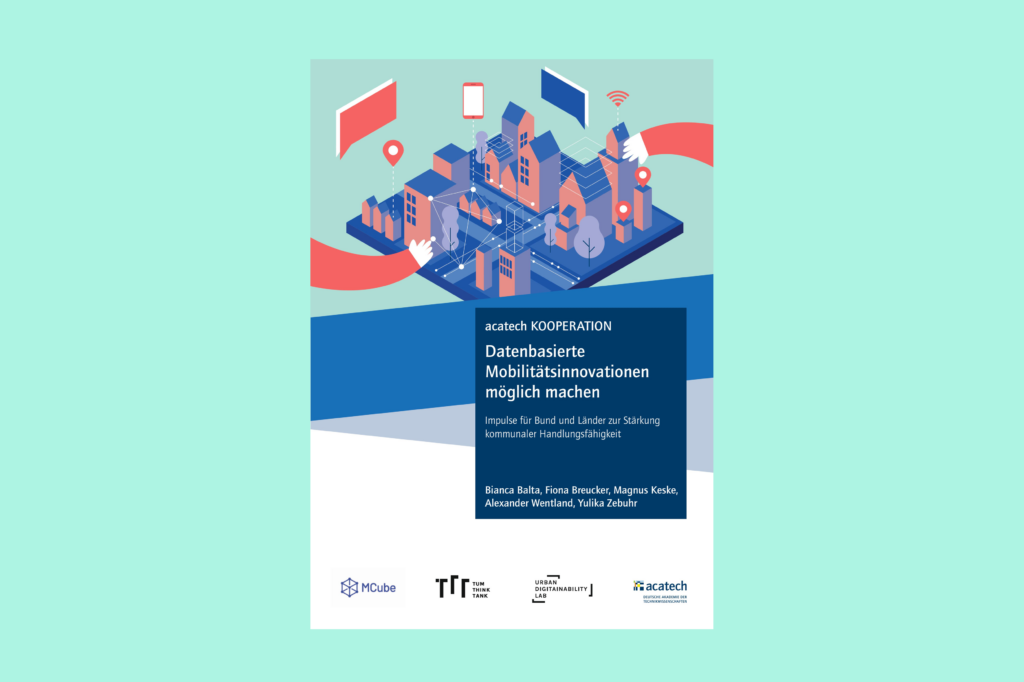
The lessons learned from the first MCube funding phase show which factors really drive projects forward - and where typical barriers arise.

Creating transparency, proving impact, sharpening strategies - the new indicator guide supports precisely this.

For the first time in this format, students made their way to three European cities. They went to Stockholm, Tallinn/Helsinki and Barcelona.

This time, mobility in the cities of Ljubljana, Genoa and Utrecht was examined.

How can mobility data and simulations make cities more liveable - and change visible and tangible?

What do Brussels, Lisbon, Milan and Paris have in common?

Where to put cars, bicycles and e-scooters - and how do we organize parking space fairly, efficiently and sustainably?

The Mobi-Score - The hidden costs of mobility at a glance

Resilient change towards sustainable mobility - lessons for a transformative urban mobility policy

Experimenting for the mobility transition - impetus for municipalities to dealing with real-world laboratories

Easy language

What is MOSAIQ?
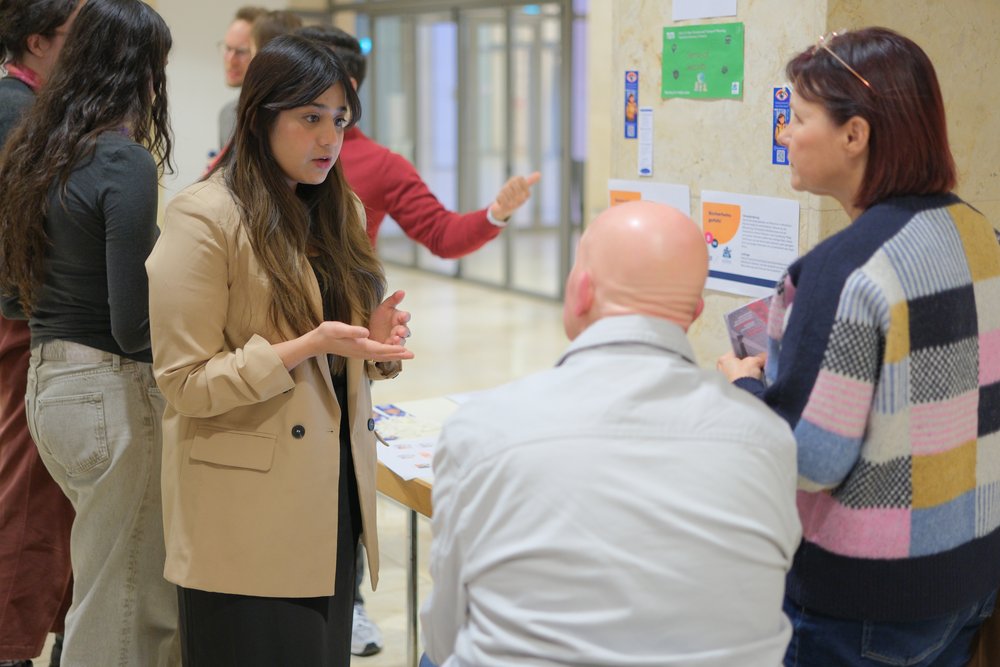
Imagine something: There is more space for people. The streets have more trees and plants. Everyone can get around better. That's how your Schwabing-West district could be in the future. How would you like your district to be? We want to talk to you about it!

The project is called MOSAIQ. MOSAIQ is a research∙project. MOSAIQ means: Mobility and urban climate in the future city∙part. The Technical University of Munich is leading the project.

What is MOSAIQ about?
MOSAIQ wants to make the streets in the city∙part more beautiful. People should feel comfortable there. There should be more space. For meetings and plants, for example. You can help decide what is tried out in the Stadt∙teil. The ideas come from you. Some ideas will be tried out on the streets for a certain period of time.
The aim of MOSAIQ is to make urban districts good places to live.
At the same time, the climate in the city should improve. And people should be able to move around the city easily. 

What is happening in the district?

  • In the year 2025:
    The people in the district can participate. They can express their ideas. There are discussions, surveys and meetings. Researchers are also starting their work.
  • In the year 2026:
    Some ideas are tried out.
    They are moved around the streets for a certain period of time.
  • In the year 2027:
    The results are evaluated.
    Consideration is given to how things can continue∙.