Participation opportunities for residents and stakeholders in Moosach and Schwabing-West
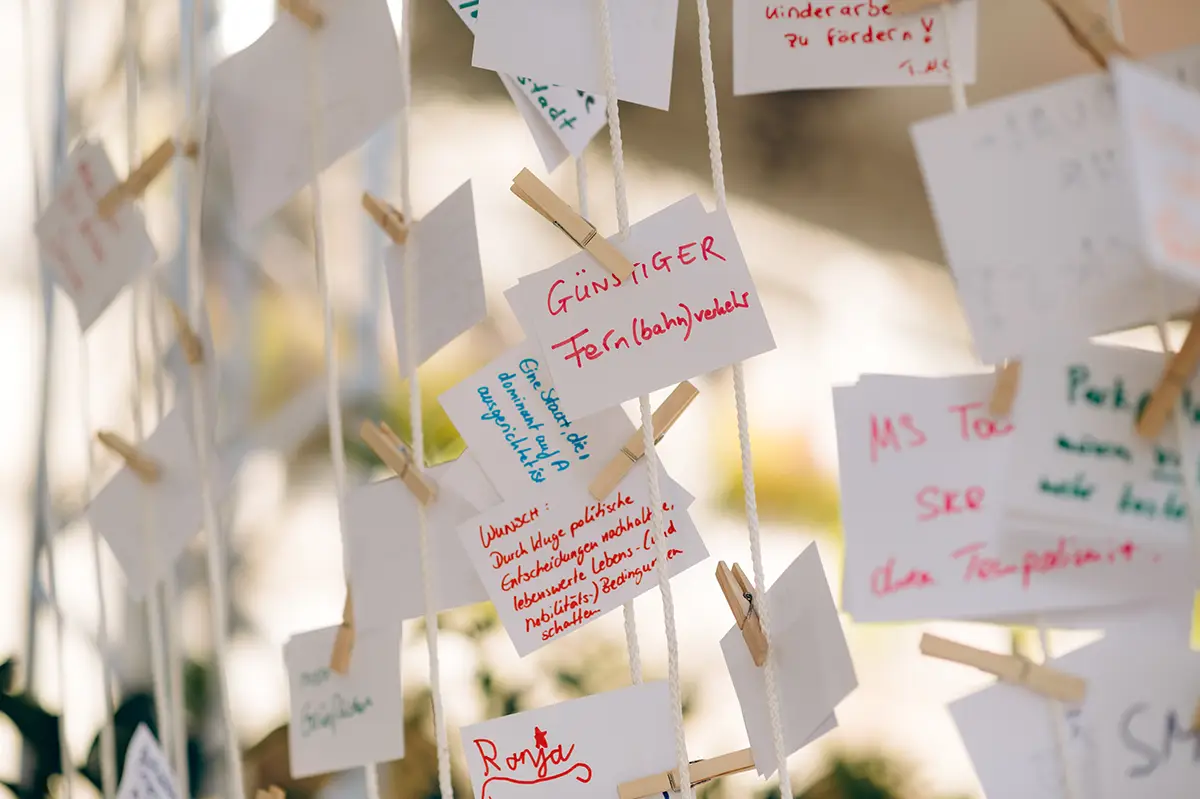
MCube MOSAIQ thrives on the participation of everyone in the neighborhood. You can get involved in various ways through different formats – every contribution is important. Together, we can develop solutions that meet the diverse needs of residents and local stakeholders as much as possible.
Do you live in the project neighborhoods in Schwabing-West or Moosach and want to participate in MOSAIQ?
Then you've come to the right place – here you'll find our participation offers for you!
Do you think Project MOSAIQ is great and don't live in Schwabing-West and Moosach?
On this page you will soon find more ideas and instructions on how you, as an individual, an organized group, a business owner, or property owners, can do something for the climate, community, and sustainable mobility.
Events
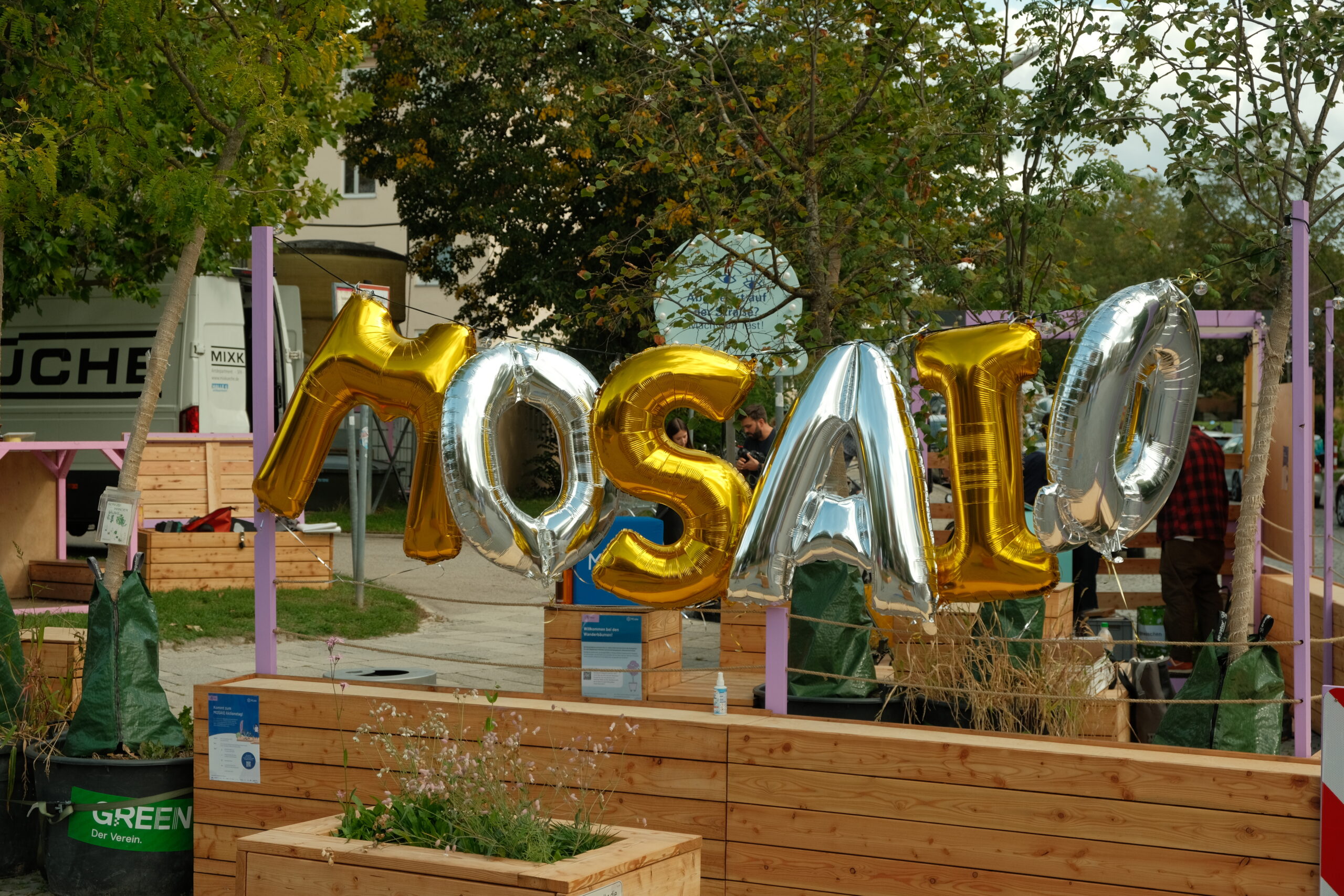
Gemeinsam knobeln, lachen und Neues entdecken: Beim Quiznachmittag am Dienstag, den 20. Oktober 2026, könnt Ihr an der neu gestalteten Nanga-Parbat-Kreuzung (Nanga-Parbat-Straße / Karlingerstraße / Hugo-Troendle-Straße) von 16:30-18:00 Uhr Euer Wissen testen und in lockerer Atmosphäre miteinander ins Gespräch kommen. Die Fragen greifen Themen aus dem Quartier sowie rund um nachhaltige Mobilität und Stadtgrün auf. Kommt vorbei!
Bei schlechtem Wetter findet der Quiznachmittag alternativ am Montag, den 26. Oktober, von 16:30-18:00 Uhr an der Nanga-Parbat-Kreuzung statt.
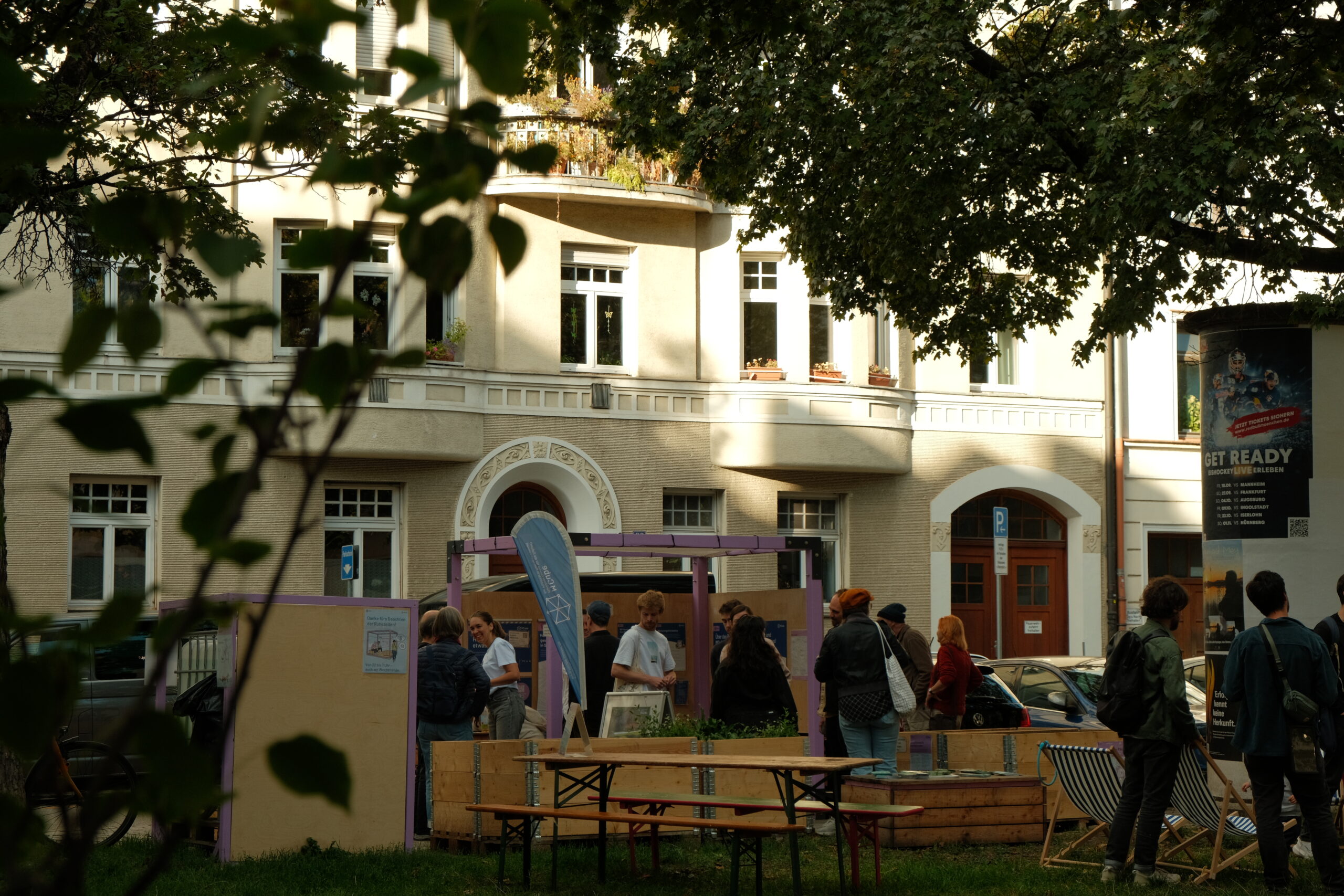
Gemeinsam knobeln, lachen und Neues entdecken: Beim Quiznachmittag am Dienstag, den 27. Oktober 2026, könnt Ihr am neu gestalteten Zittelplatz (Ecke Fallmerayerstraße / Zittelstraße) von 16:30-18:00 Uhr Euer Wissen testen und in lockerer Atmosphäre miteinander ins Gespräch kommen. Die Fragen greifen Themen aus dem Quartier sowie rund um nachhaltige Mobilität und Stadtgrün auf. Kommt vorbei!
Bei schlechtem Wetter findet der Quiznachmittag alternativ am Donnerstag, den 29. Oktober, von 16:30-18:00 Uhr am Zittelplatz statt.
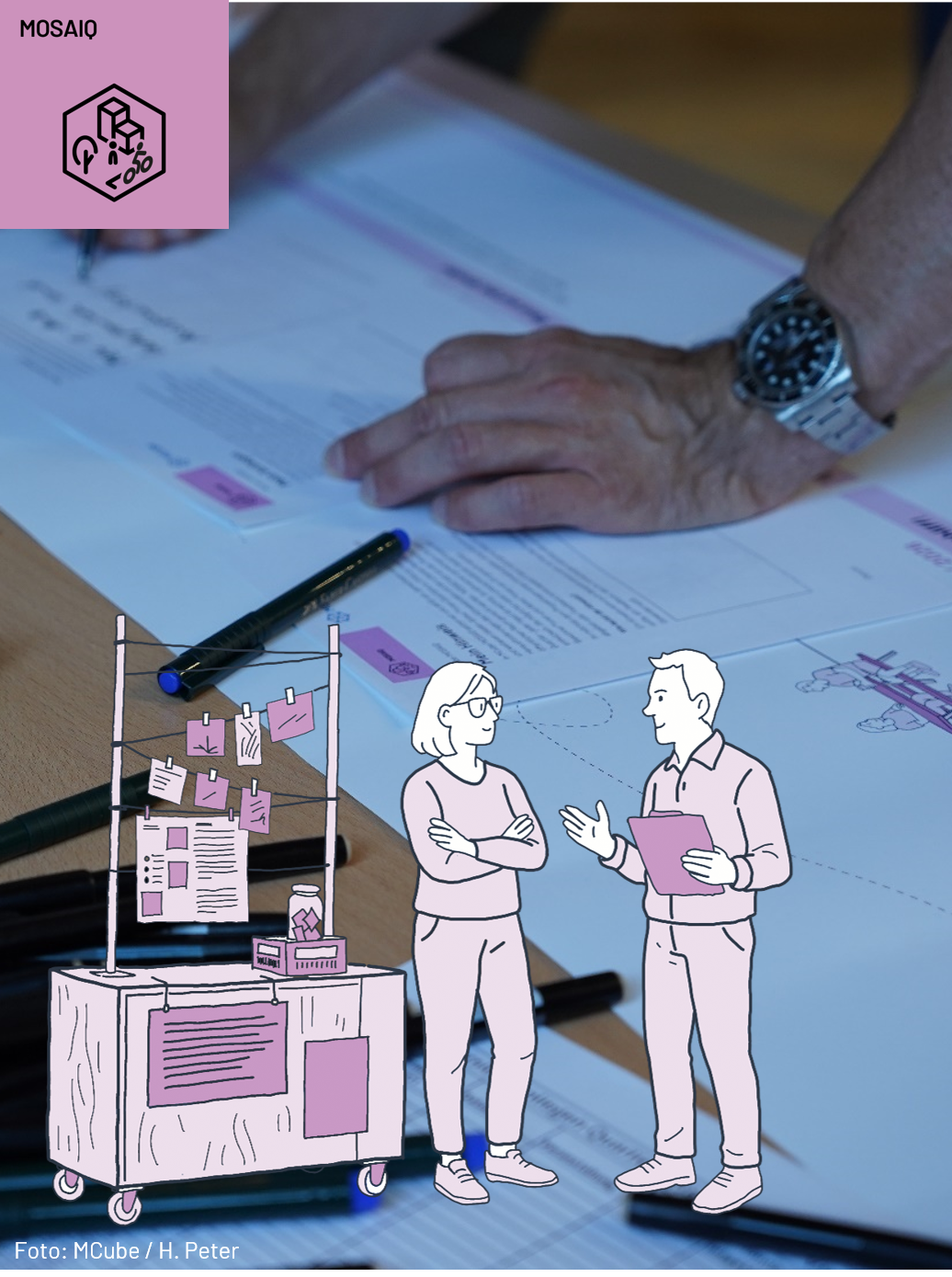
Do you want to know what's happening in Project MOSAIQ? Do you have questions or comments about the planned time-limited measures?
Come by and chat with the project team – regularly on-site in your neighborhood.
These are the new dates where you can find us in Moosach:
More dates to follow.
We look forward to seeing you!
There are no results matching your search
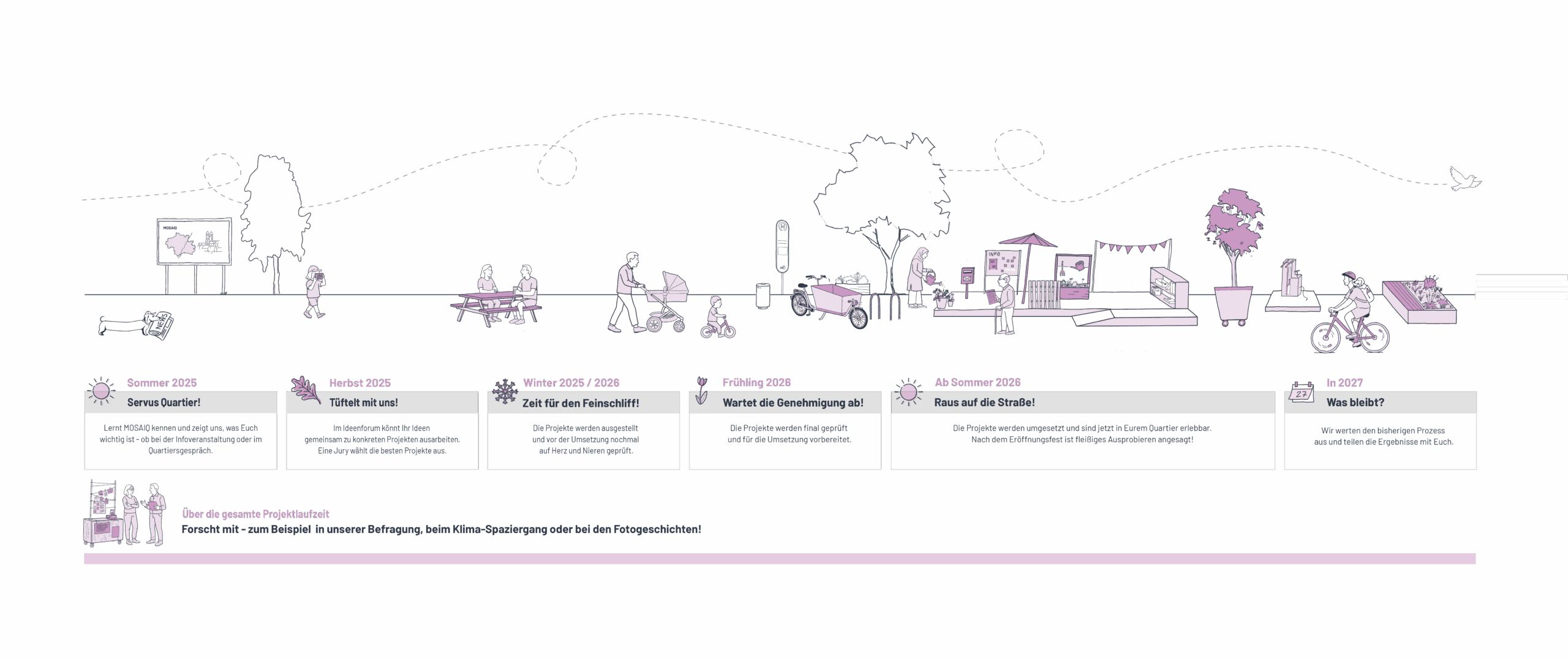
The MCube MOSAIQ innovation project consists of various phases.
In this phase, you can get to know the MCube MOSAIQ innovation project. What is it about? What do we want to achieve (together)? And, of course, we want to get to know you and your neighborhood even better. Let us know what is important to you - whether at the information event or on site in a neighborhood meeting. Our team will be out and about a lot to talk to you.
The Ideas Forum is about jointly developing ideas for tangible, temporary projects for public (street) space. Individual projects will be implemented over a period of several months to a year from summer 2026. The ideas submitted can range from small (e.g. a seating area or raised bed) to large (design of a neighborhood square or temporary redesign of a street). Several small and medium-sized projects as well as one large project can be implemented - depending on the type of ideas submitted. The exact rules and conditions of participation were communicated at the start of the ideas forum.
This is how the ideas forum went:
Thank you for your creative ideas and your active participation!
Die Gewinner-Projekte aus dem Ideenforum wurden ausgestellt und vor der zeitlich begrenzten Umsetzung nochmal umfänglich geprüft. Zum Beispiel ging es um die Frage, wie die Orte im Quartier genutzt werden sollen, die basierend auf Euren Ideen und Projektskizzen umgestaltet wurden.
The projects are finally reviewed and prepared for implementation.
Selected projects will now be implemented for several months to a year - depending on the ideas developed - and can be experienced in your neighborhood. A festival will be held to mark the start of the projects. Everyone is cordially invited to visit the new locations and try out different uses. We also want to know: Which of the implemented projects do you particularly like? Where could something be adapted?
This phase is primarily concerned with evaluating the feedback from participation and the research results. Recommendations for the long-term design of the project neighborhoods can be derived from this. Which implemented ideas were successful? Where are other solutions needed? We will share the results with you. The recommendations can also be transferred to other neighborhoods.
Während des gesamten MCube MOSAIQ-Innovationsprojektes erheben wir Daten, um Antworten darauf zu finden, wie urbane Mobilität und öffentlicher Raum im Quartier so gestaltet werden können, dass den wachsenden Herausforderungen in der Stadt begegnet werden kann. Dabei erheben wir auch Daten zu den die umgesetzten Maßnahmen und werten diese aus. Ihr könnt uns dabei bei der Datenerhebung aktiv unterstützen, zum Beispiel indem Ihr an unseren Befragungen teilnehmt, beim Klima-Spaziergang mitmacht oder Euer Mobilitätsverhalten mit uns teilt. Ausführliche Informationen zu den Forschungsfragen und zu den einzelnen Forschungsformaten findet Ihr here.
Participation formats
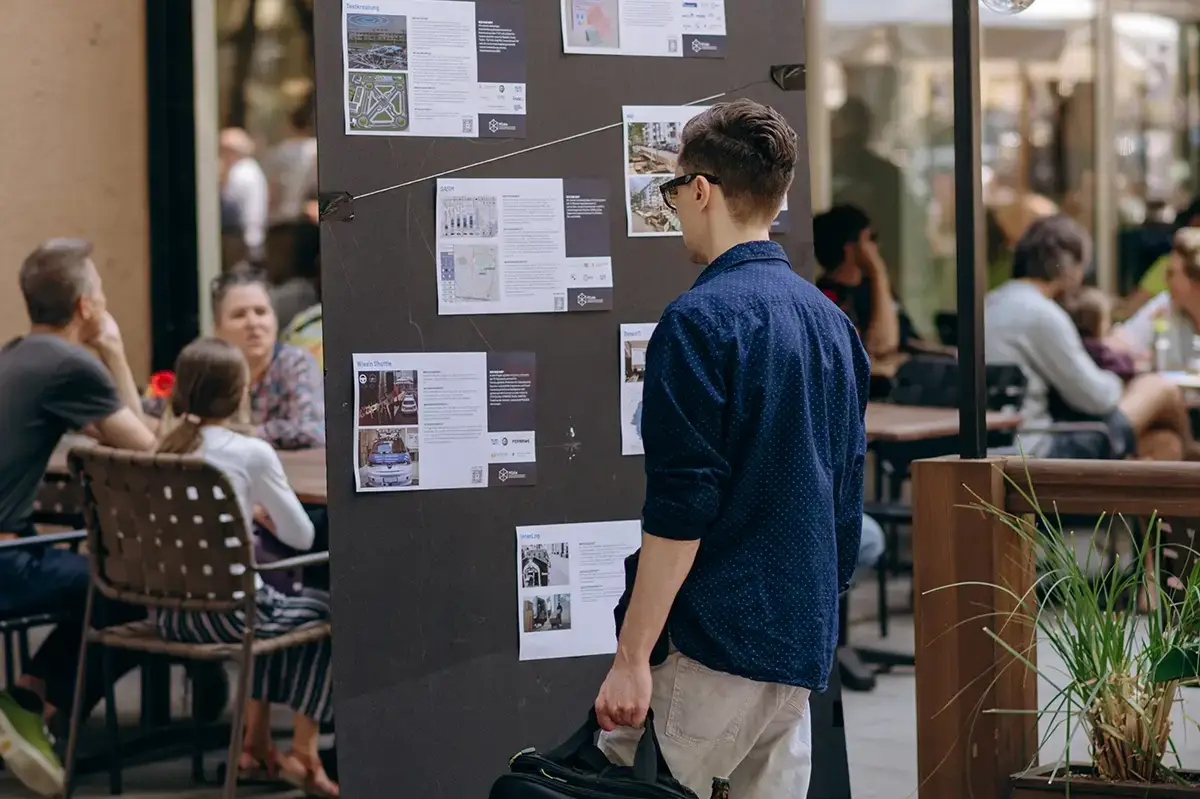
Als Auftakt standen seit September 2025 in beiden Projektquartieren jeweils zwei Dialogpunkte als zentrale Anlaufstellen im öffentlichen Raum. Hier konntet Ihr Euch über Termine, Planungen, Beteiligungsmöglichkeiten etc. informieren, mit dem Projektteam in den Austausch kommen und Rückmeldung geben.
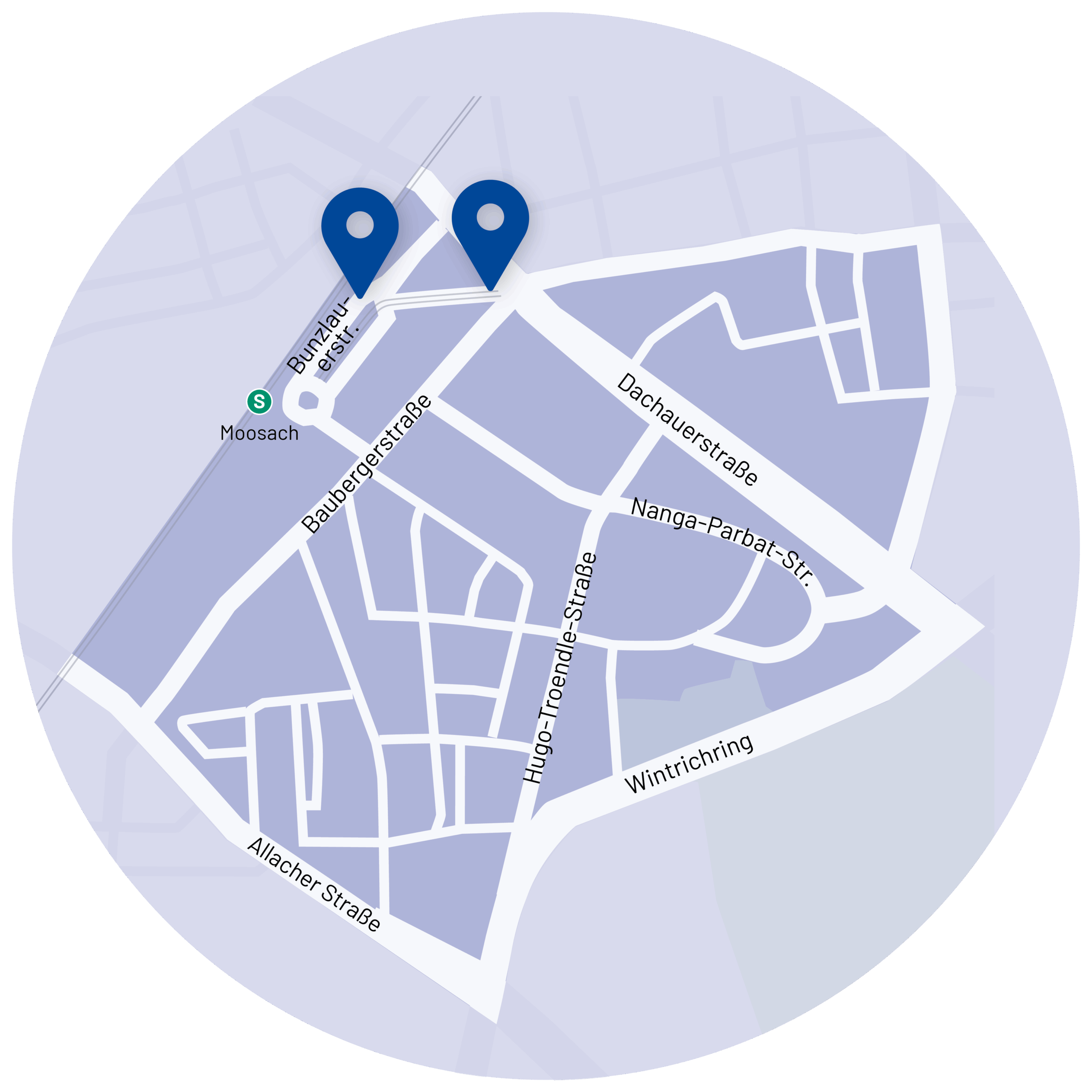
Locations of the dialog points in Moosach:
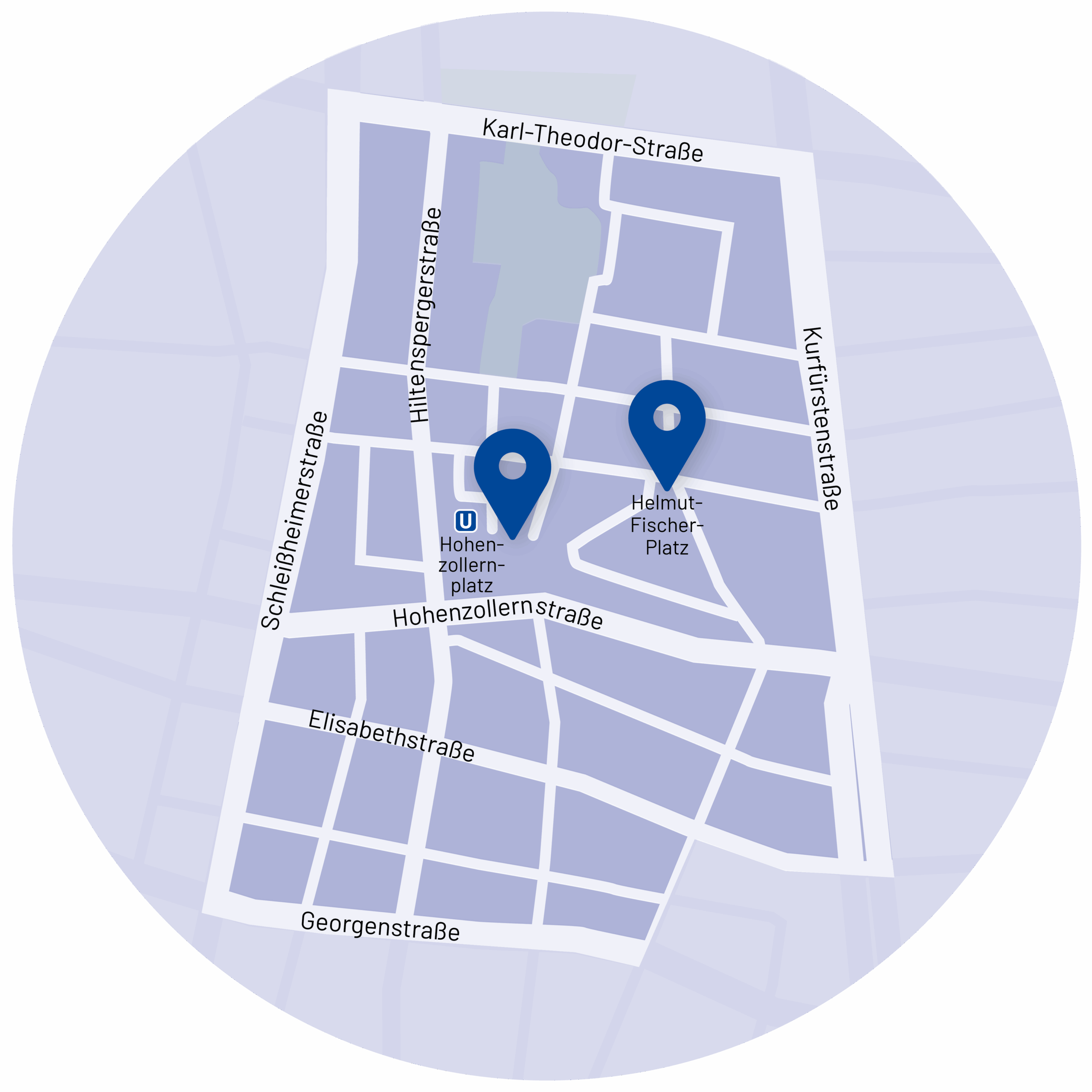
Locations of the dialog points in Schwabing-West:
Do you want to know what's happening in Project MOSAIQ? Do you have questions or comments about the planned time-limited measures?
Come by and chat with the project team – regularly on-site in your neighborhood.
Die aktuellen Termine für die Quartiersgespräche findet Ihr unter hier auf unserer Webseite im Bereich „Events„.
Beim Ideenforum ging es darum, gemeinsam Ideen zu greifbaren, temporären Projekten für den öffentlichen (Straßen)Raum zu entwickeln. Einzelne Projekte werden ab Sommer 2026 in einem Zeitraum von mehreren Monaten bis zu einem Jahr zeitlich begrenzt umgesetzt. Die eingereichten Ideen konnten klein (zum Beispiel eine Sitzgelegenheit oder ein Hochbeet) bis groß (zum Beispiel ein Quartiersplatz oder eine temporäre Umgestaltung eines Straßenzuges) sein. Es konnten einzelne kleinere und mittlere Projekte und ein großes Projekt umgesetzt werden. Die finale Anzahl war abhängig von den eingereichten Ideen. Die genauen Spielregeln und Teilnahmebedingungen wurden zum Start des Ideenforums mitgeteilt.
So lief das Ideas forum from:
Thank you for your creative ideas and your active participation!
Are you wondering how your comments, concerns, suggestions and ideas are taken into account in MCube MOSAIQ? Then take a look at here over!
Research formats
We want to know how you experience your neighborhood - before, during and after the implementation of the temporary projects. That is why we are conducting surveys at all three points in time. For example, we want to know about the climate in the neighborhood, the quality of your stay, how you get around and how you feel about neighborhood cohesion.
All households in the project area will receive a letter in good time with information on how to take part. Anyone aged 18 and over can take part - simply online or at our on-site appointments. We will also be happy to help you fill out the survey there.
With the help of an app, we accompany a small group of participants from the neighborhood as they search for a parking space in their everyday lives - before and during the measures in the neighborhood. We are particularly interested in: How long does it take to find a parking space? How often do people search? And does the search for a parking space change as a result of the new measures? The app helps us to systematically record parking search traffic and answer these questions better - anonymously and in compliance with data protection regulations, of course. Participation is voluntary. All residents in the neighborhood with a car can take part, especially those without their own parking space. Recruitment takes place via our participation formats and communication channels.
In der Simulator-Studie geht es darum herauszufinden, wie man Kreuzungen so gestalten kann, dass Radfahrende sicherer unterwegs sind. Dazu werden Tests in einem Fahrsimulator an der Universität der Bundeswehr München, also in einem virtuellen Straßenraum, durchgeführt. Dabei wird getestet, wie verschiedene Varianten von Kreuzungen das Verhalten von Rad- und Autofahrenden beeinflussen. Neben der tatsächlichen Sicherheit untersuchen wir auch, wie sicher sich die Radfahrenden fühlen und ob sie die Platzverteilung zwischen Autos und Fahrrädern als fair empfinden. Die Ergebnisse sollen helfen, konkrete Empfehlungen für sichere und gerechte Verkehrsplanung zu entwickeln.
During the climate walks, we walk through the neighborhood together and use sensors to collect microclimatic data, for example on air temperature and wind speed. At the same time, we are interested in how you subjectively feel there - whether it is pleasant or rather too hot. This gives us a better picture of how the climate is perceived in different places in the neighborhood.
In the photo stories, children and young people take photos to record what they like about their neighborhood and what bothers them. We then talk together about their impressions, wishes and ideas for their neighborhood. In this way, they themselves become researchers of their surroundings. We also use photo stories during the temporary measures to find out together with the children and young people how they experience the changes - what works well and what they think is still missing.
Studierende der Technischen Universität München (TUM) erheben und analysieren Daten im Quartier, zum Beispiel im Rahmen von Projektwochen, sogenannten “Winter Schools” bzw. „Summer Schools“ – da beschäftigen sie sich über einen kurzen Zeitraum intensiv mit dem Quartier. Aber auch Abschlussarbeiten sind möglich, bei denen Studierende das Quartier über einen längeren Zeitraum begleiten.
Die Studierenden sprechen im Rahmen ihrer Arbeiten mit Menschen im Quartier, beobachten das Umfeld oder werten Daten aus – je nachdem, welche Fragen sie erforschen. Dabei werden sie von uns begleitet und helfen uns dabei, das Quartier besser zu verstehen.
We also use other formats to investigate changes in the neighborhood and beyond. For example, we have noise measurements, a traffic survey and a microclimatic simulation carried out. We also observe how the public spaces are used: Who spends time where and how does this change over the course of the project? In addition, we talk to various stakeholder groups in interviews and group discussions (so-called focus groups) to gain an even better understanding of their experiences and perspectives.
Please also have a look at the general MCube Glossary Here is a selection of terms and topics that might interest you in the context of MOSAIQ.
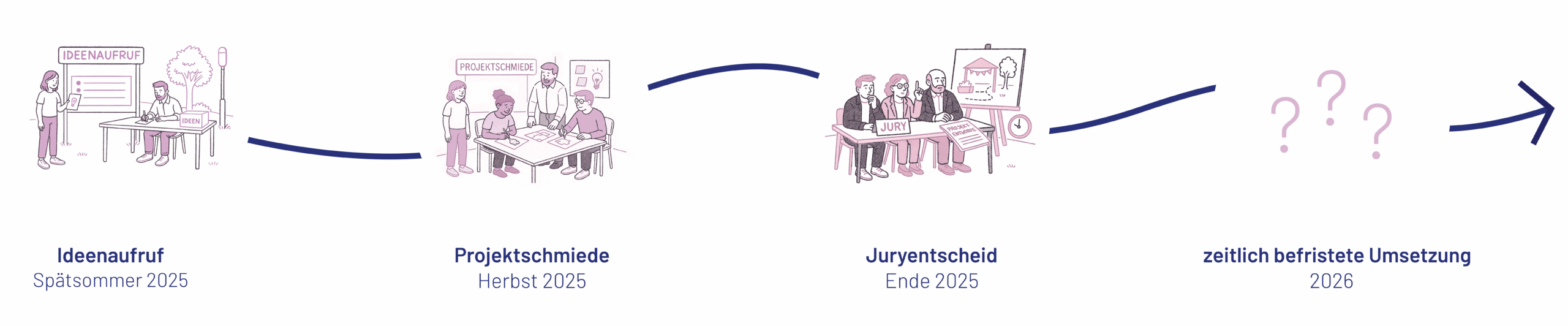
Call for ideas
Everyone who lives, works or is active in the project quarter was invited to submit their ideas for the project area in Moosach and Schwabing-West from mid-September to mid-October 2025 via the MOSAIQ letterbox or digitally. The project team was also on site at the dialog points on a weekly basis. 46 idea profiles were submitted in Moosach. Of these, 34 met the specified requirements. In Schwabing-West, 90 idea profiles were submitted. Of these, 78 met the specified requirements.
All submitted idea profiles for the project quarter in Moosach can be downloaded by clicking on the adjacent image. Whether a profile was classified as invalid, partially valid, or fully valid is under this link tabulated.
All submitted idea profiles for the project district in Schwabing-West can be downloaded by clicking on the adjacent image. Whether a profile has been classified as invalid, partially valid, or fully valid is under this link tabulated.
Project Forge
The project forge took place in Moosach on October 25, 2025 and in Schwabing-West on November 15. The participating citizens selected what they considered to be the best ideas and developed them into project outlines with the support of experts. This resulted in 6 concrete project proposals per neighborhood. These were then submitted to the jury for pre-selection.
The project sketches developed for the project district in Moosach can be downloaded by clicking on the adjacent image.
The project sketches developed for the project district in Schwabing-West can be downloaded by clicking on the image next to it.
Jury decision
On December 4 (Schwabing-West) and December 11, 2025 (Moosach), the jury assessed which project outlines it recommended for further development and time-limited implementation. The jury was made up of members of the district committee, local senior citizens' representatives and experts from the administration in the areas of urban planning, urban climate and mobility.
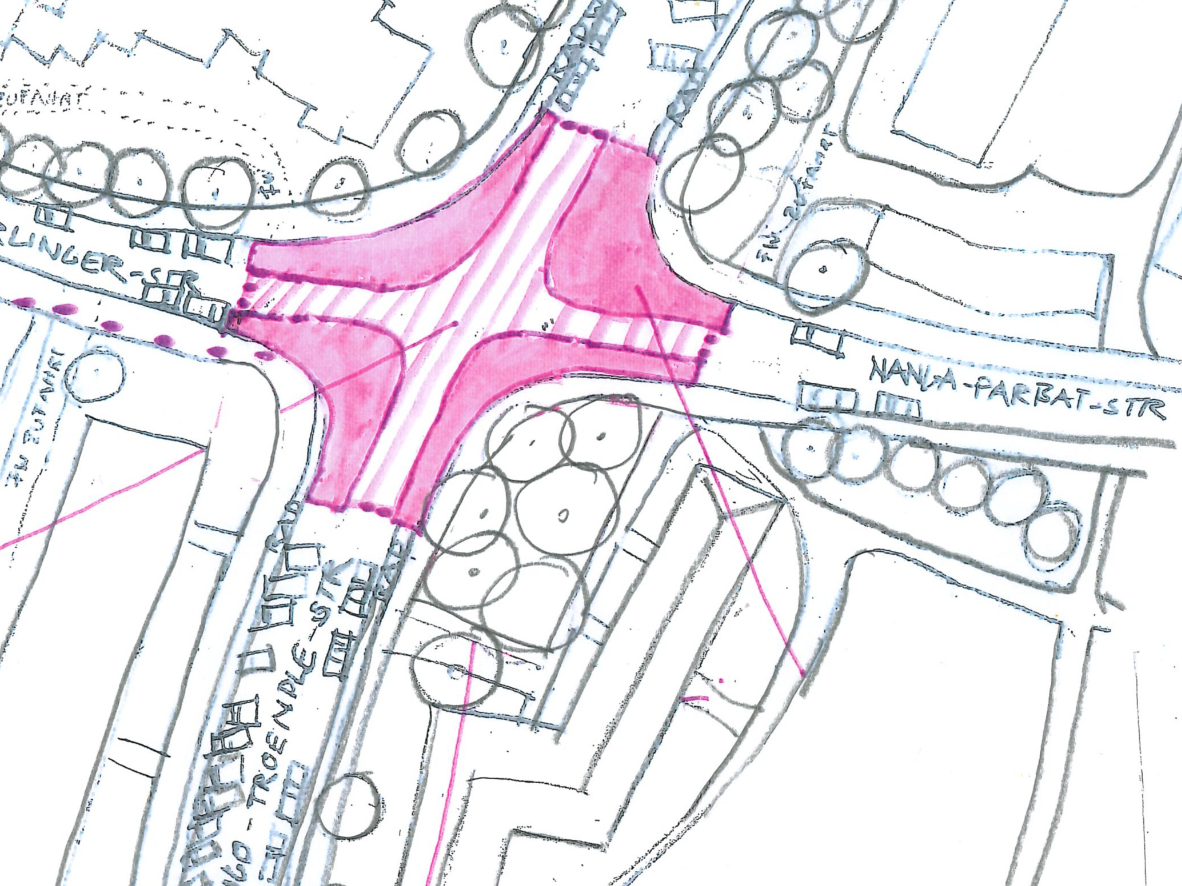
1st project proposal: Meeting place in the neighborhood
Widening the sidewalks with furniture and greenery will create a meeting place for community activities at the intersection and make it safer to cross.
Location: intersection of Nanga-Parbat-Straße / Hugo-Troendle-Straße / Karlingerstraße
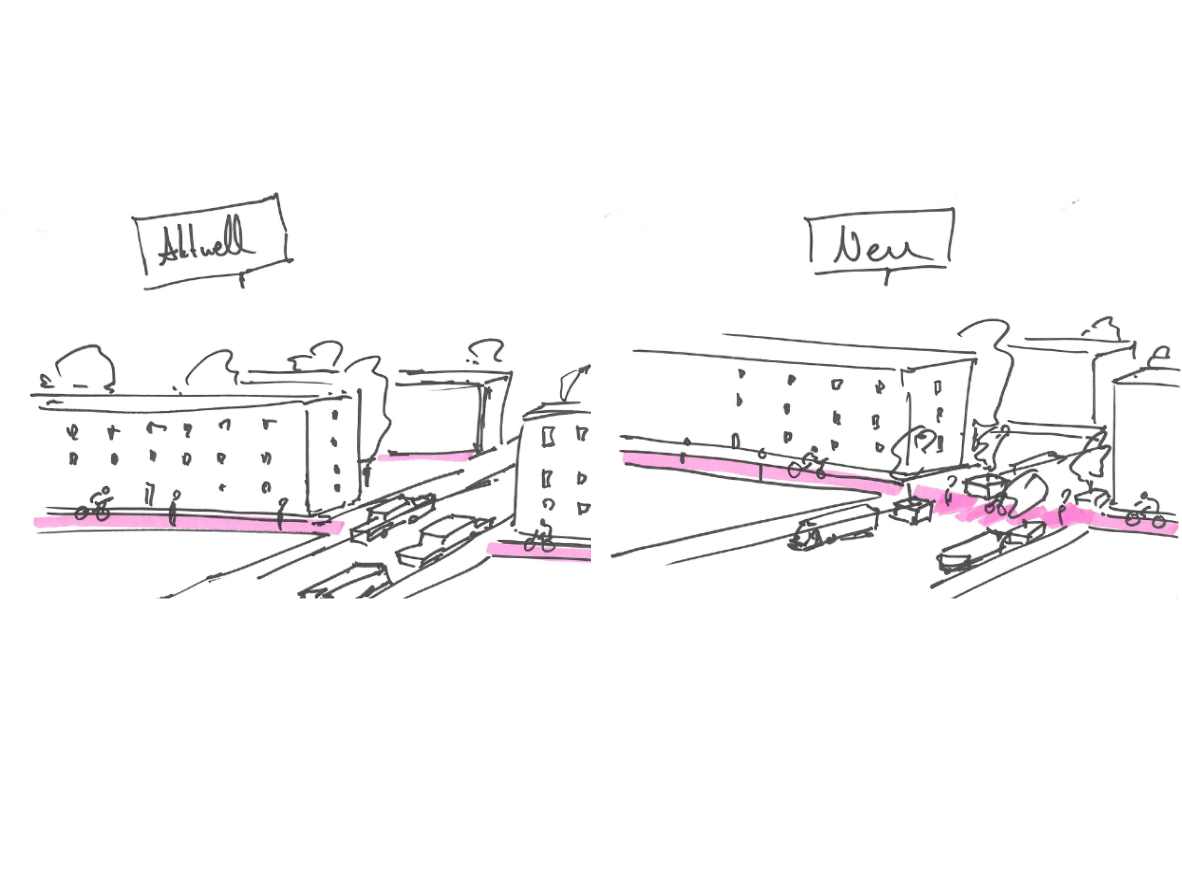
2. Project Proposal: Safe Walking Routes in the Neighborhood
Existing footpaths are linked up and made safer thanks to clear crossing options with the help of parklets.
Location: Footpaths in the housing estate
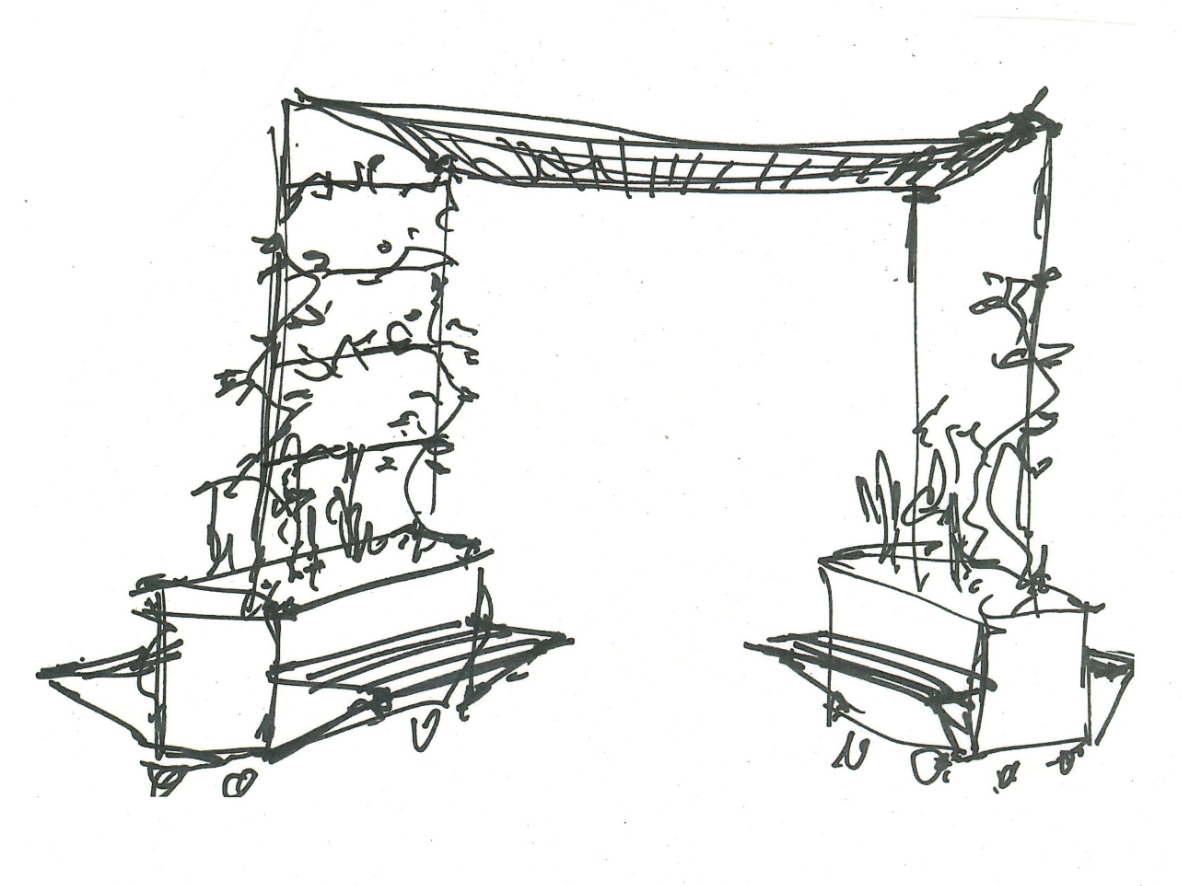
3rd project proposal: Modular green
By installing combinable planting, seating and shading elements, places are created in the neighborhood that make it pleasant to spend time outdoors even in hot weather.
Location: integrated into the other measures
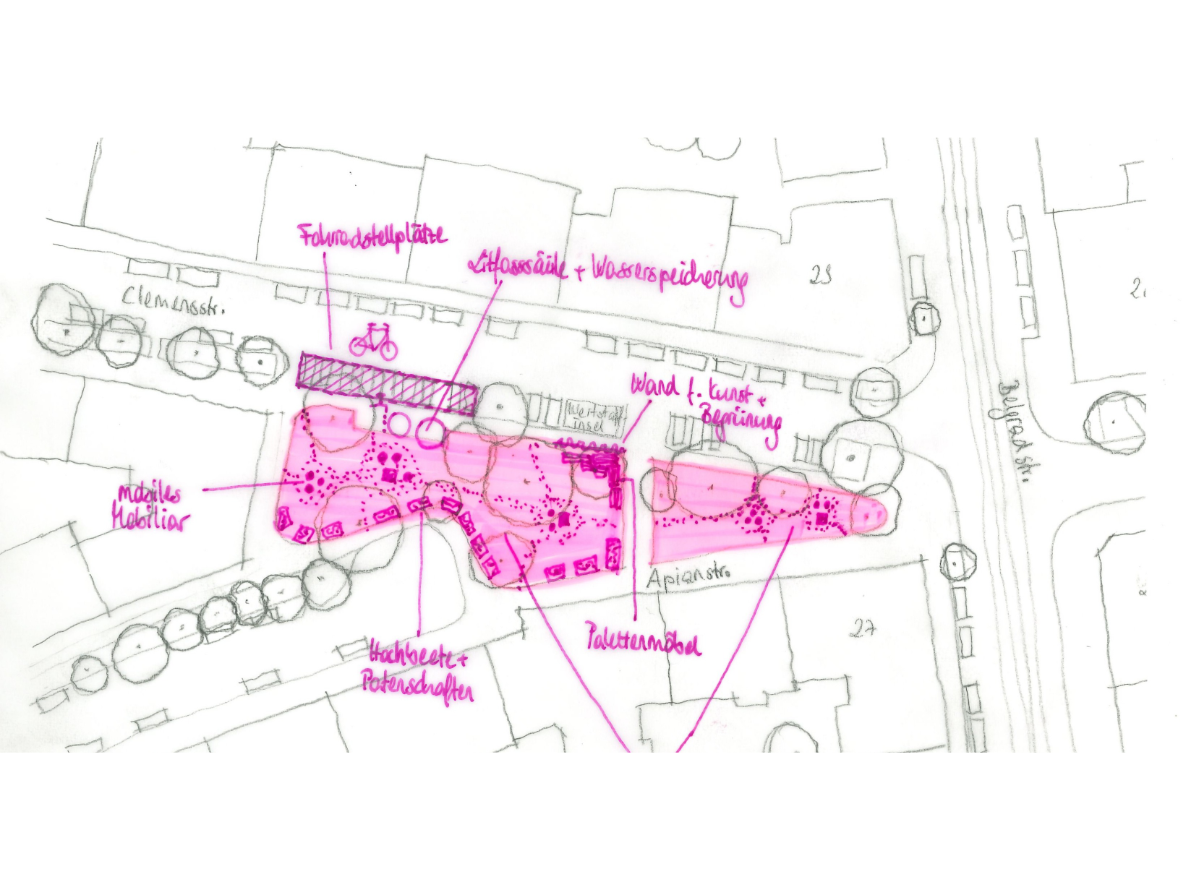
1st project proposal: Meeting oasis at Apianplatz
The area on and around the green space will be transformed into an inclusive meeting oasis with temporary furniture, plant elements and community activities.
Location: Triangular square Apian- / Clemensstraße
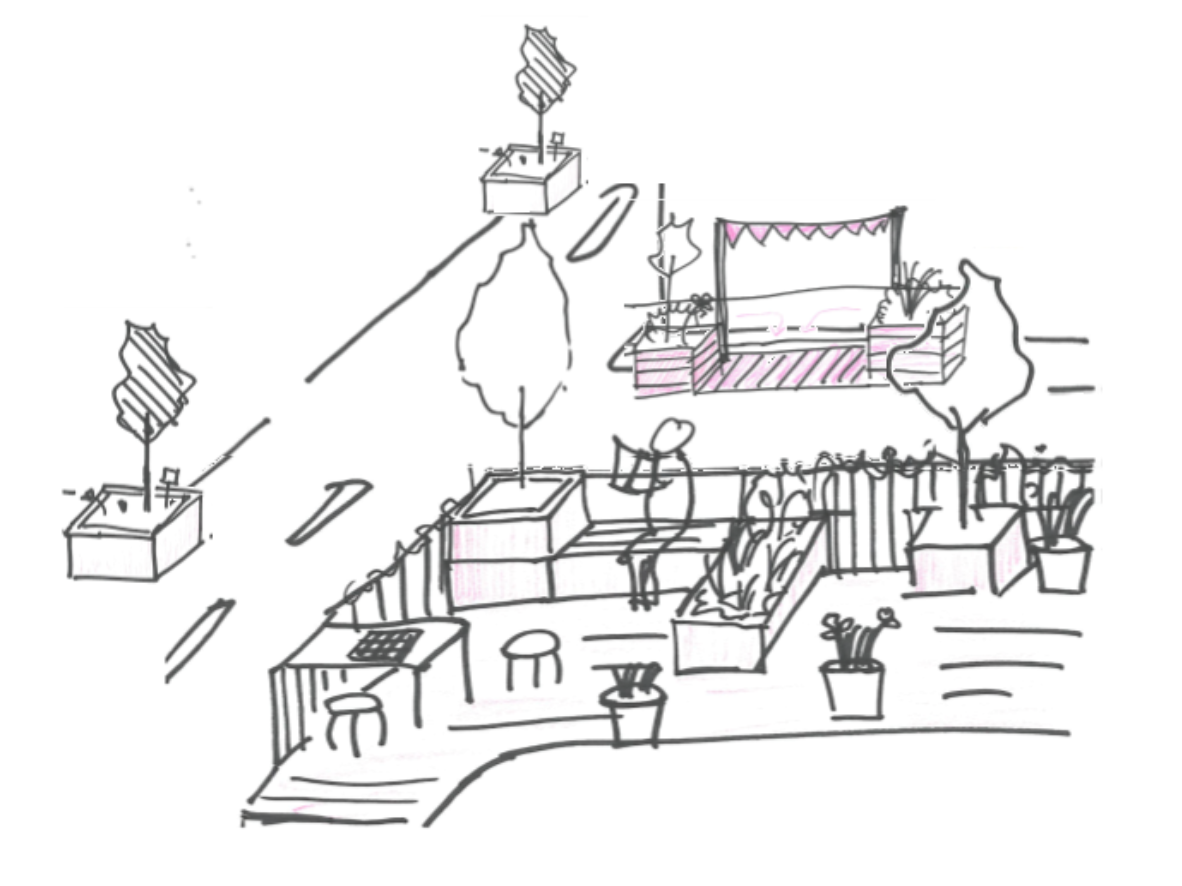
2nd project proposal: Greened and safe Fallmerayerstrasse
Temporary trees, parklets and new crossing points will make Fallmerayerstrasse greener and safer for the neighborhood.
Location: Fallmerayerstrasse between Herzogstrasse and Hohenzollernstrasse
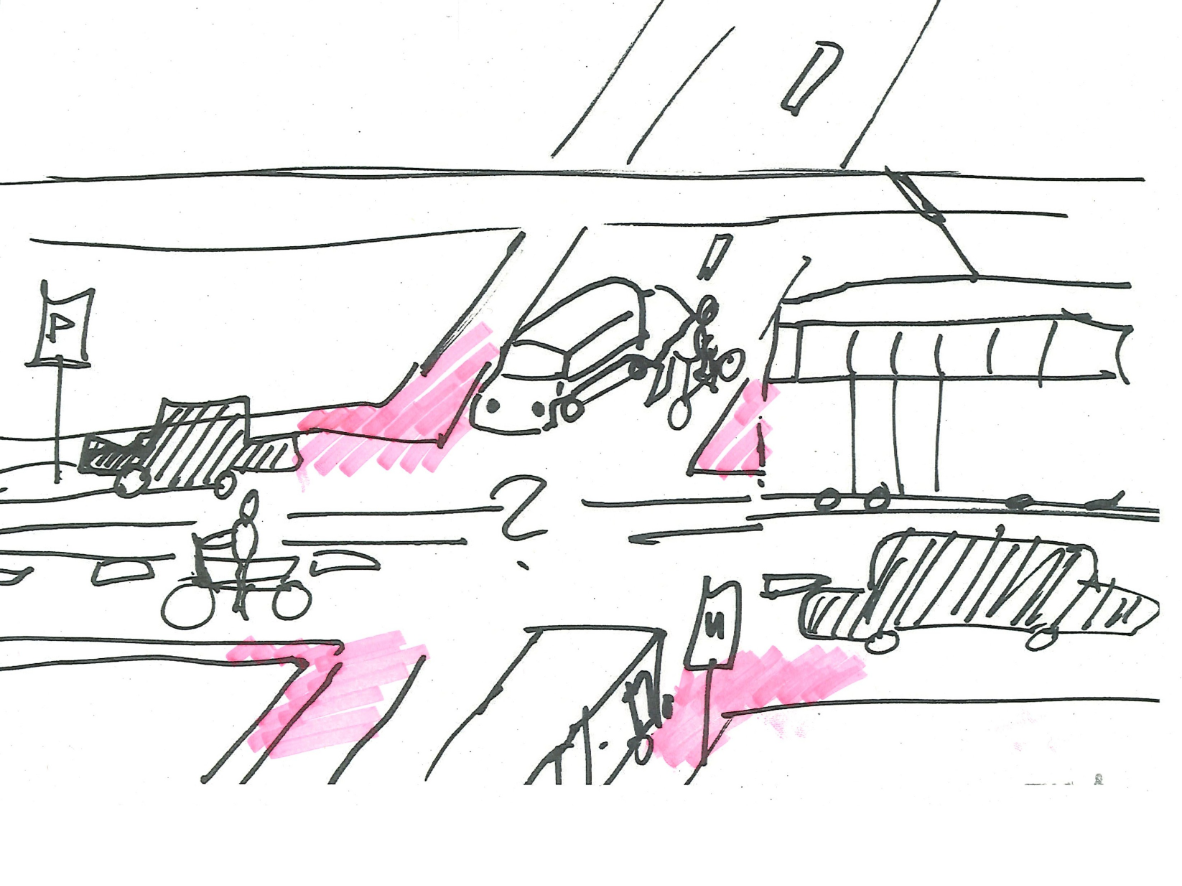
3rd project proposal: Safely across Hohenzollernstraße
Improving visibility for pedestrians and cyclists will make crossing Hohenzollernstraße safer.
Location: intersection Hohenzollern- / Fallmerayer- / Isabellastraße
Temporary implementation
Following the ideas forum, the project outlines recommended by the jury were handed over to the project consortium, where they were elaborated in detail, adapted, and prepared for approval – with the goal of implementing the selected measures in the project district starting in July 2026 for a duration of about one year. The time-limited implementation will be accompanied by information and dialogue formats, (participatory) research formats, and hands-on activities. Current information on ongoing events and offers can be found in the section Events to find.
Please feel free to check out our detailed report on the MOSAIQ Ideas Forum, published in the „Mobility and Urban Climate“ series!
You can find all current issues of the series and further insights into MOSAIQ in the section Results.
Subscribe to our mailing list and stay up to date!
What is MOSAIQ?
Imagine something: There is more space for people. The streets have more trees and plants. Everyone can get around better. That's how your Schwabing-West district could be in the future. How would you like your district to be? We want to talk to you about it!
The project is called MOSAIQ. MOSAIQ is a research∙project. MOSAIQ means: Mobility and urban climate in the future city∙part. The Technical University of Munich is leading the project.
What is MOSAIQ about?
MOSAIQ wants to make the streets in the city∙part more beautiful. People should feel comfortable there. There should be more space. For meetings and plants, for example. You can help decide what is tried out in the Stadt∙teil. The ideas come from you. Some ideas will be tried out on the streets for a certain period of time.
The aim of MOSAIQ is to make urban districts good places to live.
At the same time, the climate in the city should improve. And people should be able to move around the city easily.
What is happening in the district?