Electrification in Residential Neighborhoods: When E-Car Sharing Becomes Economically Viable
The electrification of urban transport is considered a key lever for the mobility transition. At the same time, the question arises as to whether new concepts such as shared charging infrastructure and e-car sharing in residential areas are also economically viable. This is where the study on economic efficiency for the MCube Project ComfficientShare She investigates the conditions under which such models are not only ecologically sound but also economically sustainable. The aim of the present analysis was to systematically evaluate the economic viability of different business models and to derive concrete recommendations for action.
Project Context
The project was initiated as part of ComfficientShare and implemented in cooperation with TUM. MCube Consulting was commissioned to conduct the feasibility study and develop recommendations for key market players such as fleet operators, charging infrastructure providers, and housing companies.
How the study was conducted
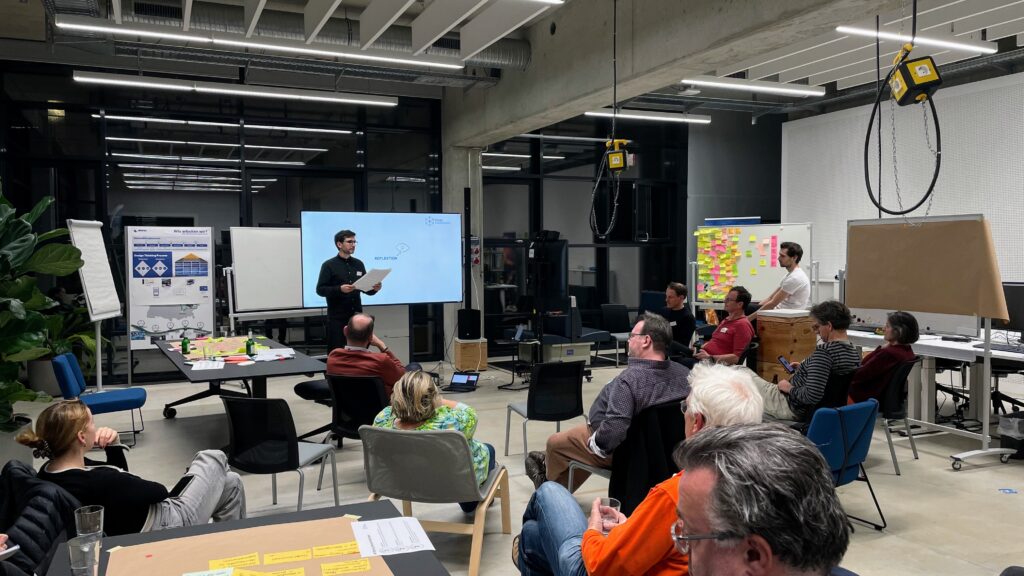
The analysis is based on a combination of model-based calculations, empirical usage data, and expert assessments. At its core is a detailed calculation model that simulates various scenarios and maps cost and revenue structures.
For this purpose, mobility data from real usage trials, different pricing models (per km, per hour, subscription), and various integration levels of the participating stakeholders were considered, among other things. In addition, interviews with industry experts were conducted to validate assumptions and gain practical insights.
Key Findings
- Profitability is highly dependent on price: Economical operation will only be achieved in the base scenario at around €0.52/km, €3.36/h or approximately €337 per month.
- Integration increases efficiency: Higher integration levels (e.g., all-in-one providers) reduce costs and enable earlier profitability through economies of scale and reduced interface costs.
- Utilization is a key lever: Higher vehicle utilization significantly reduces the necessary fleet size and thus operating costs, without changing demand.
- Tension between economic efficiency and user costs: While rising prices increase profitability, monthly costs for households rise almost linearly.
Recommendations for Policy and Practice
- Promote integration: Business models should be more integrated to realize efficiency gains and reduce interface costs.
- Targeted Increase in Utilization: Smart pricing, collaborations, or demand aggregation can improve usage.
- Design pricing models to match usage: Prices must be economically viable, but should not exceed user willingness to pay.
- Involving the housing industry: Integrating car-sharing into rent or ancillary costs can lower usage barriers and increase predictability.
Conclusion
E-car sharing in residential areas can be economically viable, but only under clearly defined framework conditions. The price level, utilization rate, and organizational integration of the involved stakeholders are particularly crucial. Without these factors, the model remains economically fragile.
Further information
The study was conducted by MCube Consulting in collaboration with in-tech GmbH and the Technical University of Munich. The authors include Dr.-Ing. Daniel Schröder, Timo Natemeyer, and Benjamin Braun.
The complete final report with all results is here for Download available.