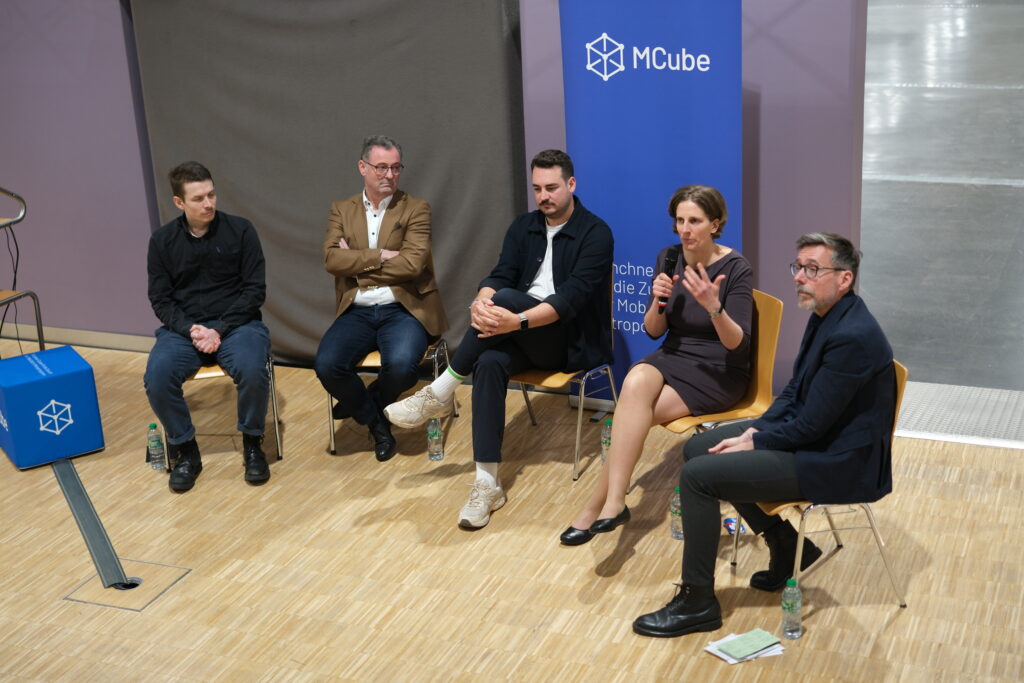
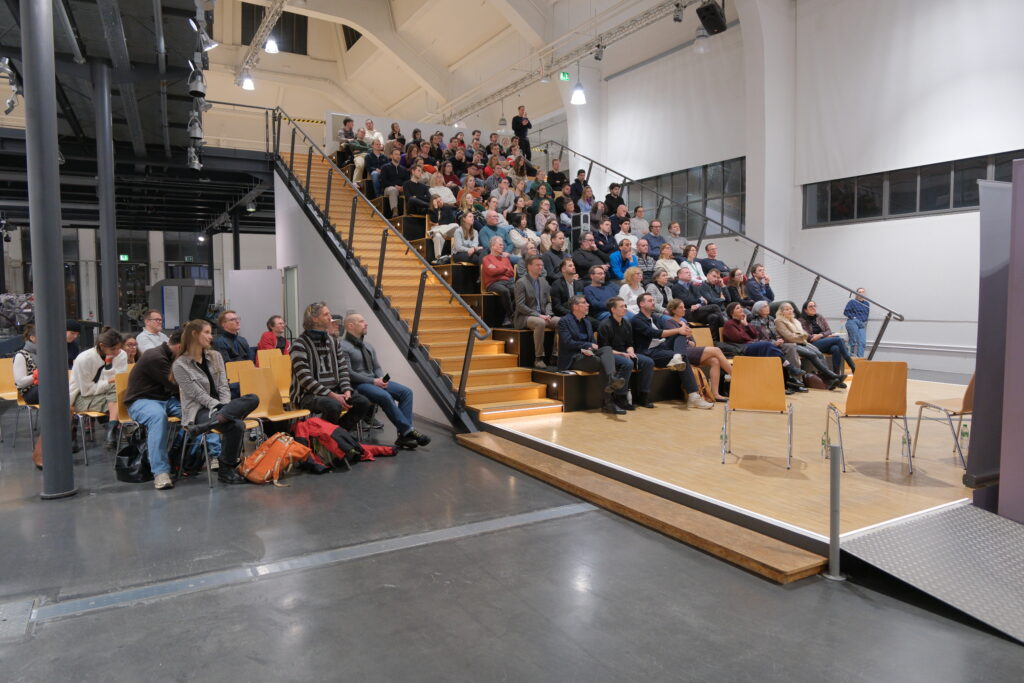
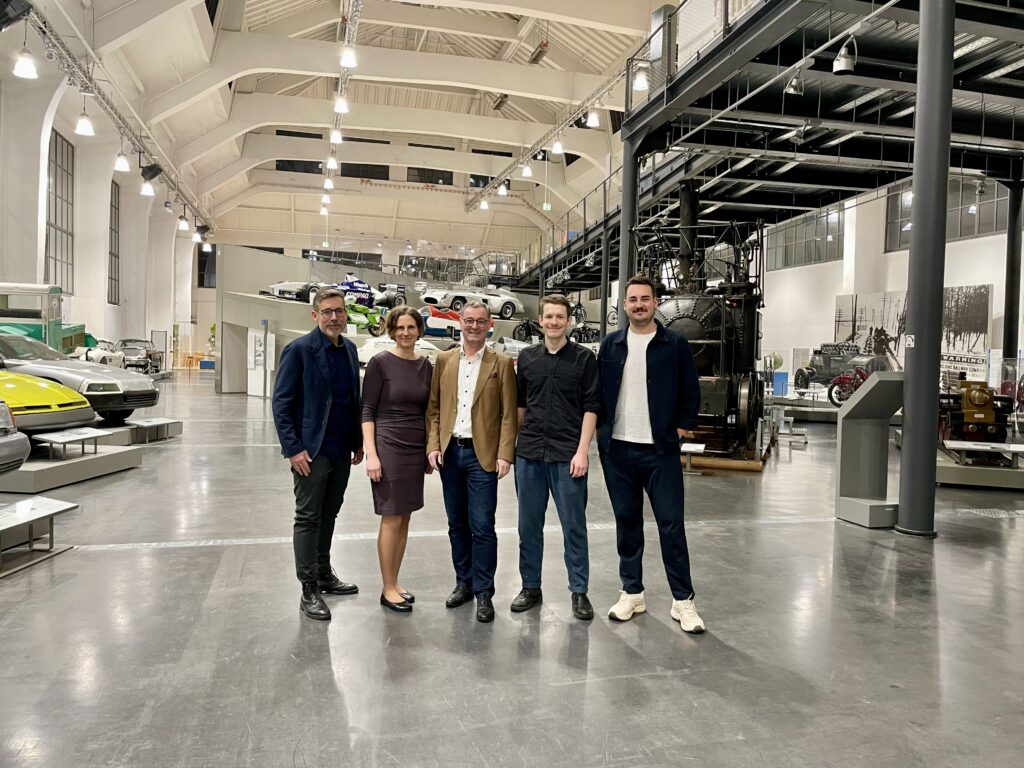
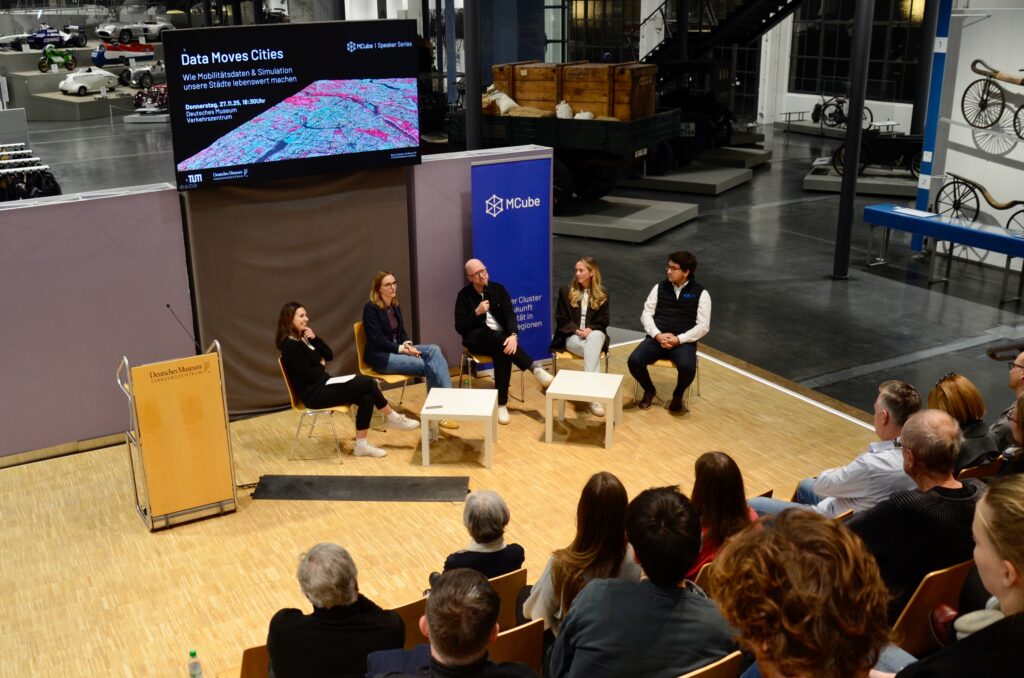
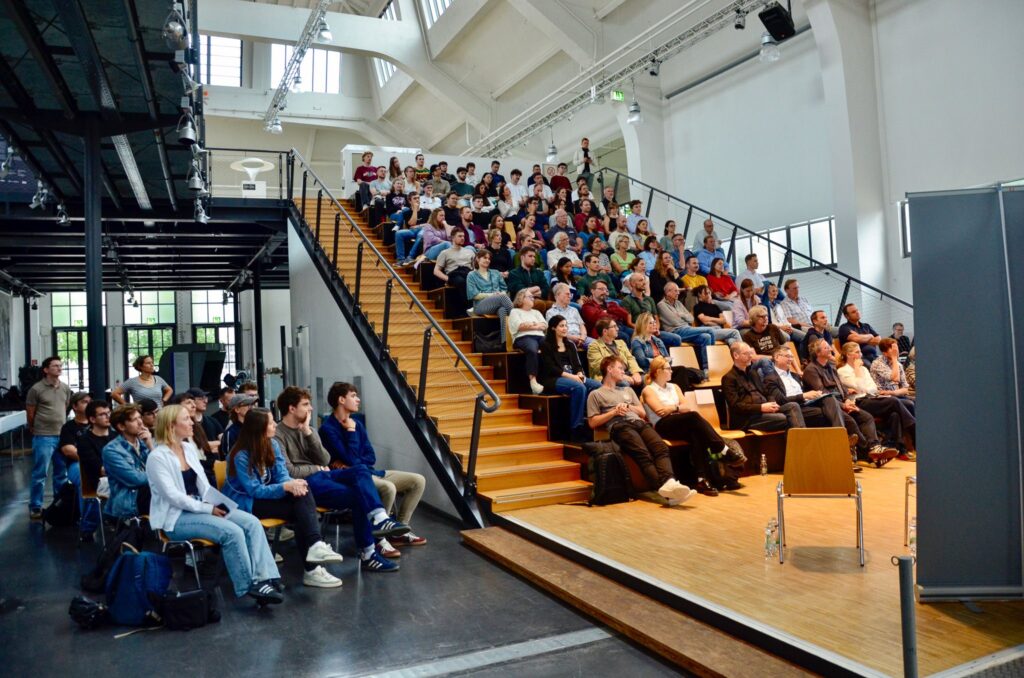
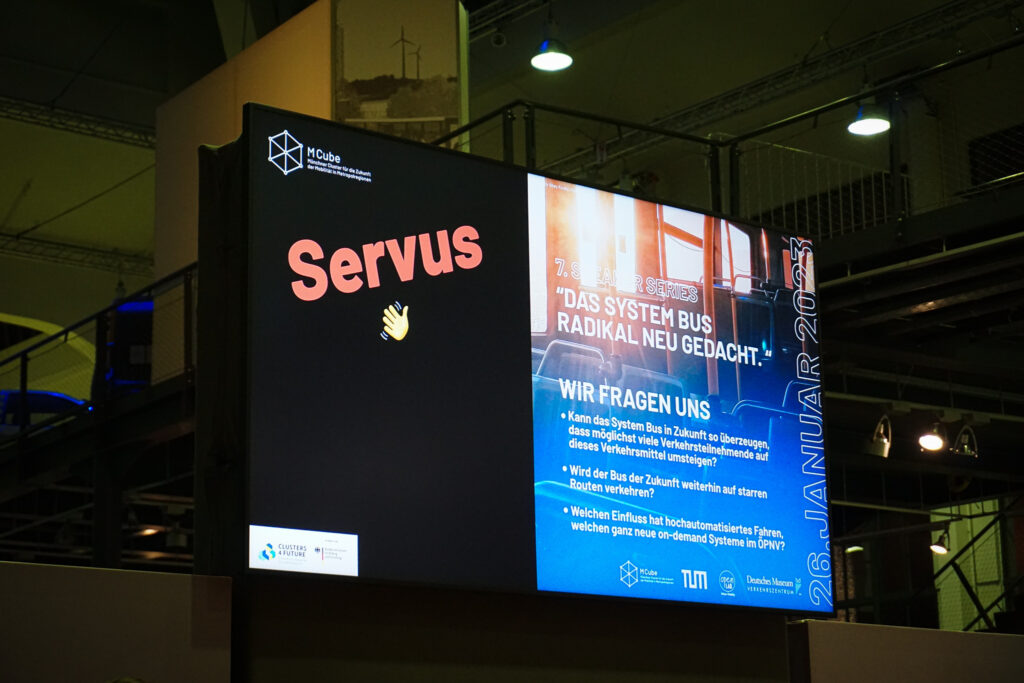
Where to put cars, bicycles and e-scooters - and how do we organize parking space fairly, efficiently and sustainably? These questions were the focus of the MCube Speaker Series "Future of Mobility" edition on January 29, 2026 - on the topic of "Parking Next level", where experts from science, business and practice discussed how Munich - and cities in general - can rethink parking.
Moderator Marco Eisenack from the Munich Innovation Crew introduced the evening with the words: "There are few topics in neighborhoods that can generate so much discord". But why is the parking space turnaround stalling while pressure on the streets is growing?
Fewer parking spaces - more living space
Emil Pabst, Managing Director of VEOMO Consulting, posed a key question on the subject of parking: "Who do we give space to - people or cars?" Parked cars take up 17.2 percent of the total city area in Munich - around four times as much as the Theresienwiese. Emil Pabst used this figure to demonstrate the potential that these spaces have. He called for parking to be shifted from public to private spaces - and showed solutions that are already working in Paris, Oslo and Landau. In residential areas in particular, shared parking spaces and intelligent booking systems could help to make better use of the available space - and at the same time reduce the need for private cars.
Parking space turnaround: Private parking spaces must be used more efficiently
Lawyer Wiebke Hederich from the Initiative Parkraumwende München explained the role played by the legal framework. She criticized the inefficient use of existing parking spaces - for example by offices, authorities, hotels or in private parking lots, which are rarely used. Hederich made it clear: "We don't actually need to have this discussion, because we have space." At the same time, she warned against legalizing the much-discussed sidewalk parking in Munich: The minimum width of 2.50 meters is important for the accessibility of baby carriages, wheelchair users* as well as children and elderly citizens*. The legal framework that obliges businesses and new buildings to build parking spaces is also problematic - even in central locations where parking spaces are often empty.
There is also the classic chicken-and-egg problem: anyone renting office space or apartments usually has to rent parking spaces at the same time. At the same time, garage spaces can hardly be sublet as long as residents receive very cheap resident parking permits. The aim must therefore be to use this "empty parking space" more efficiently and to de-privatize it. According to Hederich, if cars increasingly disappear into private spaces again, conflicts would also decrease when public spaces are redesigned.
Data on parking space is missing - and thus also the possibility of change
Traffic researcher Matthias Langer (Chair of Traffic Behavior at TUM) also attaches great social value to public parking spaces. After all, it's not just parking spaces that have an impact on public space; parking offenders and people looking for a parking space also hinder the flow of traffic.
Langer's research focuses on spatial mobility - i.e. activities that involve travel and costs - and therefore also on the question of accessibility: How do I get from A to B? His work is primarily based on data used to analyze parking space supply, demand and specific measures. He criticized the fact that cities often do not even know how many parking spaces there are in public spaces. However, reliable data and clear goals are a prerequisite for change.
When looking at demand, Langer pointed out that the more cars are allowed into the city, the more cars come - which in turn leads to a discrepancy between residents and those looking for a parking space. He also pointed to the much-cited example of the residents' parking permit, which costs just 30 euros a year in Munich - many times cheaper than rents in Munich and has remained unchanged for decades. International examples made it clear what levers are available: Amsterdam, for example, is planning with only 0.2 parking spaces per apartment, Oslo has made large parts of the city center car-free, and in Japan a car may only be registered if it has its own parking space.
Innovations in parking - also for bicycles
Markus Hofheinz, CEO of WÖHR Autoparksysteme GmbH, showed how technical solutions can help to use parking space much more efficiently. "We are consolidating parking space," explained Hofheinz - for example through compressed parking solutions, parking towers or automated underground parking, where vehicles are parked on top of each other.
The aim is to save space and create room for other uses, such as unsealing or green areas. At the same time, the aim is to make better use of existing structures, such as using "dead space" in multi-storey parking lots for bicycle parking facilities or enabling densification in confined spaces.
A practical example from Munich makes the potential of this technology tangible: In the private underground parking garage for residents on Donnersbergerstrasse were realized with the fully automatic parking system from WÖHR. 284 parking spaces The new parking garage can be realized in a small area without taking up additional above-ground parking space - and thus accommodate considerably more cars than a conventional underground garage.
Early planning is crucial here: automated parking and underground solutions must be considered from the outset. Hofheinz also emphasized that bicycle parking also needs a modern, space-saving infrastructure - especially at train stations, where secure and well-integrated parking facilities are becoming increasingly important.
At MCube, we are also working intensively on the question of how parking space can be organized in a more efficient, data-based and neighbourhood-friendly way in the future - including in the innovation project MOSAIQ and in the ReFuMoLab Garching. Together with our MCube partner VePa - Vertical Parking, we are incorporating concrete practical experience, for example from the realized parking tower in the "VePa parking tower in the Werksviertel-Mitte" in Munich, which accommodates twelve vehicles with integrated charging infrastructure on just 49 m², and from other planned towers in Berlin (e.g. at Hackescher Markt) and at locations throughout Germany - all examples of how vertical parking can keep urban spaces open
Our conclusion:
The MCube Speaker Series "Parking next level" impressively demonstrated that parking is a key lever for the transformation of our cities. Whether through better data, efficient regulation or technical solutions: The approaches are there. Political will and courage will be crucial in order to distribute public space more efficiently and make cities more liveable.