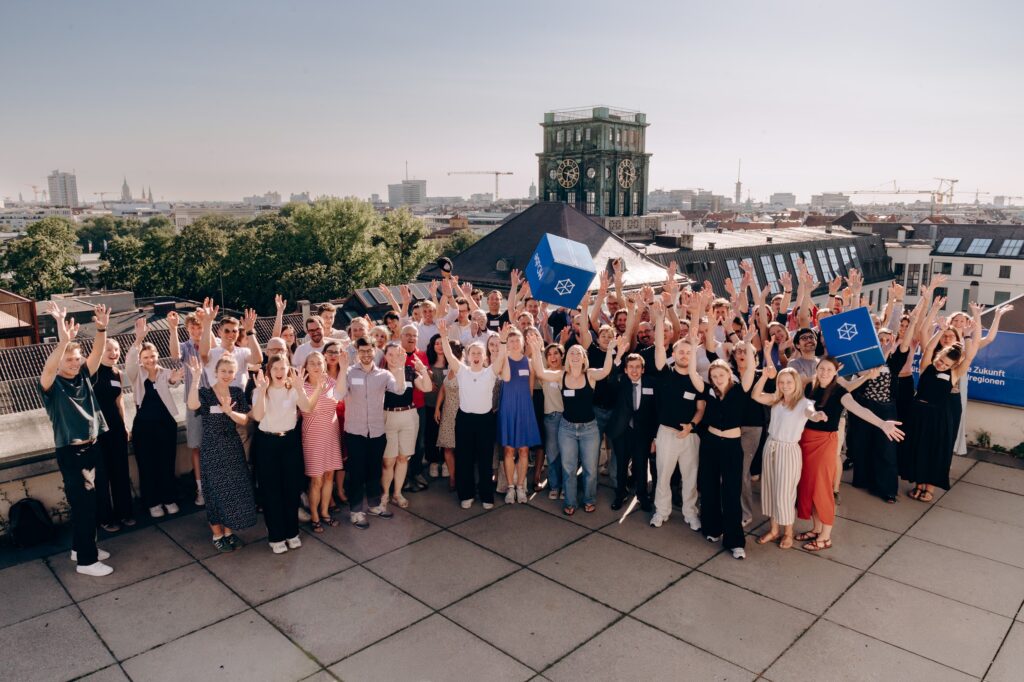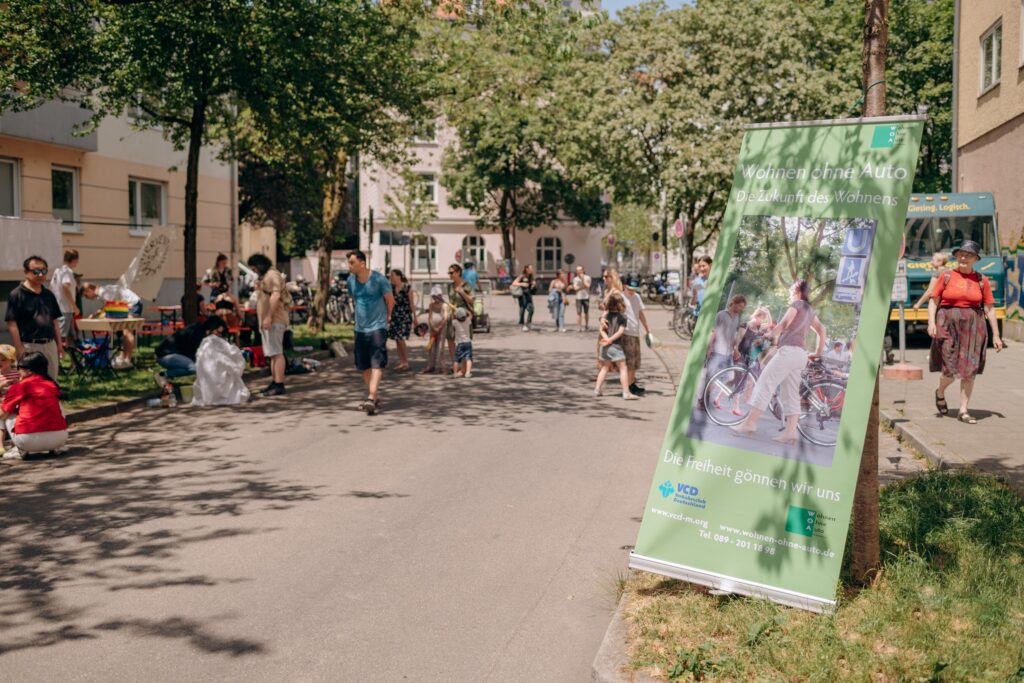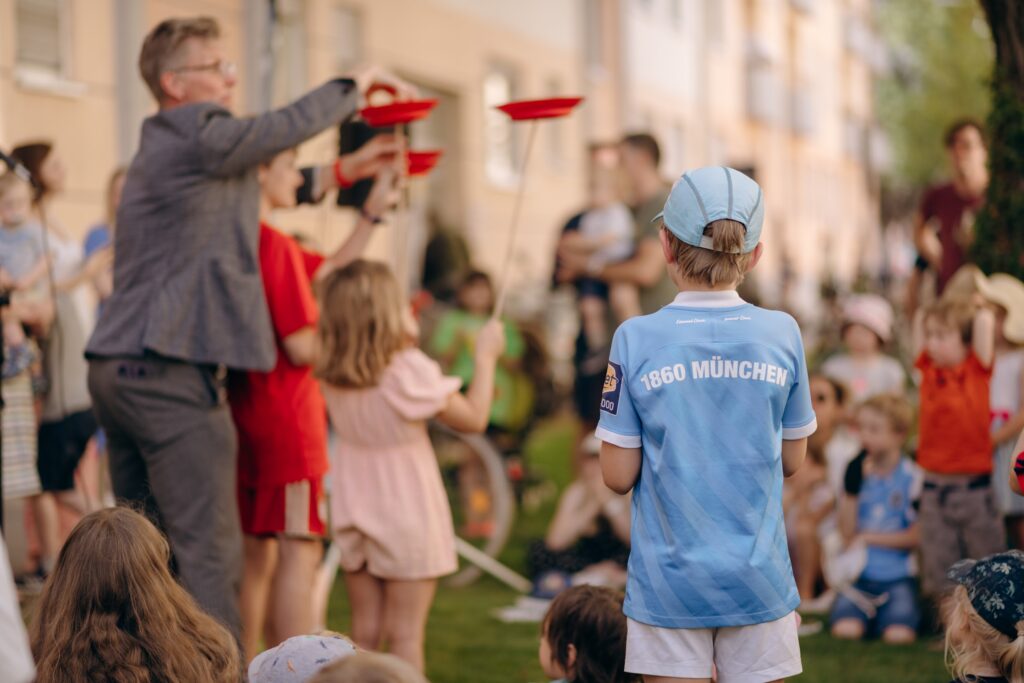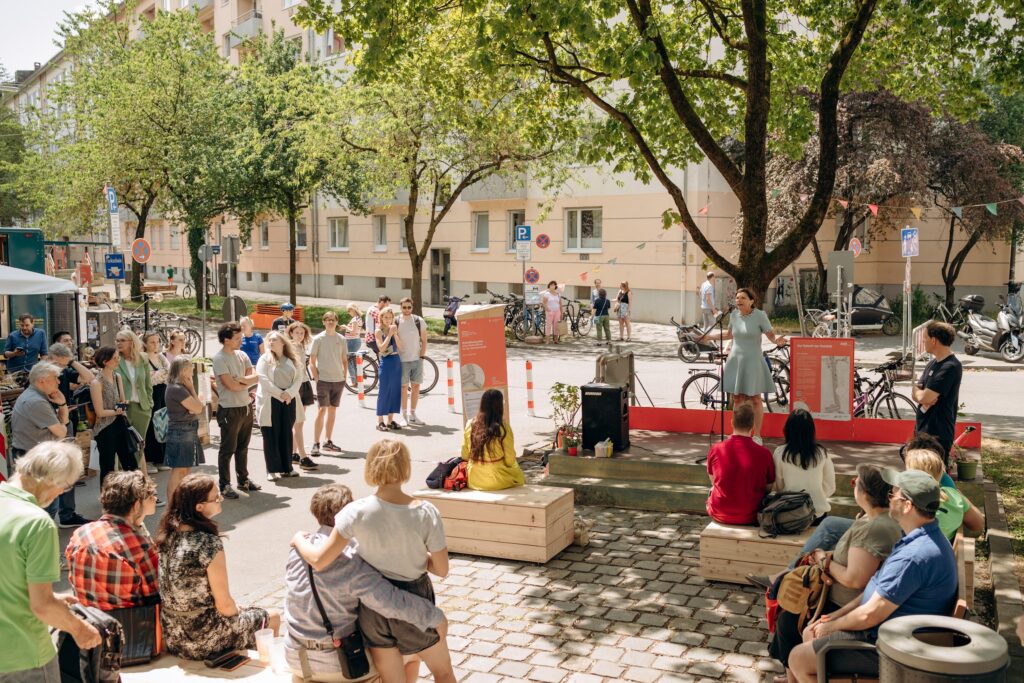
Last weekend, on June 17, 2023, we launched our project aqt - car-reduced districts for a liveable city in the southern Au. Together with around 800 residents and passers-by, we celebrated the launch all Saturday long and were accompanied by local musicians and artists.
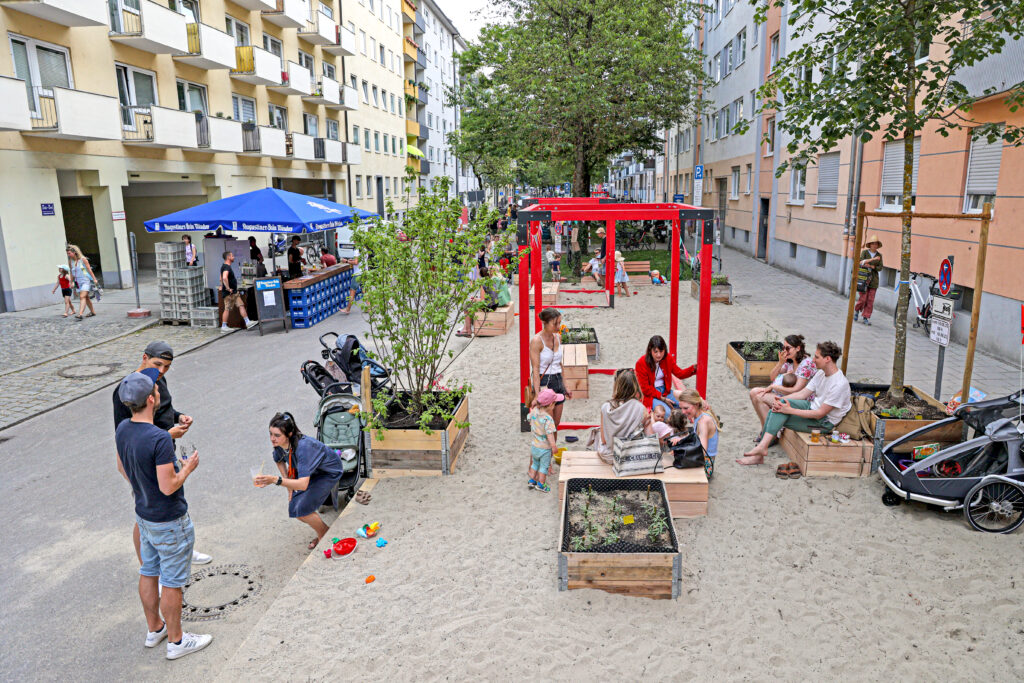
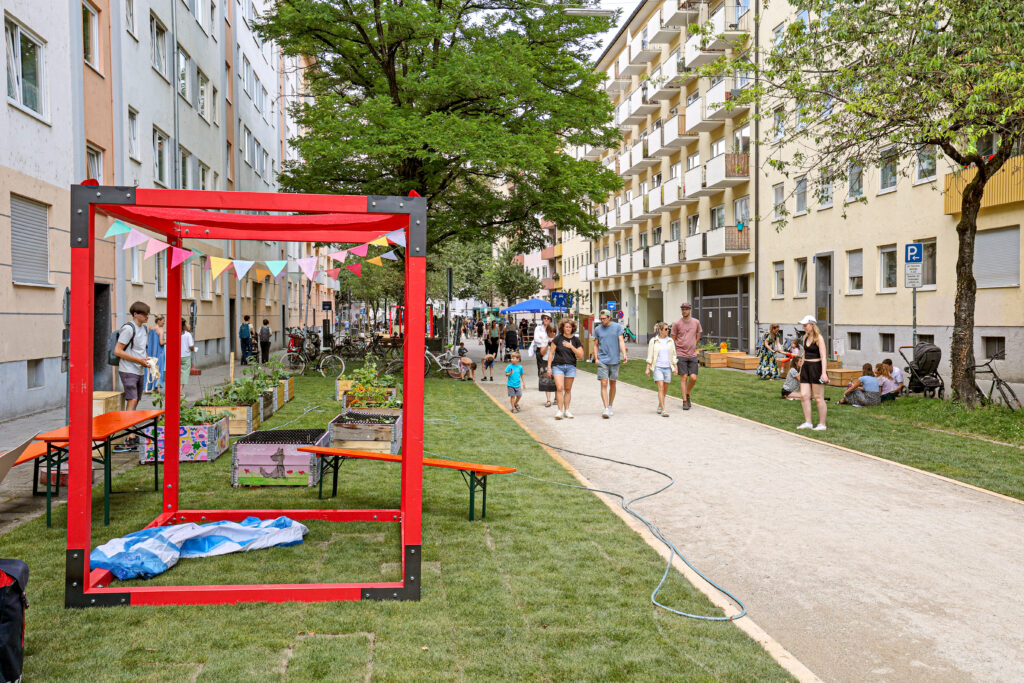
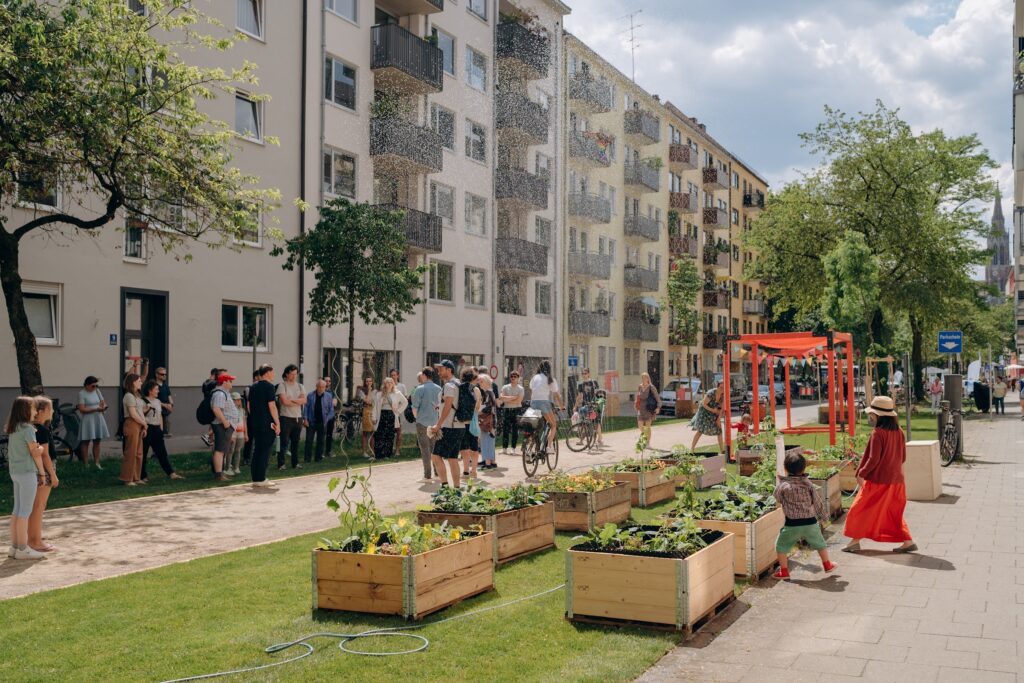
On Schlotthauerplatz and Edlingerplatz and in between on Kolumbusstraße, visitors were able to experience a car-reduced and repurposed space. With meadows and beaches instead of asphalt, picnic blankets and beer benches instead of parking spaces, people were able to let off steam freely in the public space at this festival and come together safely (without the usual car traffic). On Saturday and over the next 5 months, residents can experience and practice sustainability in the neighborhood with urban gardening, raised beds and sidewalk gardens, as well as relax in the various recreational areas in public spaces.
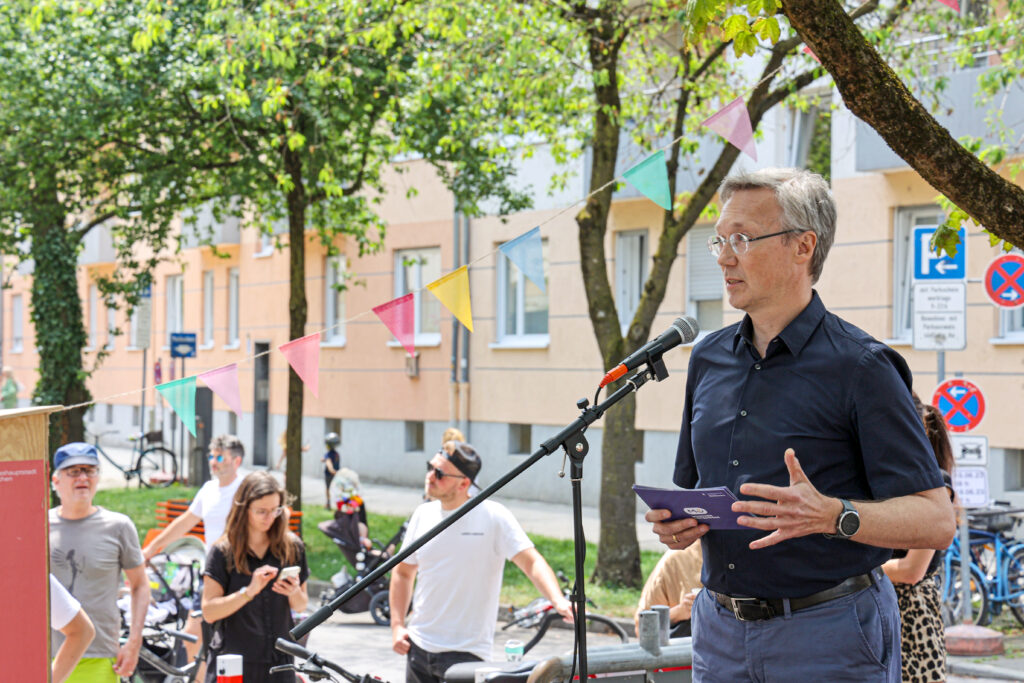
"We need a redistribution of public space; there is a lot of room for a much more efficient use of cars - this is possible with fewer cars and fewer cars parked in public spaces!" - Georg Dunkel, Mobility Officer of the City of Munich
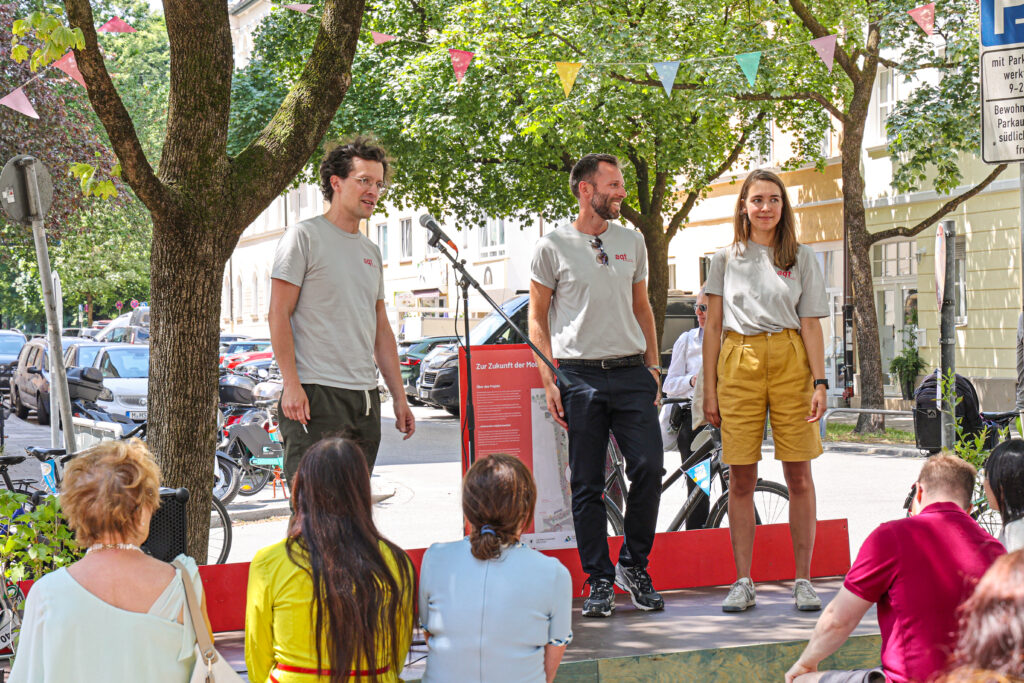
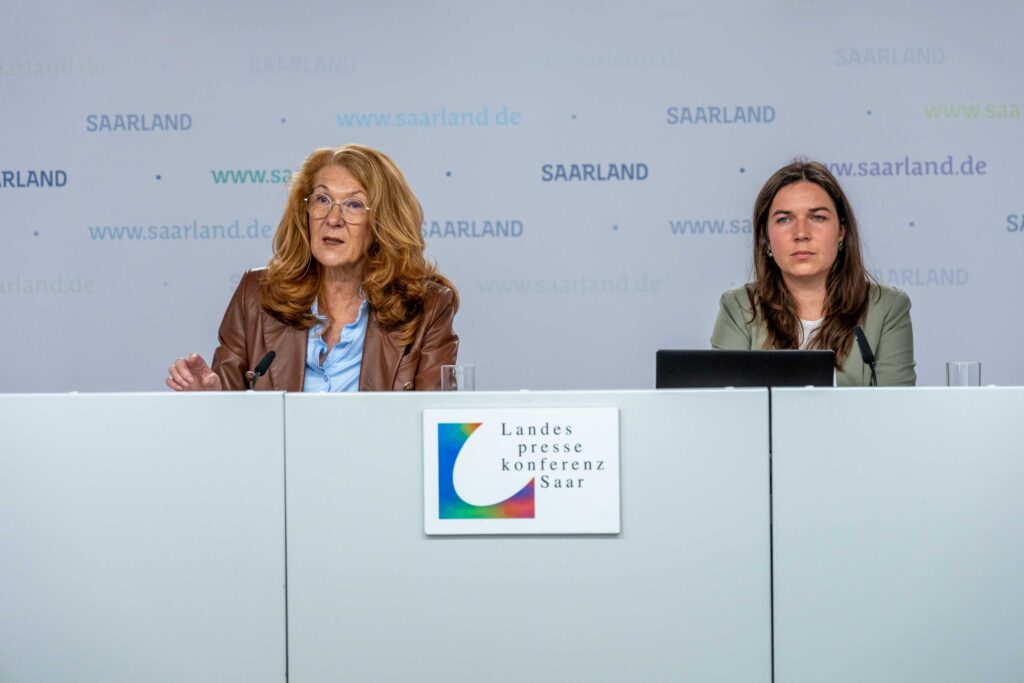
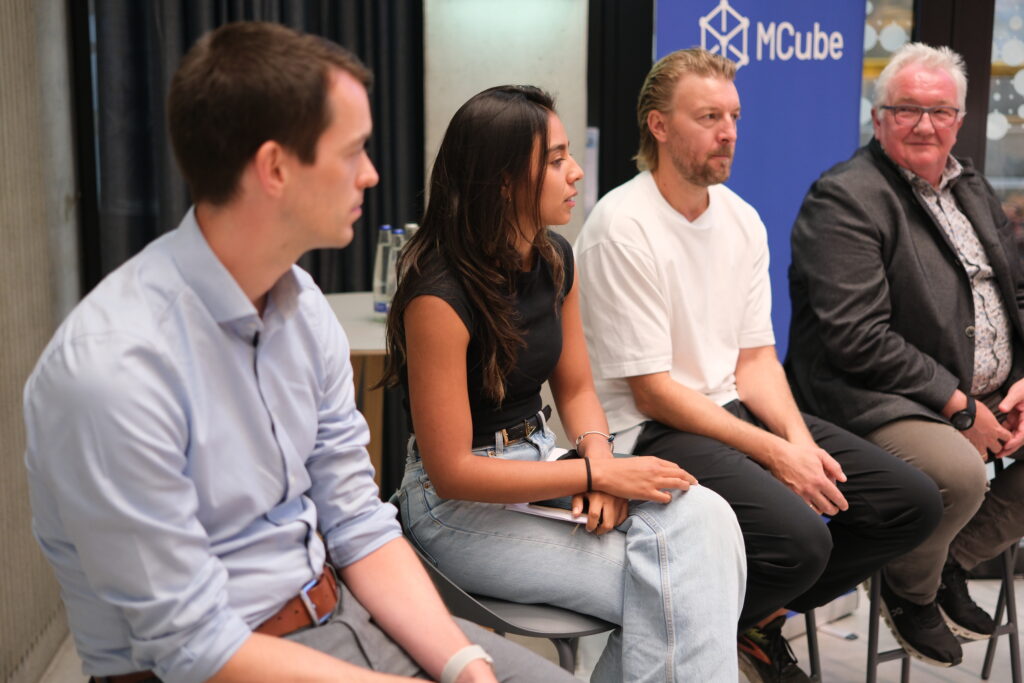
Moderated by Oliver May-Beckmann (Managing Director MCube), the Reallabor aqt was founded by Jeanne Rubner (Vice President Technical University of Munich), Georg Dunkel (Mobility Officer City of Munich), City Planning Councillor Elisabeth Merk and Benedikt Boucsein (Prof. Urban Design and aqt project manager).
"The beginning of a real traffic turnaround in Munich!" - Jörg Spengler, Chairman of the District Committee
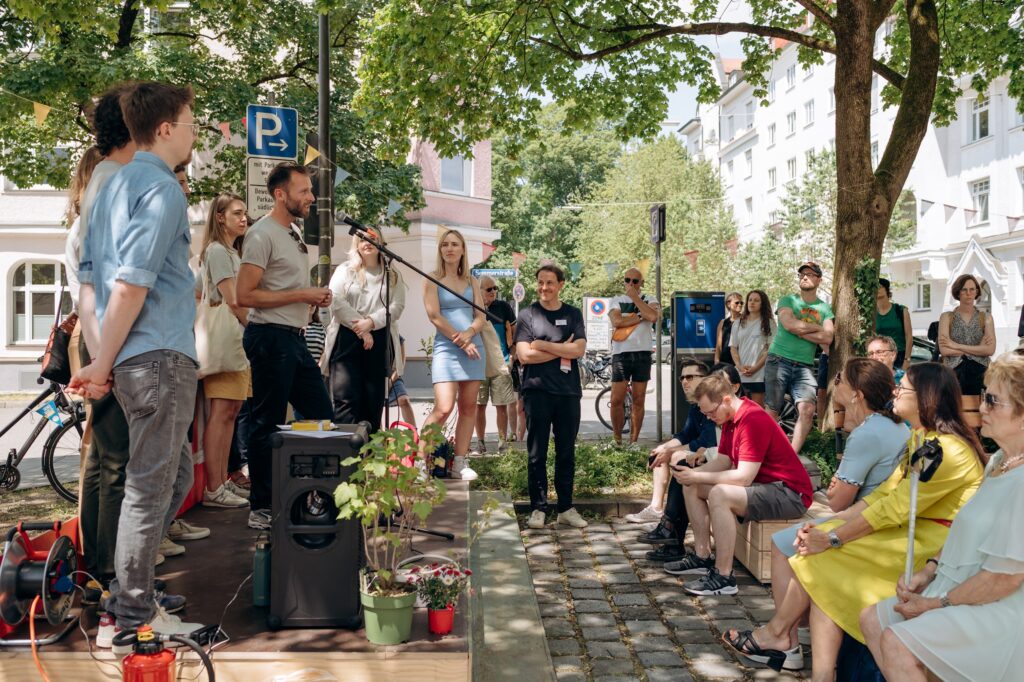
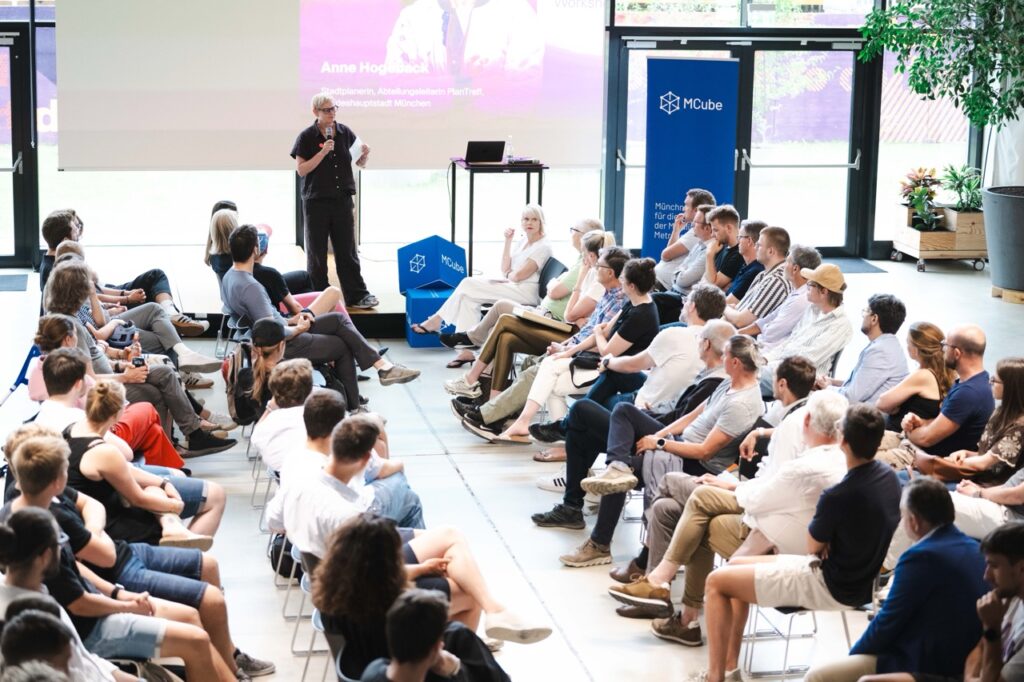
The MCube aqt team then presented the project in more detail and officially opened the summer interventions.
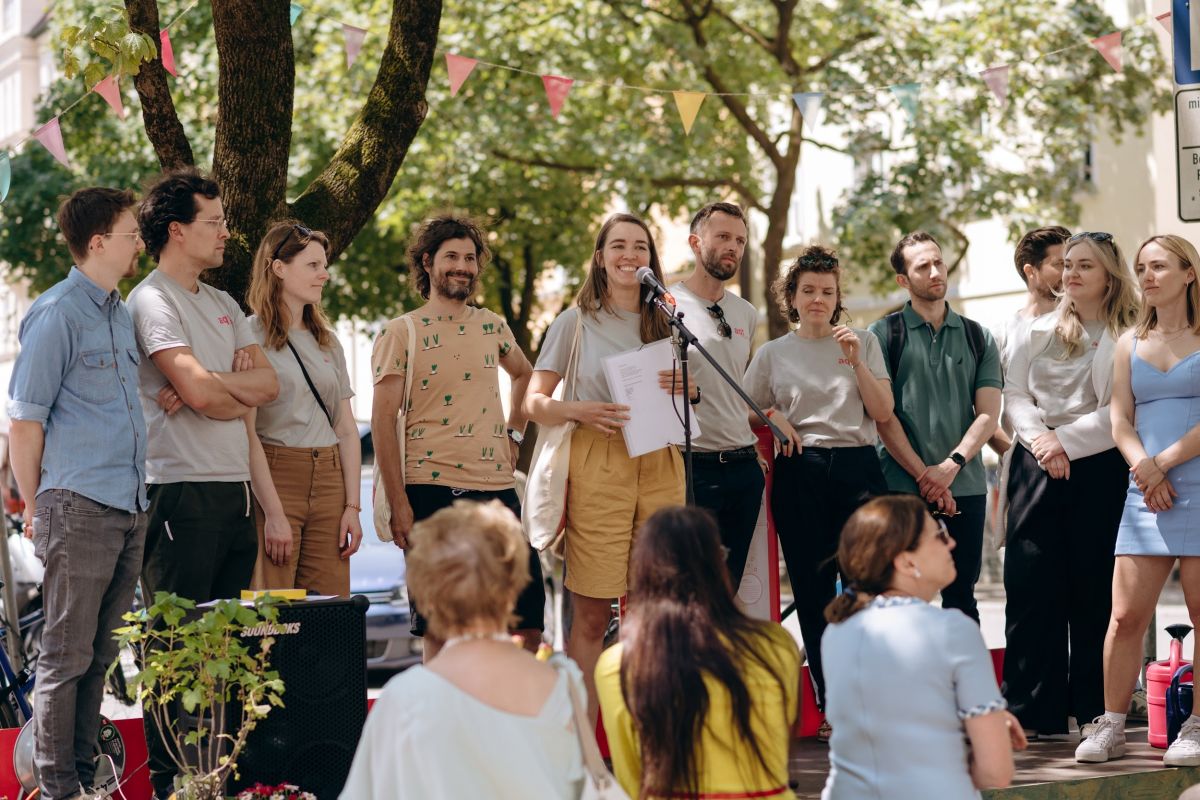
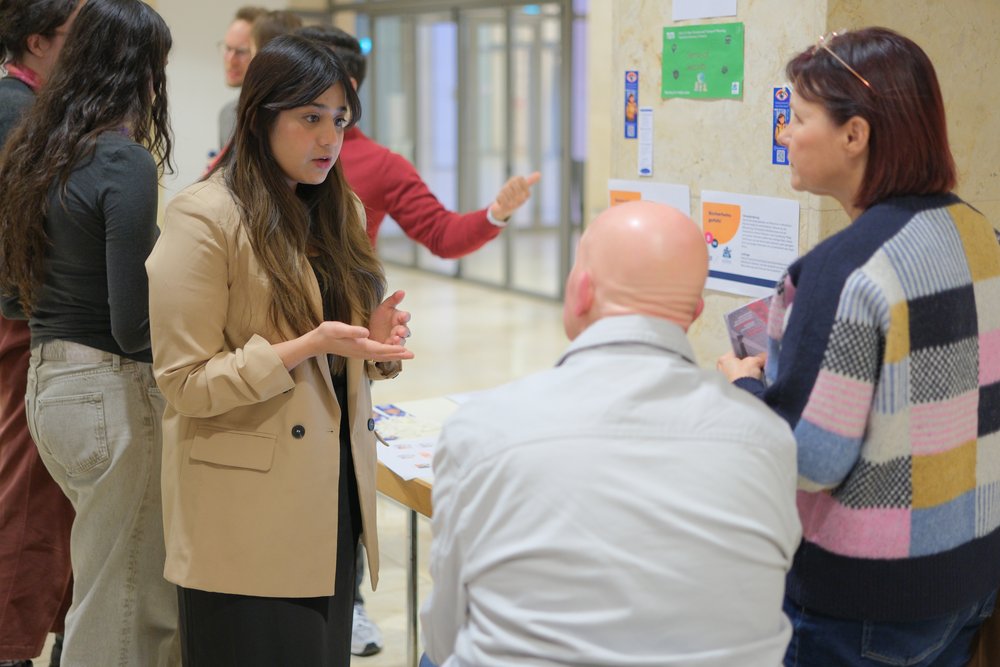
There were open-air lectures on the future of mobility for those interested. From the 15-minute city and the expansion of cargo bikes to the home fleet and the expansion of the e-charging infrastructure, experts were on hand to pitch their services, provide information and answer questions.
In addition to our MCube stand, the car and bike sharing services of Sixt and Tier were also on display. The mobility offers from the MVG/SWM, STATTAUTOCity Q and e-motion also offered visitors a test drive at their exhibition spaces on Edlingerplatz and provided information about the various aspects of sustainable mobility.
On the stage at Schlotthauer Platz there was an extensive music program from noon onwards, which encouraged visitors to spread out on the streets, take up the space - which is otherwise reserved exclusively for cars - and dance until late in the afternoon.
What the residents noticed:
We would like to thank you for the positive words and the constructive feedback! Many thanks for taking part. And a big thank you to the aqt project partners City of Munich, Stadtwerke München GmbH, EntrepreneurTUM, Digital Mobilty Hub by UnternehmerTUM, Hans Sauer Foundation, SIXT, VEOMO, TIER Mobility, ChargeX, Bayerische Hausbau GmbH & Co. KG
Together - Make it possible
Background:
In our innovation project aqt, we are testing this summer how less car traffic, alternative mobility options and more space for people are possible. To this end, a section of Kolumbusstraße is being transformed into a green meadow and sandy area for recreation and leisure activities. The corresponding measures on site include new mobility points where shared mobility services are bundled. From July, bicycles can also be repaired at a bicycle hub and the first urban gardening projects are already bearing fruit.
More about the aqt innovation project here
Here Go to the overview of the traffic measures