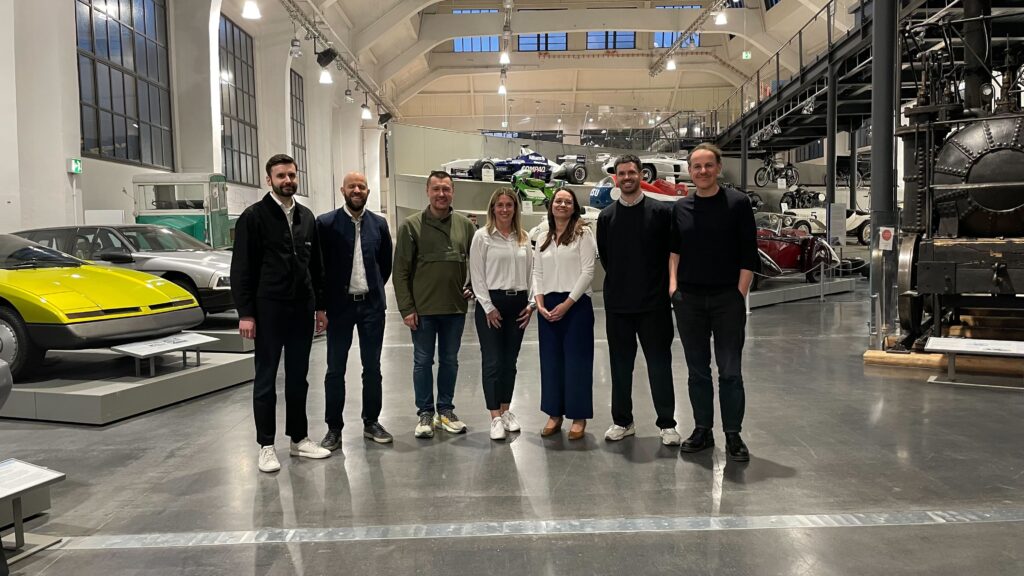
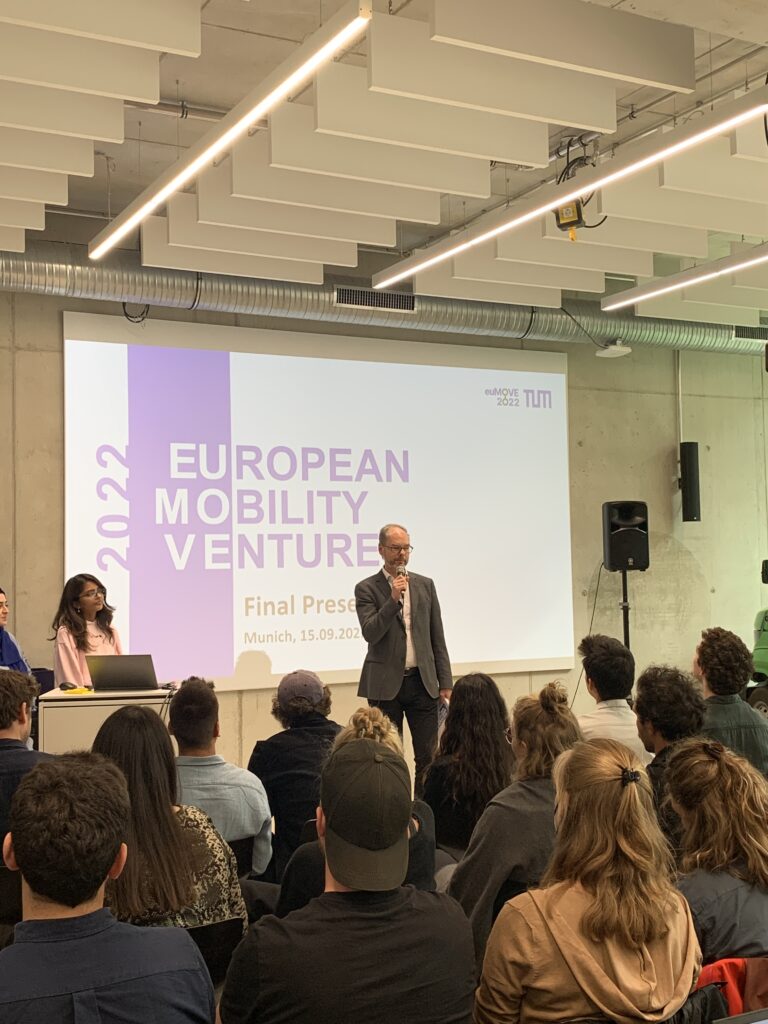
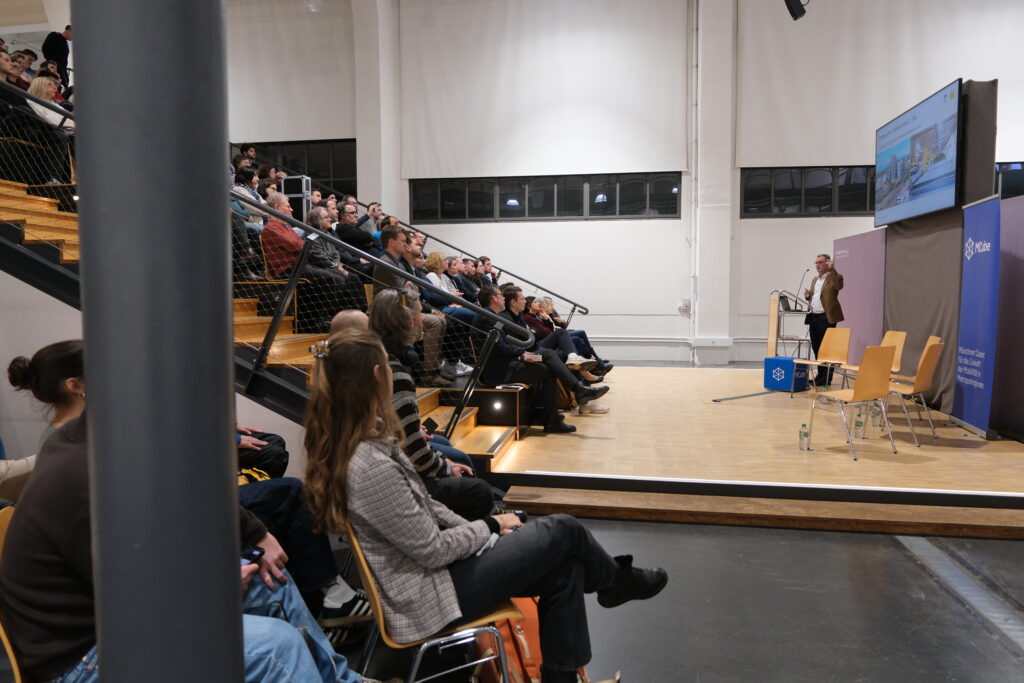
On Thursday, July 11, 2024, the fifth cohort of the euMOVE project presented the results of their semester-long work. euMOVE is an interdisciplinary student project of the Technical University of Munich (TUM) and part of MCube - the Munich Cluster for the Future of Mobility in Metropolitan Regions.
As part of the project, students travel to European cities in small interdisciplinary groups to analyze and evaluate innovative mobility solutions. The findings serve as inspiration for sustainable and future-proof mobility concepts in Munich.
This semester, mixed teams from the Environmental Engineering, Transport Systems, STS/RESET and Urbanism courses traveled to Ljubljana (Slovenia), Genoa (Italy) and Utrecht (Netherlands).
The Ljubljana Group dealt with the distribution and design of public space. Based on their approaches, the students developed prototypes for the redesign of two central squares in Munich. The aim was to improve the quality of life and sustainable mobility through additional green spaces, seating and new cycle and bus lanes. The team also designed a survey to gather feedback on the proposed design approaches.
The Genoa Group was dedicated to the topic of commuting with a particular focus on communication and accessibility. Using social science methods and testing various mobility options on site, the students investigated how mobility can be made more understandable and inclusive. Based on their findings, they developed a prototype for a tactile Braille map of Munich's Moosach subway station and a virtual „journey“ that focuses on accessibility in public transport.
The Utrecht Group dealt with the topic of bicycle parking as a key factor in promoting cycling. Inspired by the world's largest bicycle garage in Utrecht, the team presented a proposal for the redesign of Munich's Ostbahnhof station with a bicycle garage and extended parking facilities. As the Ostbahnhof does not currently have sufficient bicycle parking spaces, the implementation of this concept could make an important contribution to the attractiveness of bike-and-ride services.