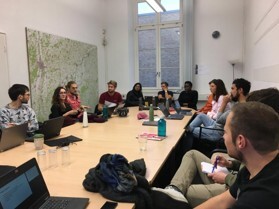
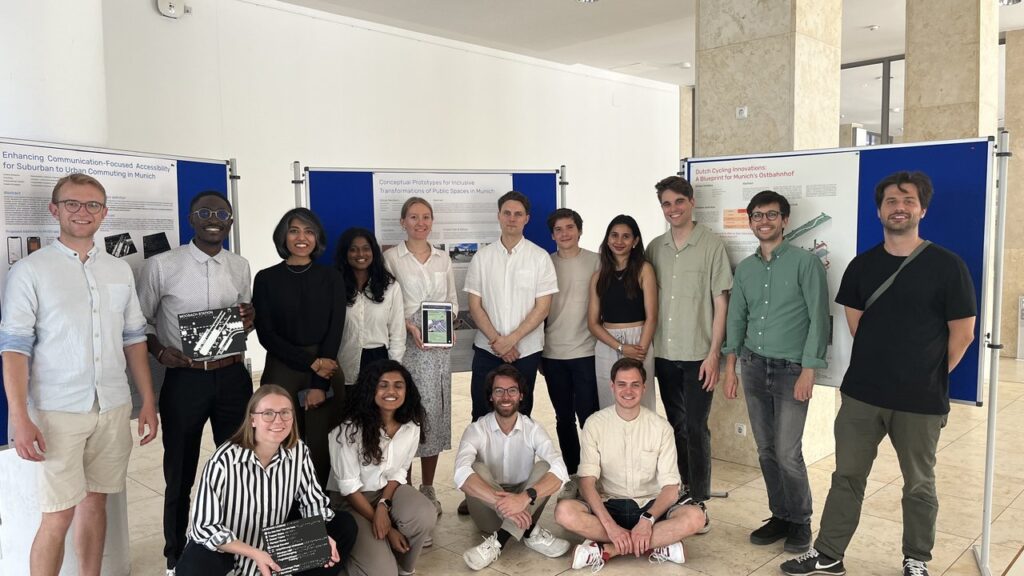
In the summer semester of 2022, the student project euMOVE - European Mobility Venture was carried out again, as in the previous year.
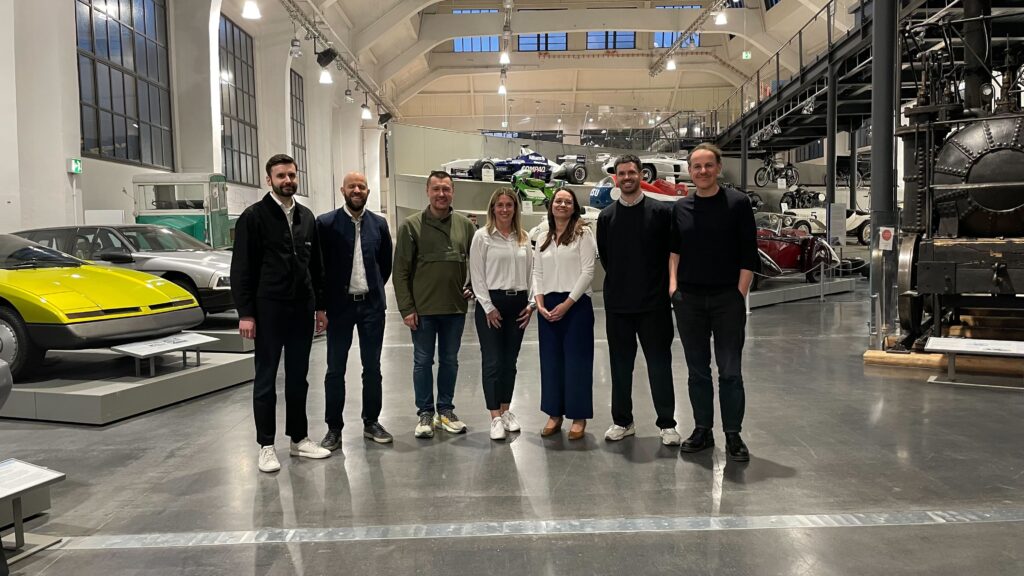
A group of 12 students embarked on a research trip to three European cities to benchmark innovative mobility solutions and examine their transferability to the Munich metropolitan region.
What have Brussels, Lisbon, Milan and Paris together? All four cities are pursuing ambitious approaches to promote sustainable urban mobility - they are strengthening public transport, creating space for cycling and active mobility and developing measures to reduce motorized private transport. These are topics that are also of central importance for Munich and therefore play an important role in the current and planned MCube sub-projects. Following the study of Copenhagen, Oslo and Amsterdam by the previous cohort, this year's students deliberately chose these three target regions.
This year's cohort once again consisted of 12 students from the Technical University of Munich from various disciplines - from engineering and management to social sciences. In small interdisciplinary groups, four students traveled to each of the three target regions. The aim was not only to gain insights into the local mobility systems, their contexts and current innovation trends, but above all to identify similarities, differences and the potential that can be derived from them for the Munich metropolitan region.
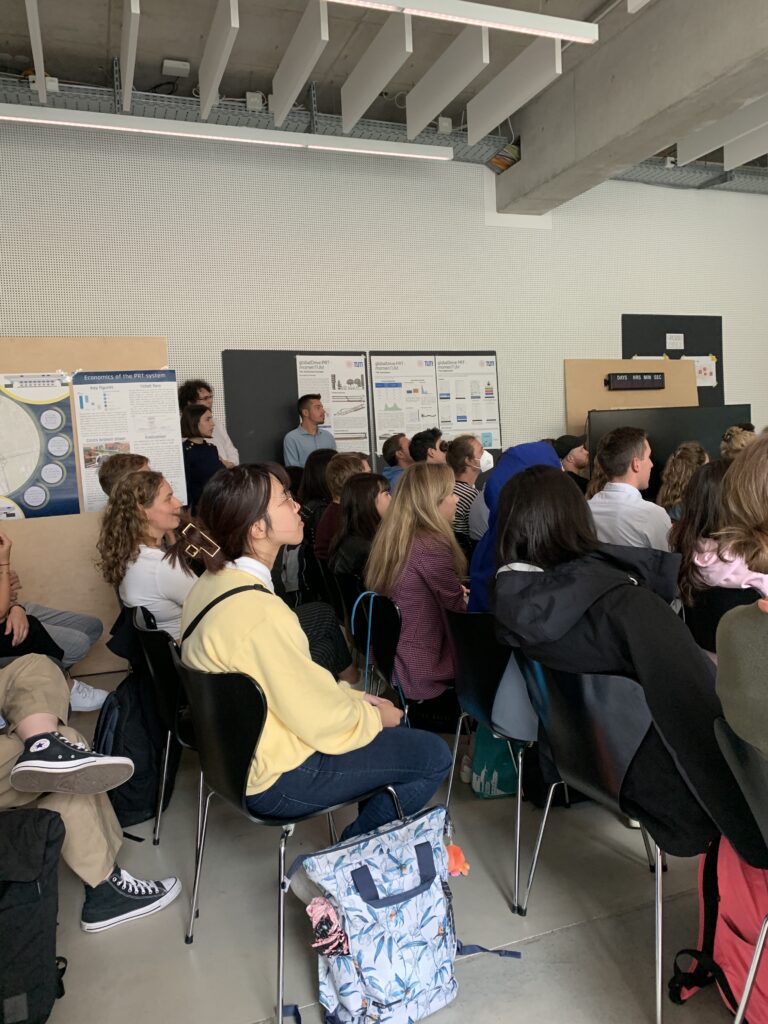
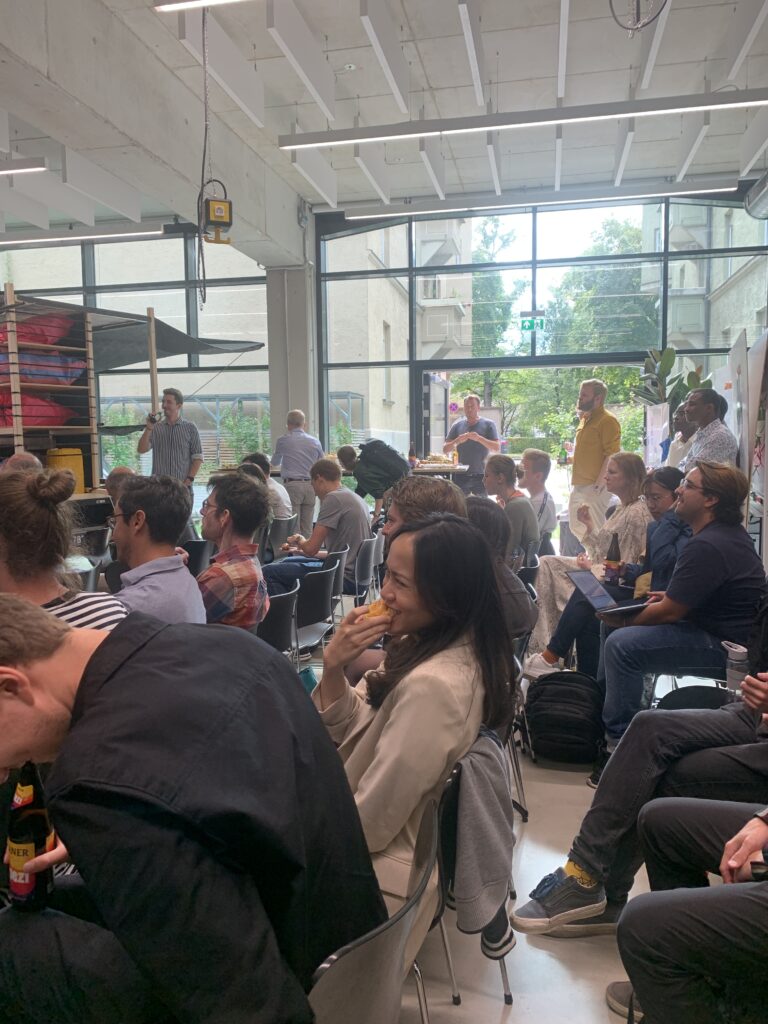
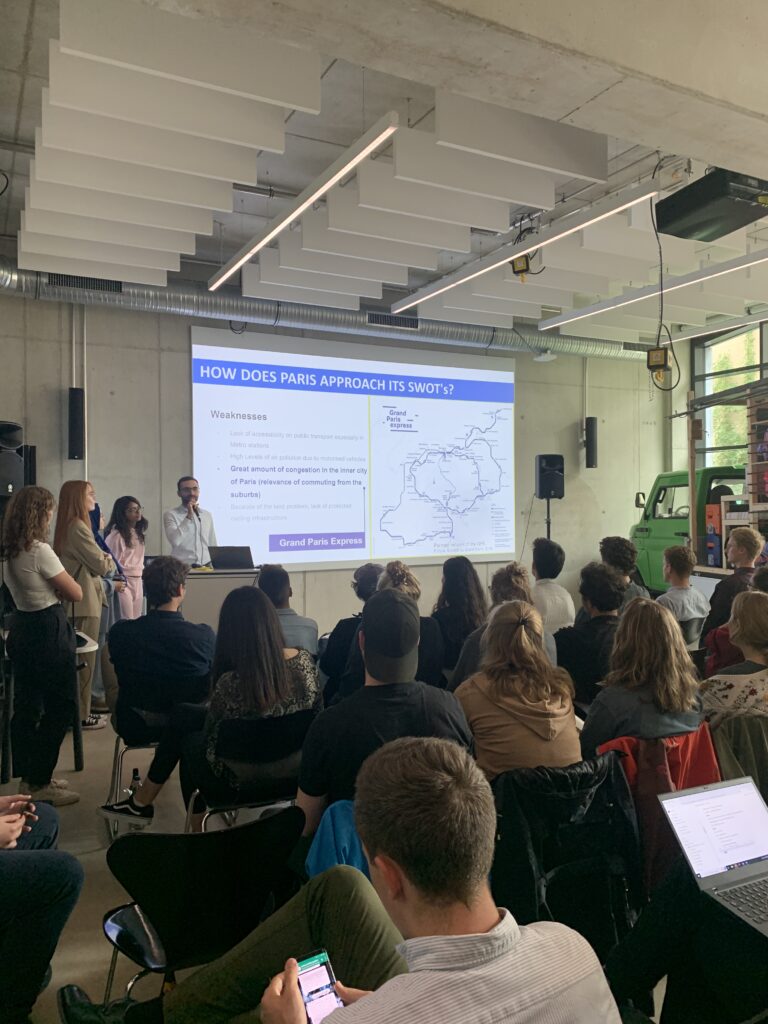
After several months of intensive work, including interviews with experts, document analyses and a research stay of several days in the respective cities, the project was successfully completed in September 2022. The students presented their results to representatives of the MCube consortium and other partners at a closing event on September 15, 2022. The results were also summarized in a joint project report.
The final report is available here: Final euMOVE 2022 report

The lessons learned from the first MCube funding phase show which factors really drive projects forward - and where typical barriers arise.
Creating transparency, proving impact, sharpening strategies - the new indicator guide supports precisely this.
For the first time in this format, students made their way to three European cities. They went to Stockholm, Tallinn/Helsinki and Barcelona.
This time, mobility in the cities of Ljubljana, Genoa and Utrecht was examined.
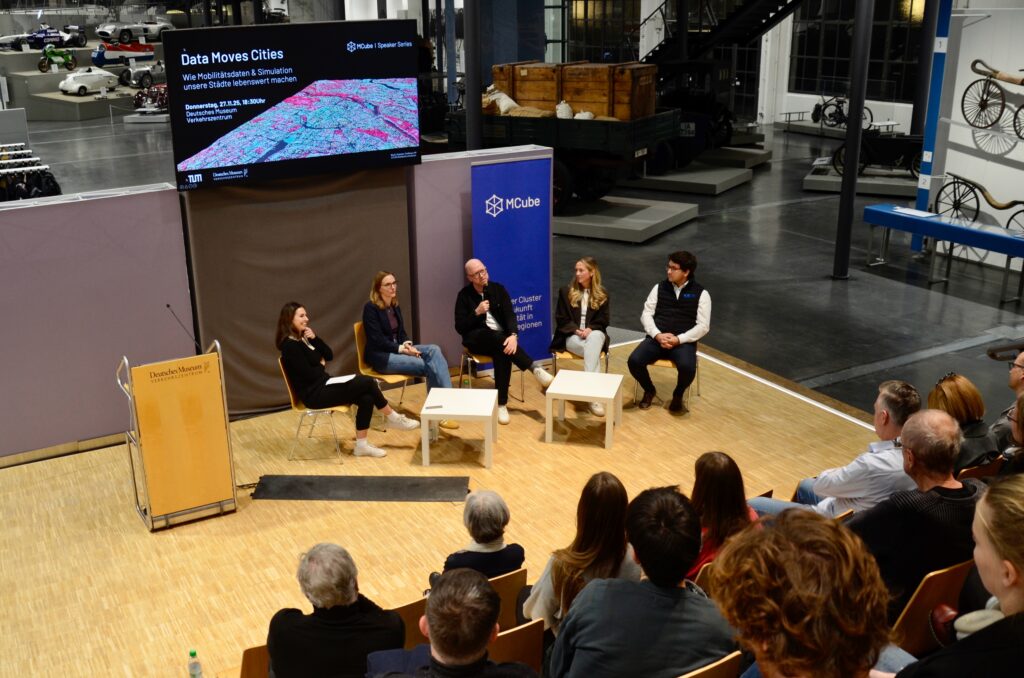
How can mobility data and simulations make cities more liveable - and change visible and tangible?
Where to put cars, bicycles and e-scooters - and how do we organize parking space fairly, efficiently and sustainably?
The Mobi-Score - The hidden costs of mobility at a glance
Resilient change towards sustainable mobility - lessons for a transformative urban mobility policy
Experimenting for the mobility transition - impetus for municipalities to dealing with real-world laboratories
Public spaces and social participation - The WHAT and HOW of comprehensive Participation for a local mobility transition
No results available
What is MOSAIQ?
Imagine something: There is more space for people. The streets have more trees and plants. Everyone can get around better. That's how your Schwabing-West district could be in the future. How would you like your district to be? We want to talk to you about it!
The project is called MOSAIQ. MOSAIQ is a research∙project. MOSAIQ means: Mobility and urban climate in the future city∙part. The Technical University of Munich is leading the project.
What is MOSAIQ about?
MOSAIQ wants to make the streets in the city∙part more beautiful. People should feel comfortable there. There should be more space. For meetings and plants, for example. You can help decide what is tried out in the Stadt∙teil. The ideas come from you. Some ideas will be tried out on the streets for a certain period of time.
The aim of MOSAIQ is to make urban districts good places to live.
At the same time, the climate in the city should improve. And people should be able to move around the city easily.
What is happening in the district?