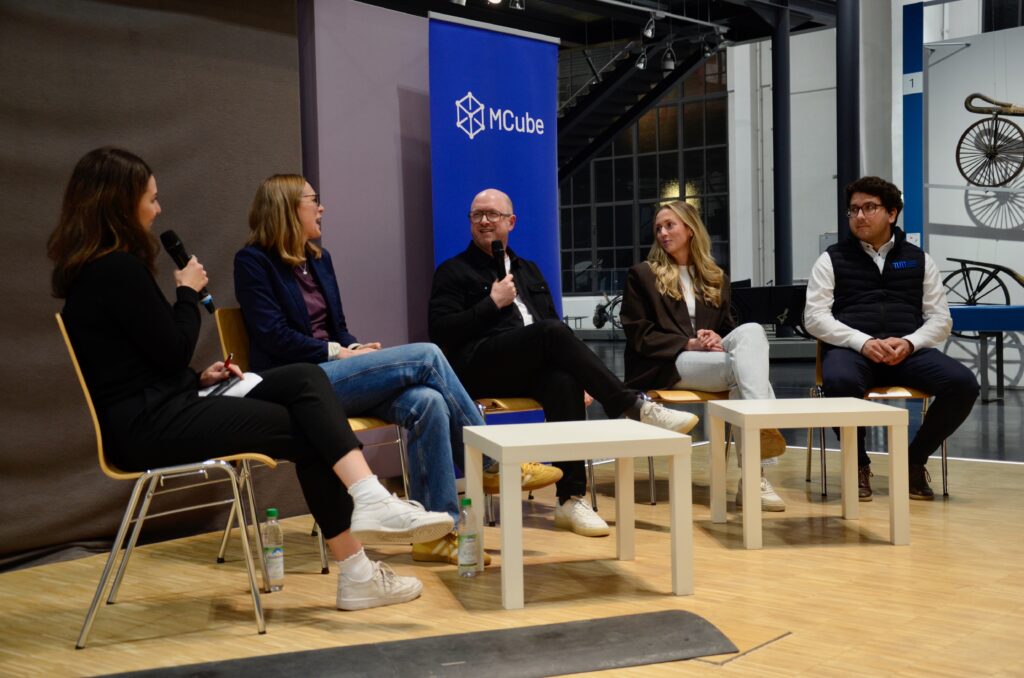
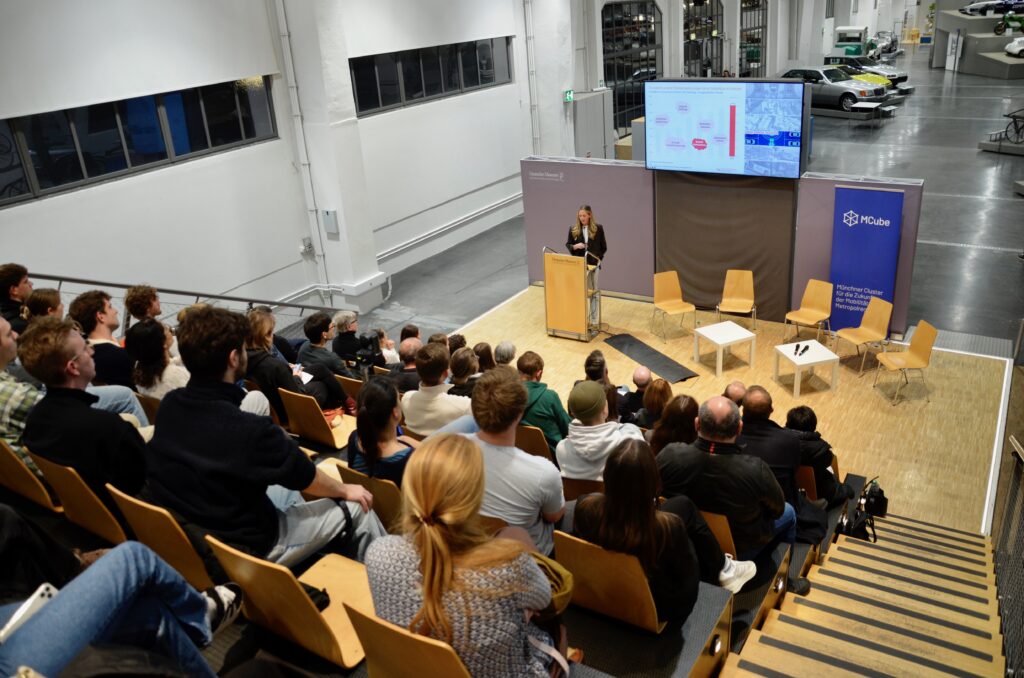
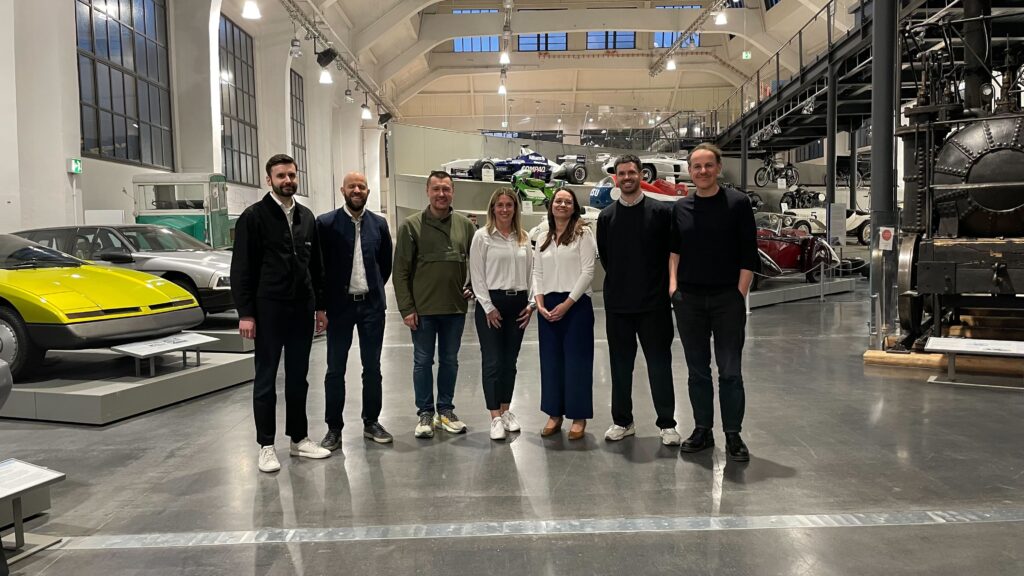
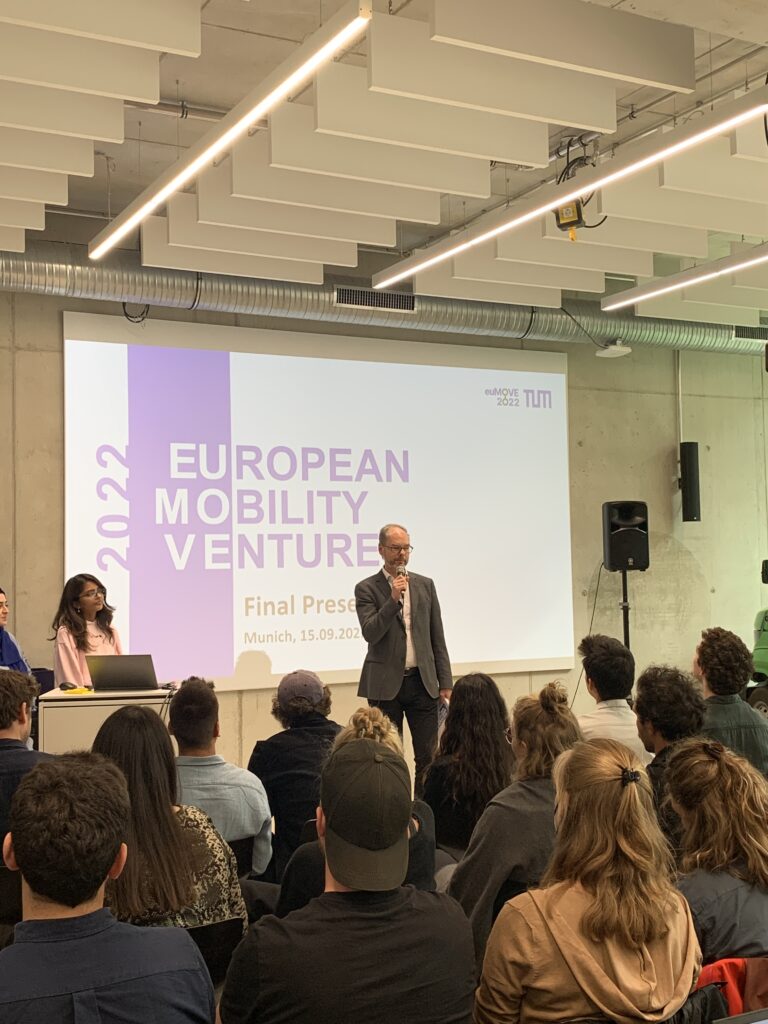
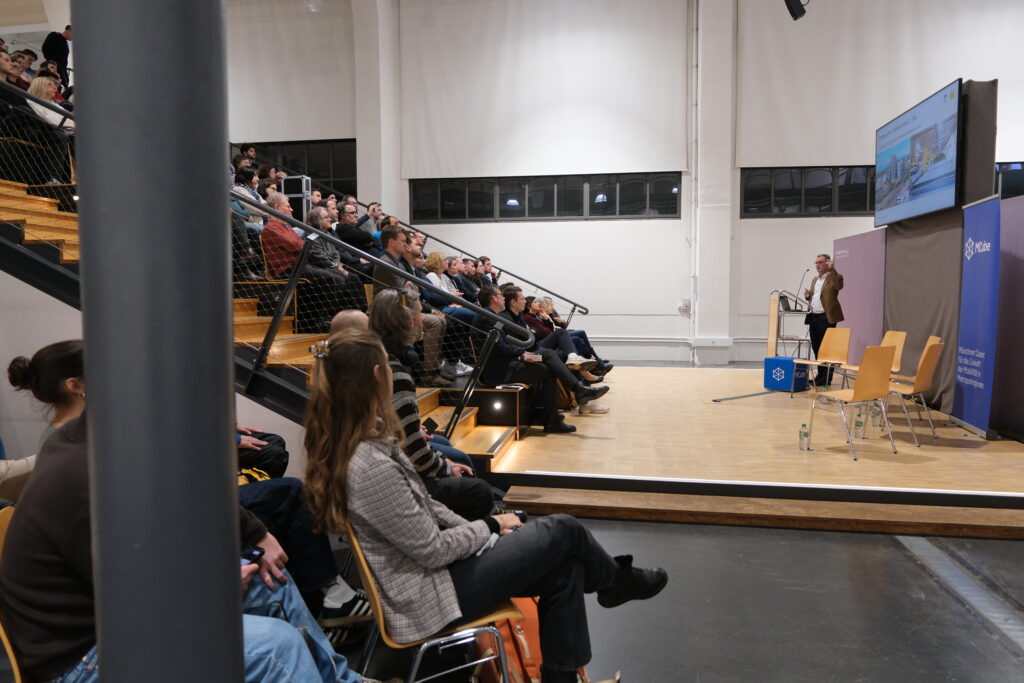
How can mobility data and simulations help to make our cities more liveable? How can data be visualized and how does it help to initiate change in reality? Answers to these questions were provided on 27.11.2025 at the MCube Speaker Series „Future of Mobility“ with the topic „Data moves Cities“ at the Deutsches Museum Verkehrszentrum with guests from science, business and administration.
Digital twins strengthen democracy - and citizens' understanding
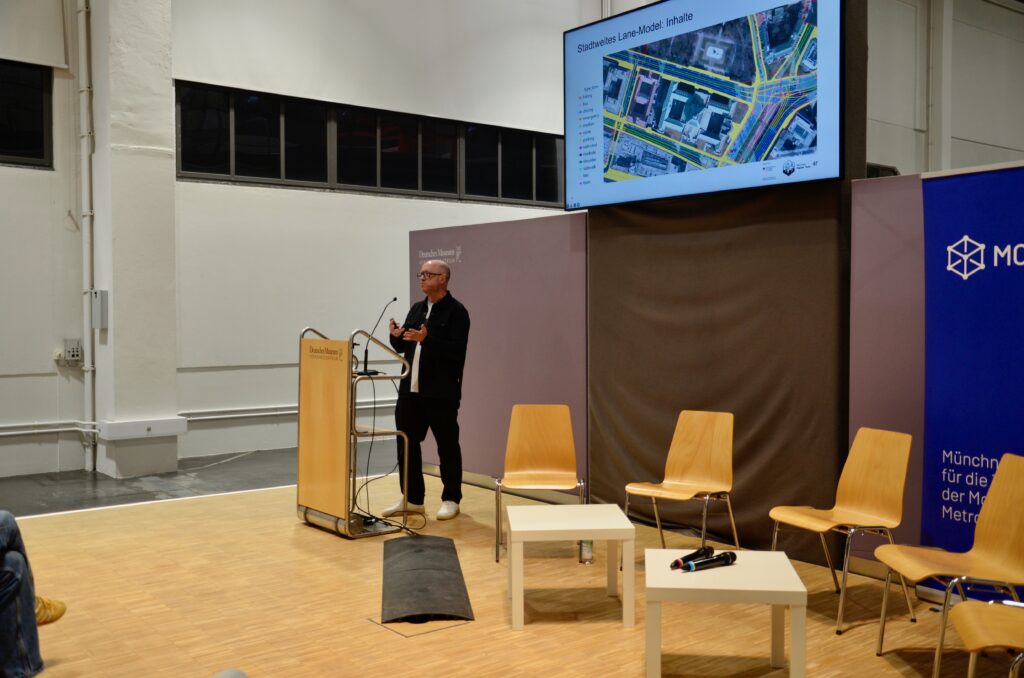
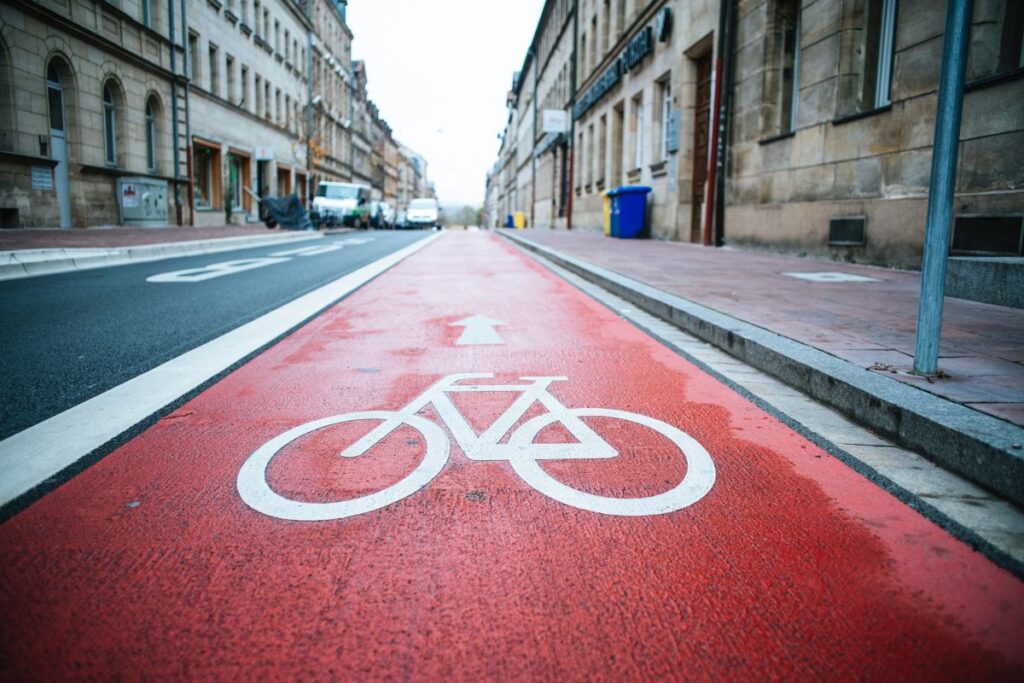
„It's not just about digitally mapping the city, but above all about strengthening democracy in the long term,“ said Markus Mohl from the Geodata Service of the City of Munich at the panel. He heads the Geoservices and Digital Twin department, which uses 3D images of Munich to visualize and test changes in the cityscape and traffic. These simulations allow certain issues to be considered not just in neighborhoods, but in precisely defined areas, such as a specific cycle path at a junction. Mohl emphasized that data simulations offer the best basis and most transparency both for citizens and for decision-makers in politics - especially when very different opinions come together. Mohl also knows from practical experience that some simulations help to understand why changes in reality often take a very long time.
Data simulations improve mobility and help with emergency rescues
Fabian Schuhmann is building a digital twin of mobility in Munich. He is a research assistant at the Technical University of Munich and heads up the MCube project DatSim 2.0. The digital twin is intended to provide a comprehensive digital representation and simulation of mobility - so that the effects of mobility measures on emergency and rescue routes can also be investigated in advance. “Thanks to simple methods, we can already analyze a lot of data, the only important thing is that it is high-resolution,” says Fabian Schuhmann. The simulations help to evaluate safety, environmental aspects and traffic flows in advance in order to ensure a safe and accessible transport network in Munich.
How data helps to make cities more liveable and traffic safer
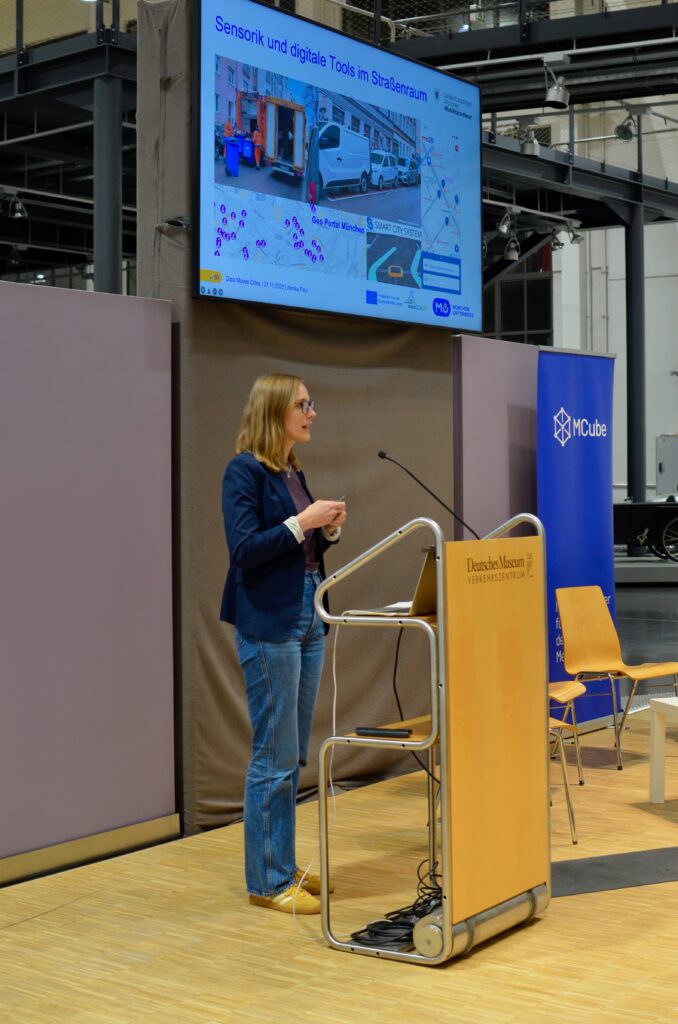
For Dr. Annika Paul from the City of Munich's Mobility Department, liveable cities and sustainable mobility don't just mean looking at efficiency: “It's not just about getting to your destination as quickly as possible, quality of life, traffic safety and planning security are also important.” Paul and her team are investigating digital mobility and the question of how Munich's traffic can be made safer and more fluid. After all, a major problem in the city center is over-parked bus stops, parking offenders and drivers doing laps in search of a parking space. In a pilot project, sensors are to help collect data on parking offenders and commercial traffic, such as care services and tradespeople. This data can not only be used to record and analyze problems - in the long term, it should also help to navigate commercial traffic to available delivery zones and make traffic safer for all participants.
Munich as the frontrunner among smart cities in Germany
Speaker Leonie Schiermeyer from Haselhorst Associates Consulting presented the Smart City Ranking, in which Munich was awarded the top spot for the third time in a row. The ranking covers over 400 cities in Germany with a total of 43 million inhabitants and examines them in ten areas of services of general interest, including mobility, energy and administration. Schiermeyer said: „The ranking creates transparency for German cities and shows current trends, such as comprehensive mobility platforms and digital twins.“ For Munich, however, the winning streak does not mean that the city can sit back and relax, but that it is also playing a part internationally and following trends.
Conclusion:
The panel showed that data and simulations already play a major role in urban planning and mobility in Munich and the surrounding area. As the Smart City Ranking also reveals, Munich is not only a leader in Germany thanks to its digital twins. “We can also keep up with Singapore and other international pioneers,” commented Markus Mohl from the Geodata Service. The audience was also impressed: one participant asked for more public access to the data, another hoped for more transparency in the projects: “So that not only the individual department knows the possibilities of the simulations, but also the people of Munich. And preferably beyond the city limits.”
____
"The future of mobility" is a series of lectures organized by MCube - Munich Cluster for the future of Mobility in Metropolitan Regions, Technical University of Munich and openLAB Urban Mobility.
Together - Make it possible