Innovation recommendation 06 - TrEx

Crises influence how we move around cities - for example during the Covid-19 pandemic. From one moment to the next, our mobility behavior changed drastically. More people than ever before used active forms of mobility, while others retreated to their homes. The emergency situation caused by the pandemic showed what the future of urban mobility could look like.

We wanted to know: What do city dwellers want for the future of mobility? What can we learn from the experiences of the Covid-19 pandemic for the transformation of urban mobility systems? And how can mobility policy in cities become more crisis-proof?

The findings in this innovation recommendation are primarily aimed at urban mobility planners, municipal and regional administrations and public transport operators.

Here you can find our innovation recommendation „Resilient change towards sustainable mobility“.

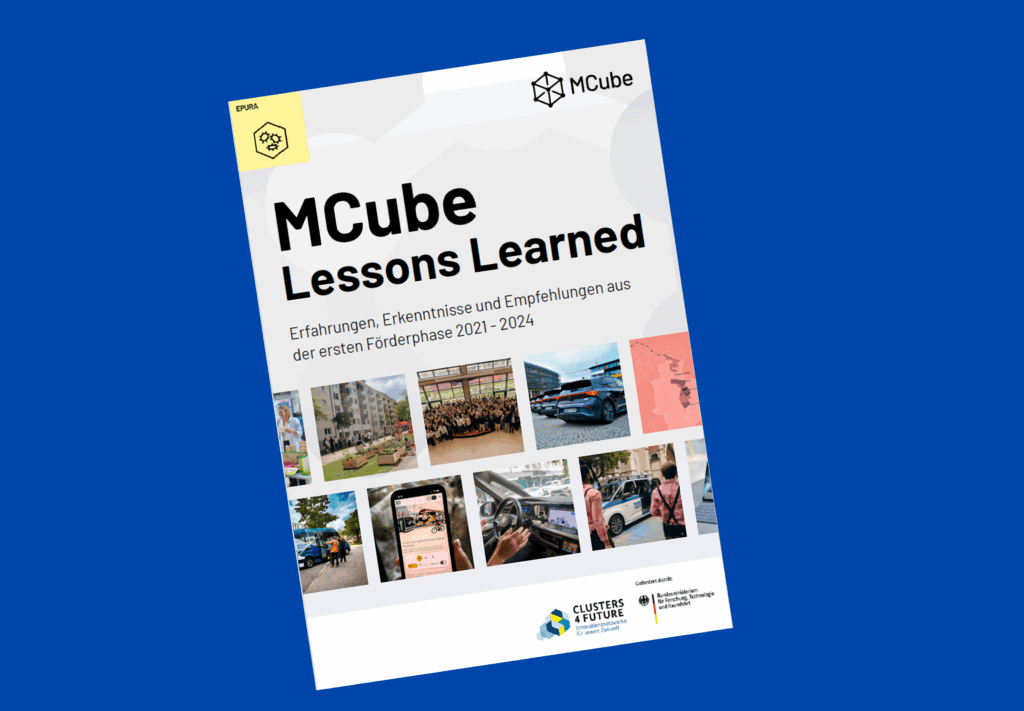
The lessons learned from the first MCube funding phase show which factors really drive projects forward - and where typical barriers arise.

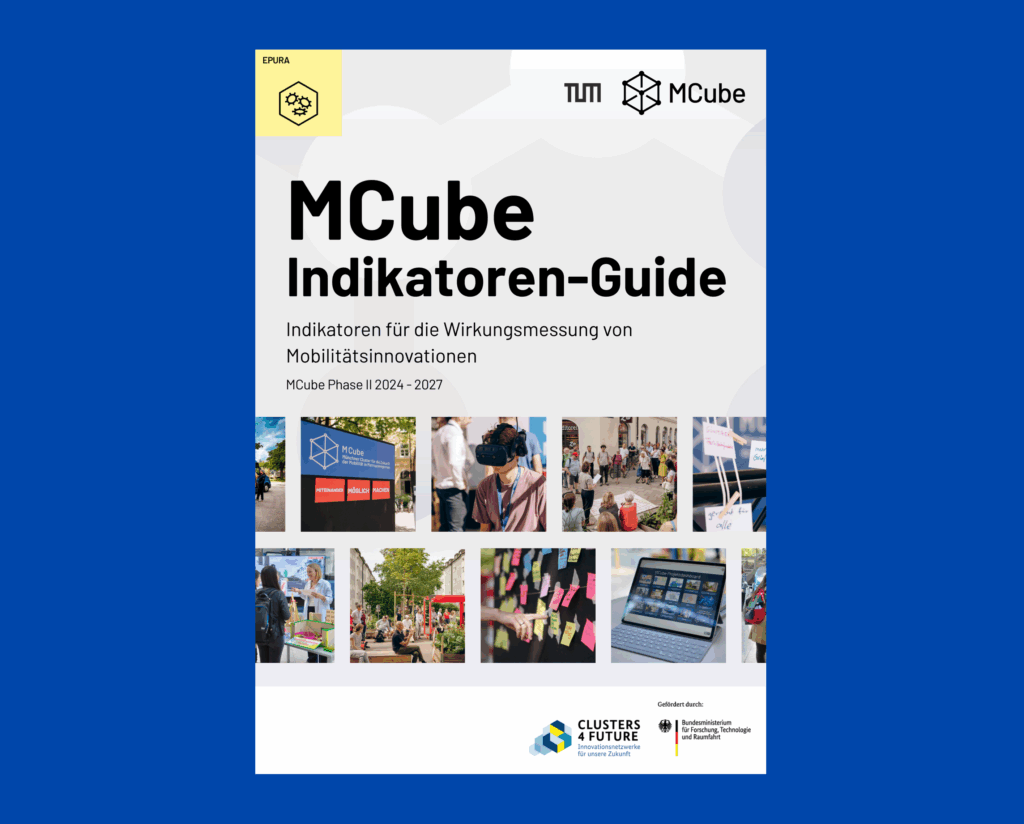
Creating transparency, proving impact, sharpening strategies - the new indicator guide supports precisely this.

For the first time in this format, students made their way to three European cities. They went to Stockholm, Tallinn/Helsinki and Barcelona.

This time, mobility in the cities of Ljubljana, Genoa and Utrecht was examined.

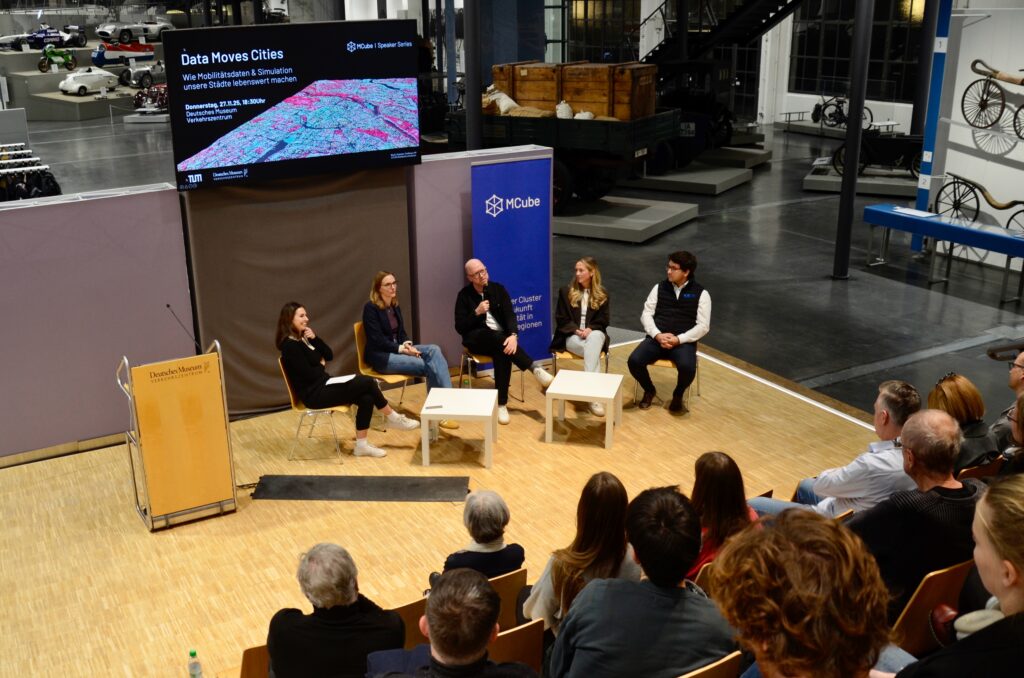
How can mobility data and simulations make cities more liveable - and change visible and tangible?

What do Brussels, Lisbon, Milan and Paris have in common?

Where to put cars, bicycles and e-scooters - and how do we organize parking space fairly, efficiently and sustainably?

The Mobi-Score - The hidden costs of mobility at a glance

Experimenting for the mobility transition - impetus for municipalities to dealing with real-world laboratories

Public spaces and social participation - The WHAT and HOW of comprehensive Participation for a local mobility transition

Easy language

What is MOSAIQ?
Imagine something: There is more space for people. The streets have more trees and plants. Everyone can get around better. That's how your Schwabing-West district could be in the future. How would you like your district to be? We want to talk to you about it!

The project is called MOSAIQ. MOSAIQ is a research∙project. MOSAIQ means: Mobility and urban climate in the future city∙part. The Technical University of Munich is leading the project.

What is MOSAIQ about?
MOSAIQ wants to make the streets in the city∙part more beautiful. People should feel comfortable there. There should be more space. For meetings and plants, for example. You can help decide what is tried out in the Stadt∙teil. The ideas come from you. Some ideas will be tried out on the streets for a certain period of time.
The aim of MOSAIQ is to make urban districts good places to live.
At the same time, the climate in the city should improve. And people should be able to move around the city easily. 

What is happening in the district?

  • In the year 2025:
    The people in the district can participate. They can express their ideas. There are discussions, surveys and meetings. Researchers are also starting their work.
  • In the year 2026:
    Some ideas are tried out.
    They are moved around the streets for a certain period of time.
  • In the year 2027:
    The results are evaluated.
    Consideration is given to how things can continue∙.