Wer Produkte und Lösungen für gesellschaftliche Probleme entwickeln will, muss diese vorab testen. Die Forschung setzt dabei vermehrt auf zeitlich begrenzte Reallabore und Experimentierprozesse – auch bei Mobilitätsinnovationen wie etwa der Begrünung von Straßenräumen oder dem autonomen Fahren im Alltagsverkehr.
Obwohl sich Reallabore der Mobilität immens unterscheiden können, wird hier die Zukunft der Mobilität diskutiert, gestaltet und greifbar gemacht. In unserer Empfehlung fokussieren wir uns deshalb auf den kommunalen Umgang mit Experimentieransätzen, die in Zusammenarbeit mit Projektpartner*innen, Innovator*innen und Forschungsförderungen vorangetrieben werden.
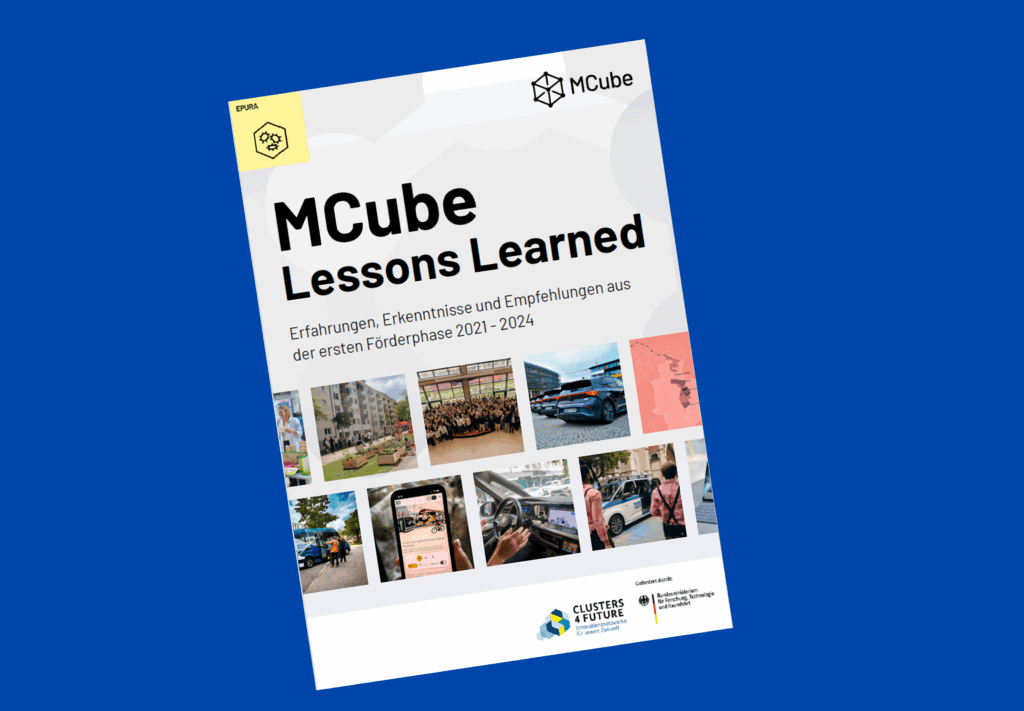
The lessons learned from the first MCube funding phase show which factors really drive projects forward - and where typical barriers arise.
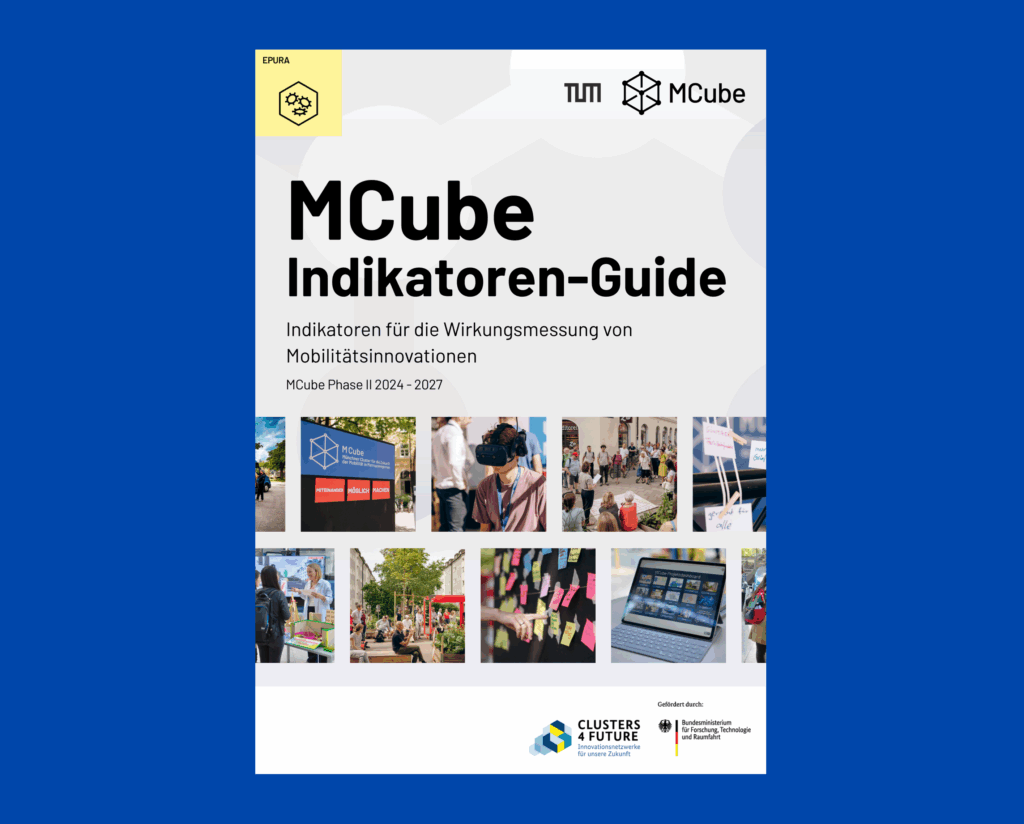
Creating transparency, proving impact, sharpening strategies - the new indicator guide supports precisely this.
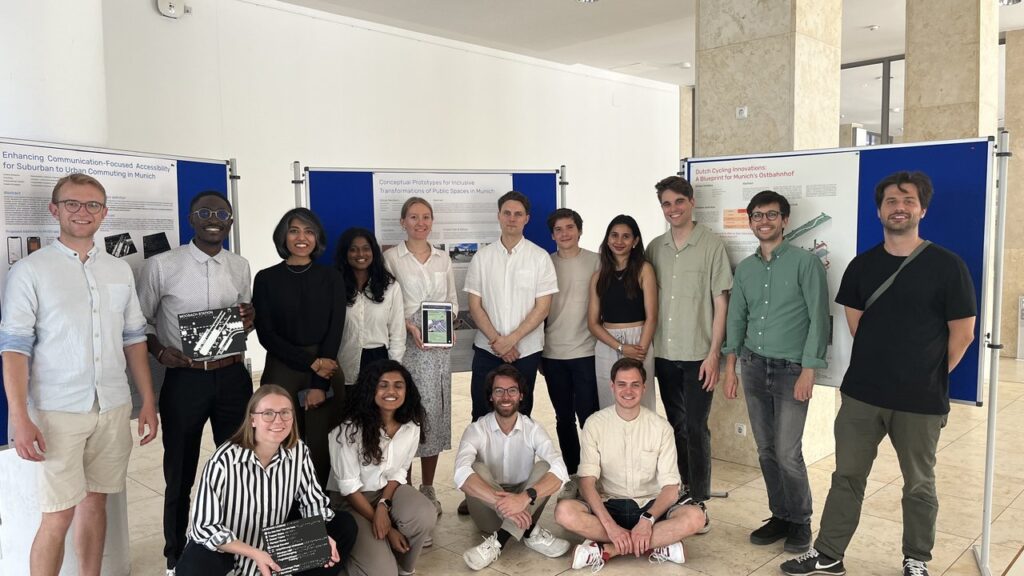
For the first time in this format, students made their way to three European cities. They went to Stockholm, Tallinn/Helsinki and Barcelona.
This time, mobility in the cities of Ljubljana, Genoa and Utrecht was examined.
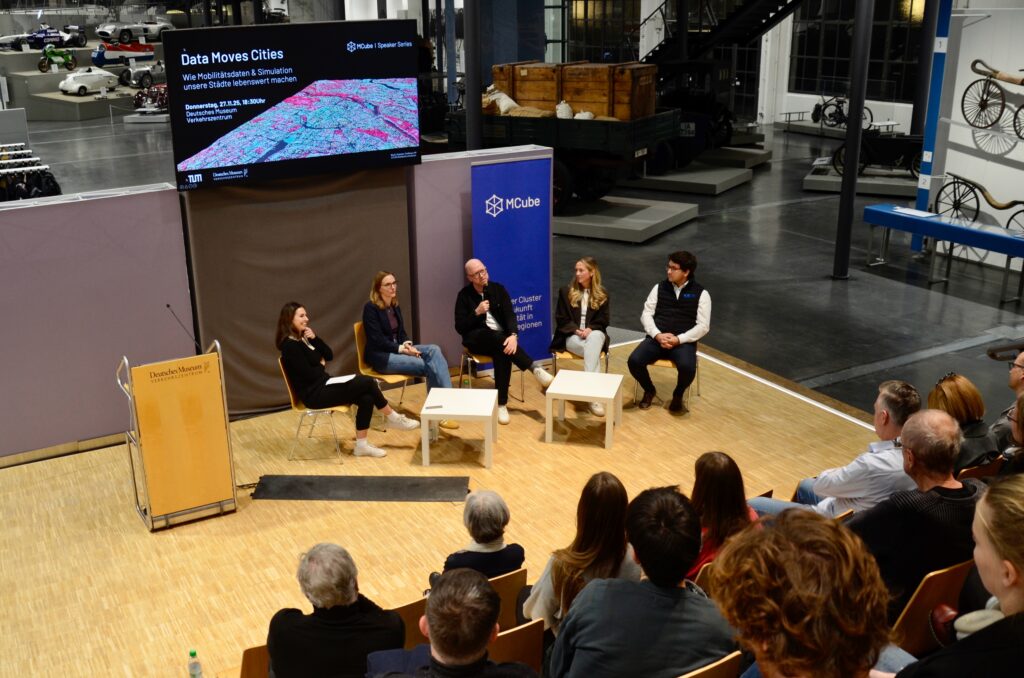
How can mobility data and simulations make cities more liveable - and change visible and tangible?
What do Brussels, Lisbon, Milan and Paris have in common?
Where to put cars, bicycles and e-scooters - and how do we organize parking space fairly, efficiently and sustainably?
The Mobi-Score - The hidden costs of mobility at a glance
Resilient change towards sustainable mobility - lessons for a transformative urban mobility policy
Public spaces and social participation - The WHAT and HOW of comprehensive Participation for a local mobility transition
No results available
What is MOSAIQ?
Imagine something: There is more space for people. The streets have more trees and plants. Everyone can get around better. That's how your Schwabing-West district could be in the future. How would you like your district to be? We want to talk to you about it!
The project is called MOSAIQ. MOSAIQ is a research∙project. MOSAIQ means: Mobility and urban climate in the future city∙part. The Technical University of Munich is leading the project.
What is MOSAIQ about?
MOSAIQ wants to make the streets in the city∙part more beautiful. People should feel comfortable there. There should be more space. For meetings and plants, for example. You can help decide what is tried out in the Stadt∙teil. The ideas come from you. Some ideas will be tried out on the streets for a certain period of time.
The aim of MOSAIQ is to make urban districts good places to live.
At the same time, the climate in the city should improve. And people should be able to move around the city easily.
What is happening in the district?