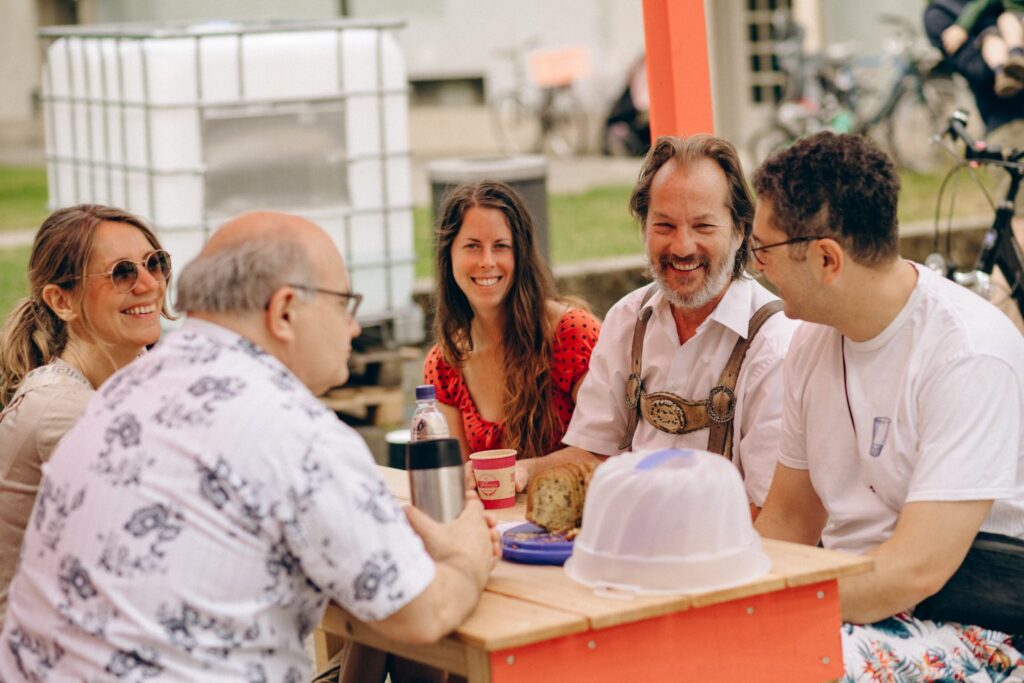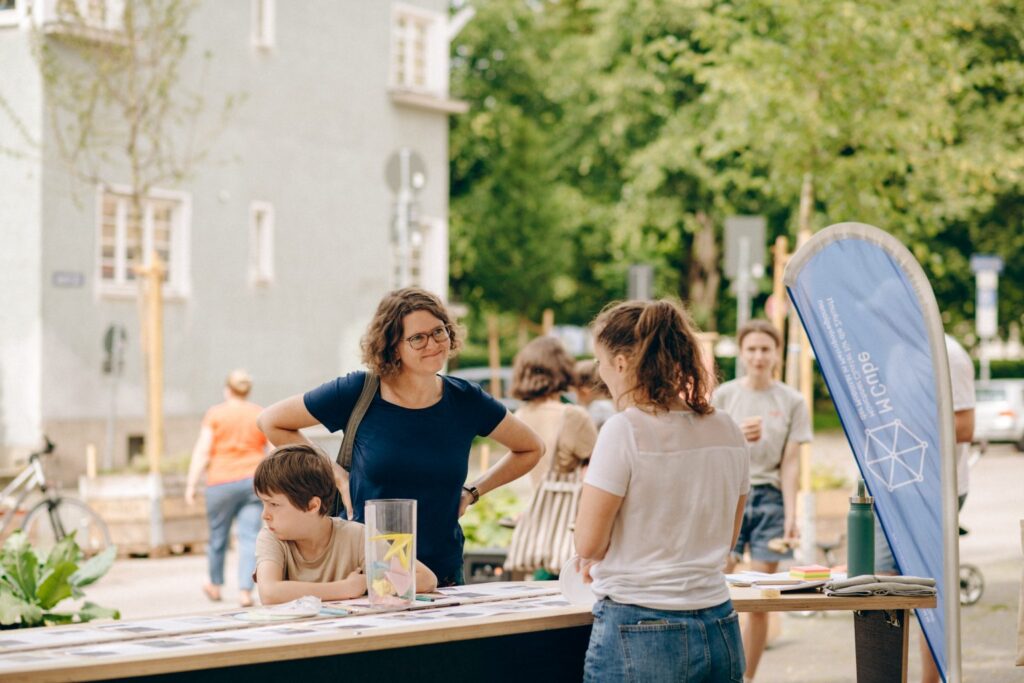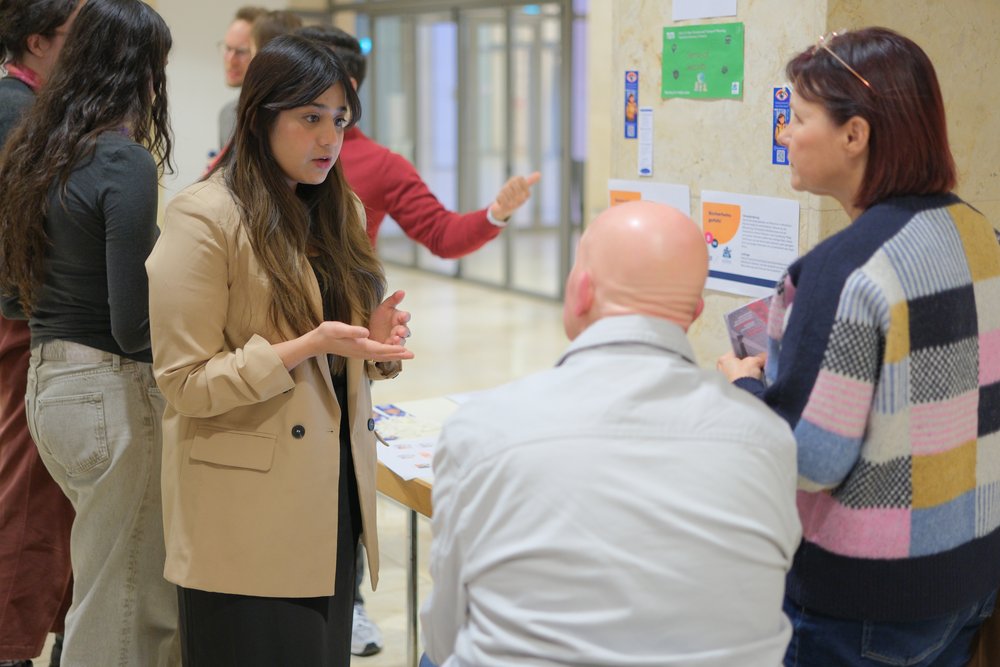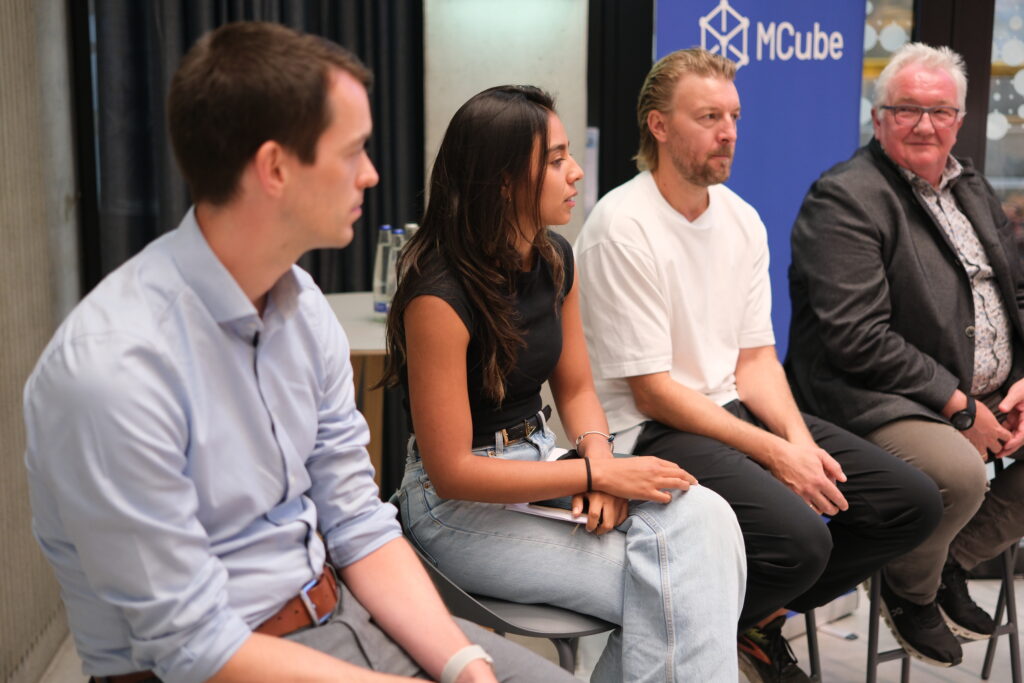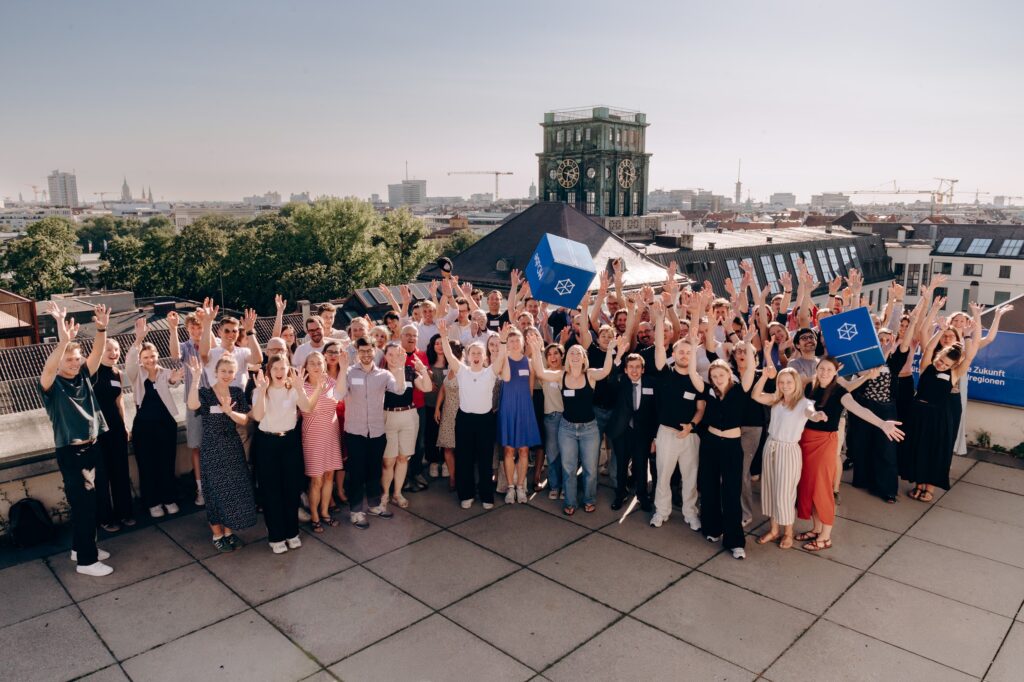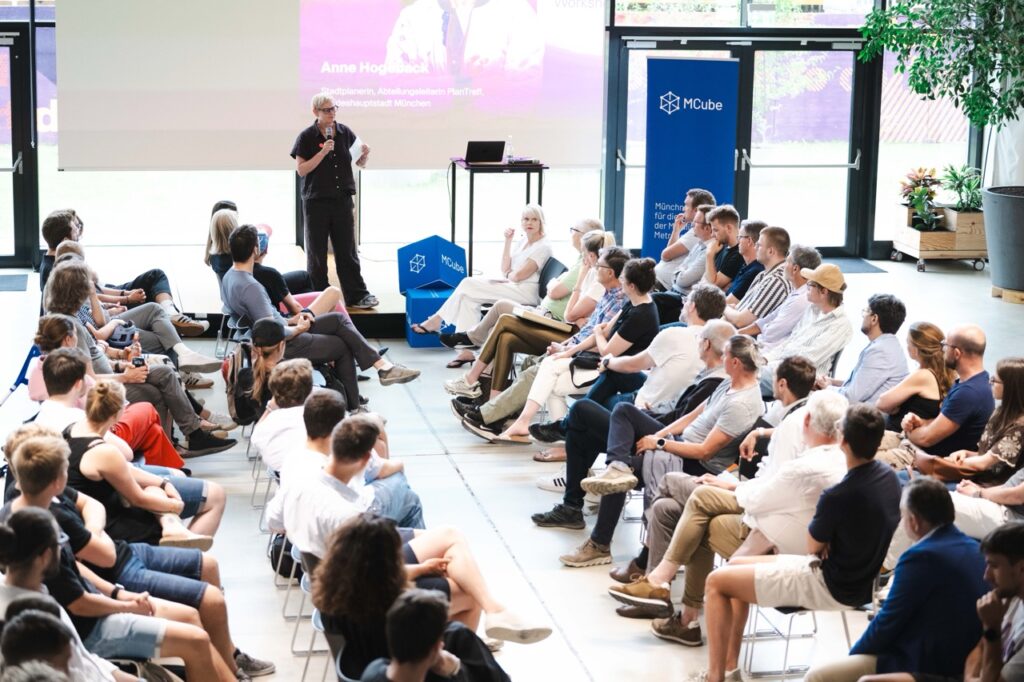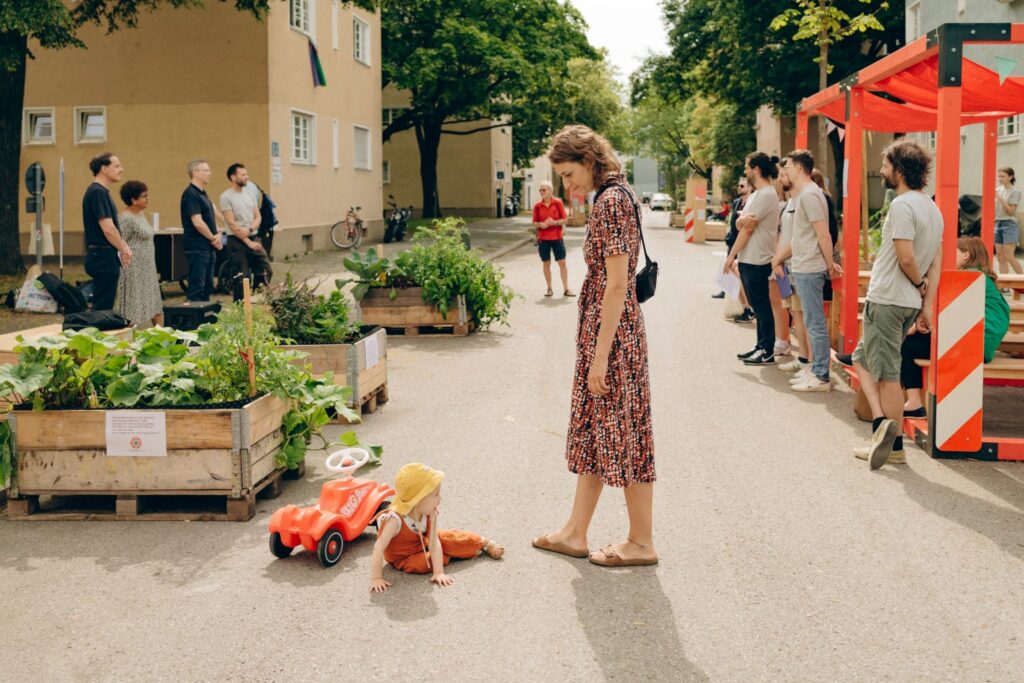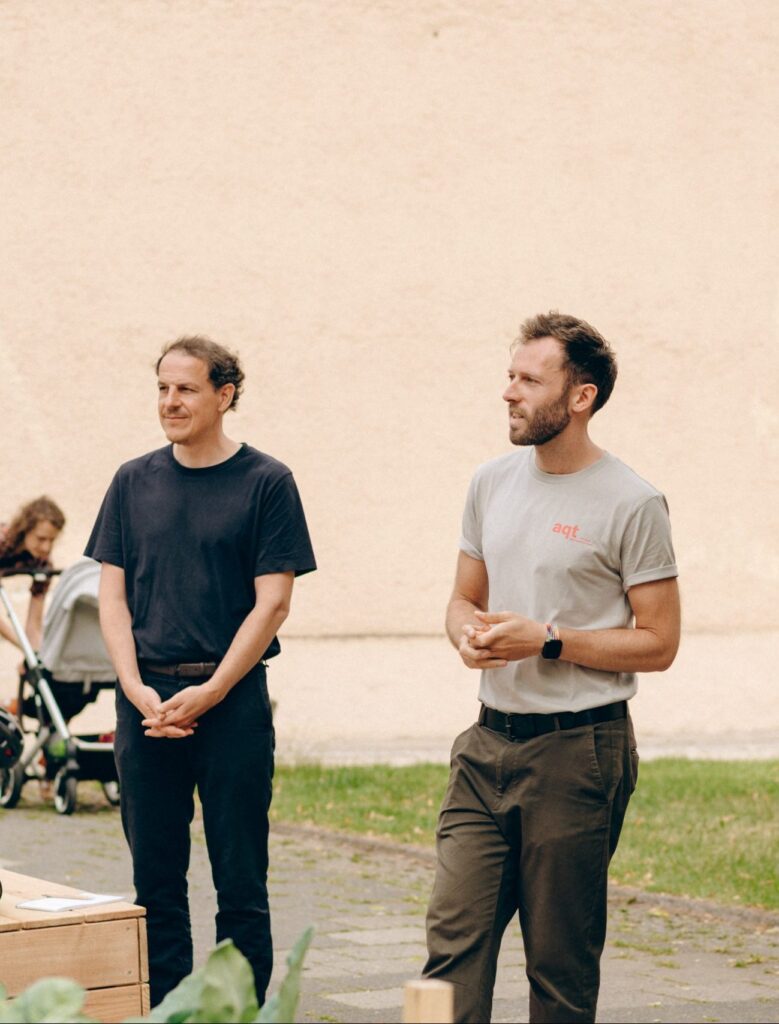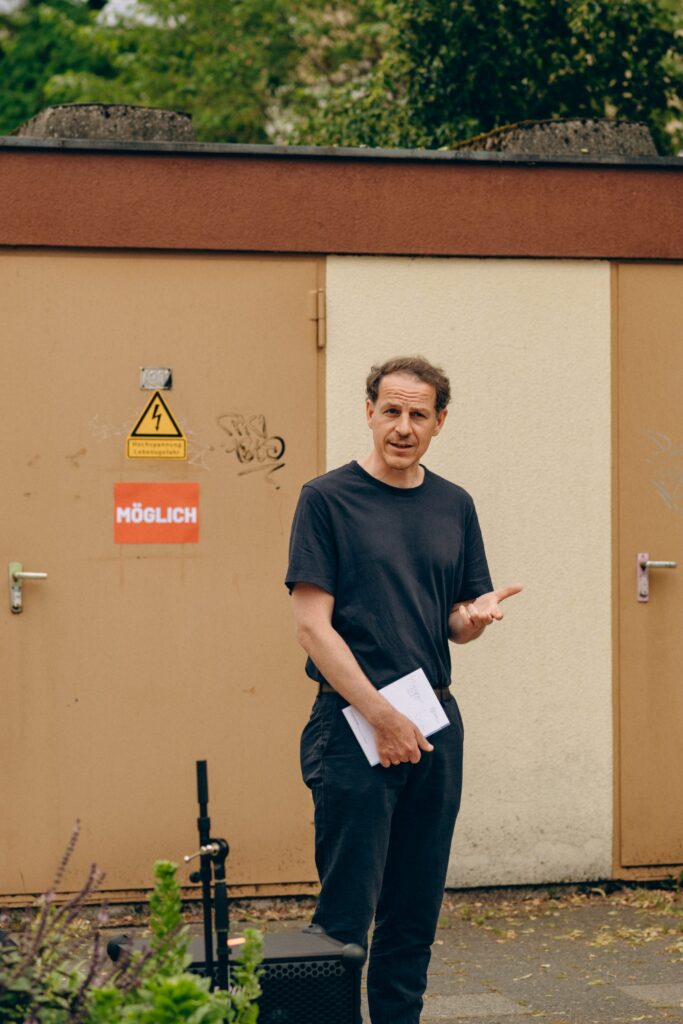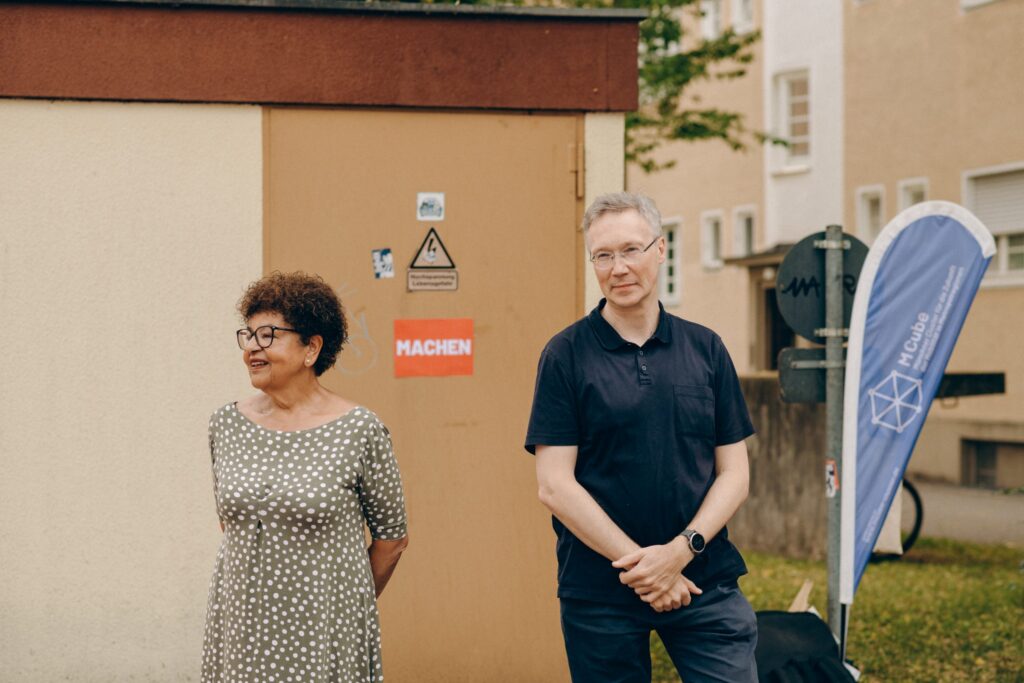
On Saturday, July 8, 2023, the MCube aqt project team - car-reduced districts for a livable city - was back in the Giesinger Quartier to celebrate the opening of the Landlstraße real-world laboratory with its residents and mobility officer Georg Dunkel and BA chairwoman Carmen Dullinger-Oßwald.
"If you don't have one yourself, you can use the street as a huge balcony from now on and I hope you take advantage of this opportunity!"
BA Chairwoman Carmen Dullinger-Oßwald
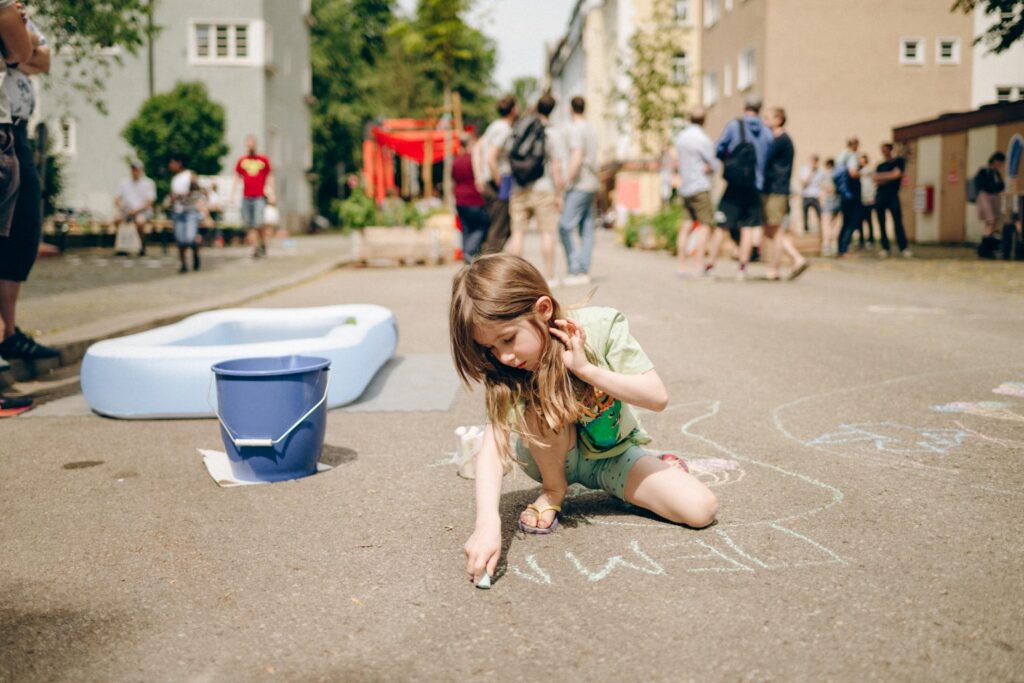
With around 70 visitors, the event opened Georg Dunkel and Carmen Dullinger-Oßwald the start of the traffic-calmed section of Landlstraße. Until October 2023, the #reallabor will be researching how traffic areas can be redistributed and how street areas in the city (southern Au and Obergiesing) can be used differently.
"We need these experiments in the city to try things out more quickly and use feedback loops."
Oliver May-Beckmann, Managing Director MCube

These temporary designs are met with enthusiasm but also criticism and uncertainty among residents. Although the aqt team held 62 in-depth discussions with local residents and made suggestions and requests for more greenery and more play areas, the residents are divided.
"We are interested in as a project, the impact of such interventions„
Marco Kellhammer, Project Management aqt
Some residents feel ignored and initially resist the measures, while others look forward to the changes. We are open to discussion and hope to bring together both groups - those in favor of the transformation of the public space and those (still) opposed to it. Because that is what our society is all about: a process of negotiation. We want to stimulate a necessary discussion about our future coexistence in the city / in urban spaces within this neighborhood. This is exactly what is currently happening in the #reallabor Landlstraße and we are using such experiments to test how the mobility transition can be shaped, how participation can be strengthened and how we can adapt our living spaces in view of climate change and make them more liveable.

During the coming months of the #reallabor, further public consultations will be held to give residents the opportunity to express their concerns and requests regarding the road transformation and to discuss their wishes and suggestions.
To the Landlstraße:
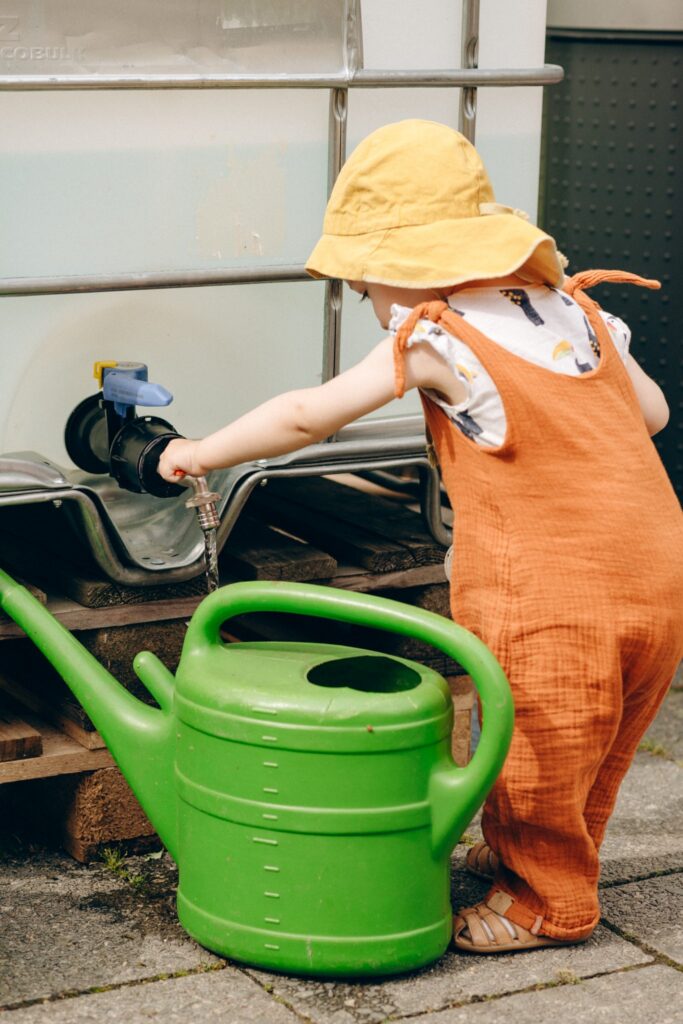
From July to October 2023, a section of Landlstraße in Obergiesing will be closed to vehicle traffic as part of the MCube project aqt - autoreduzierte Quartiere für eine lebenswerte stadt. Seating, raised beds and trees invite people to use the space. Pedestrians and cyclists gain more space. In addition, mobility points are to be added in the coming weeks.


You can find more information about the aqt project here.
Together - Make it possible